This was the second of the three talks I gave at Approaching Humanity, a conference hosted by Larken and Amanda Rose. My question was simple:
Are Christians and atheists truly enemies, or have we been trained to treat one another that way?
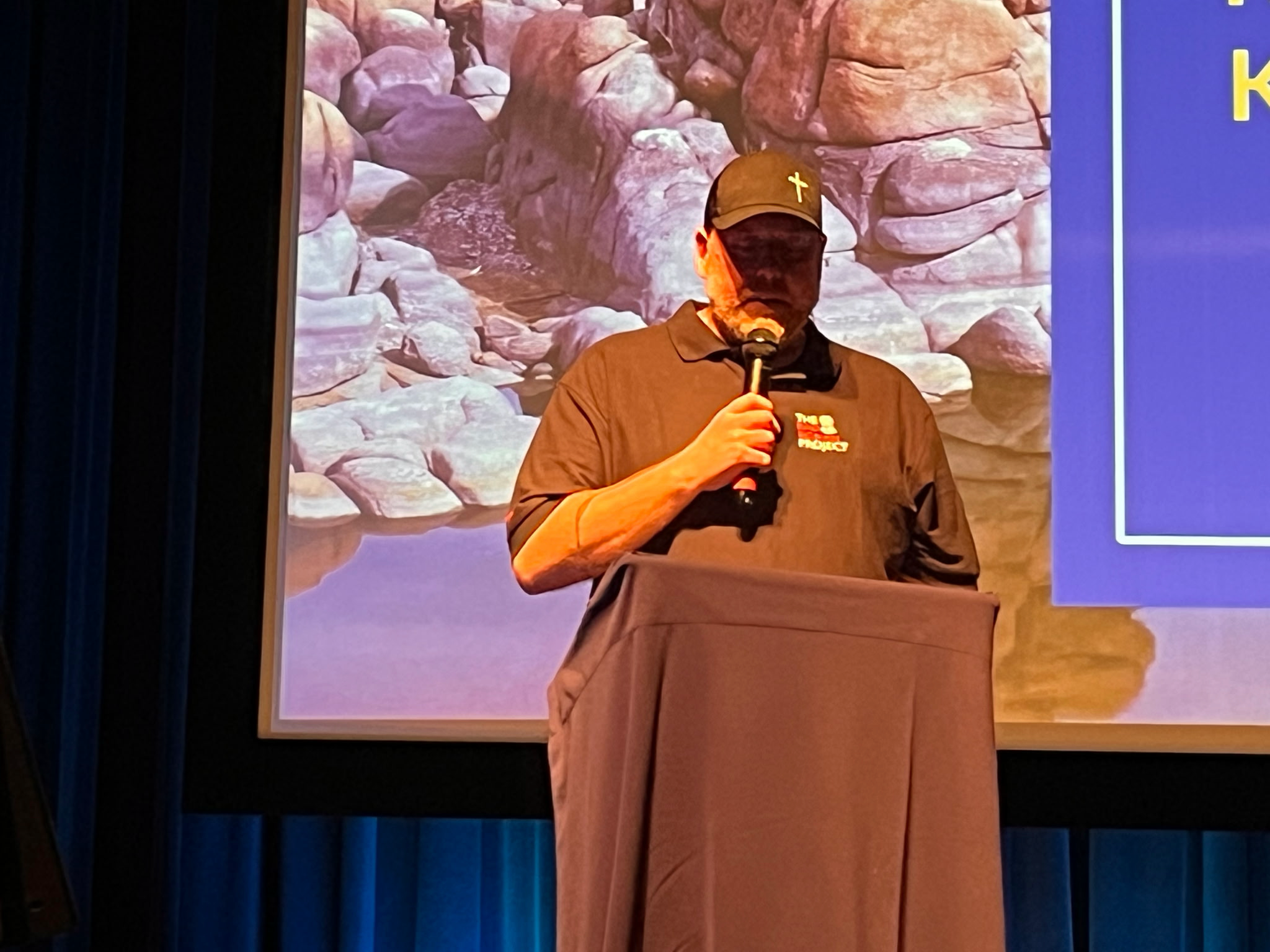
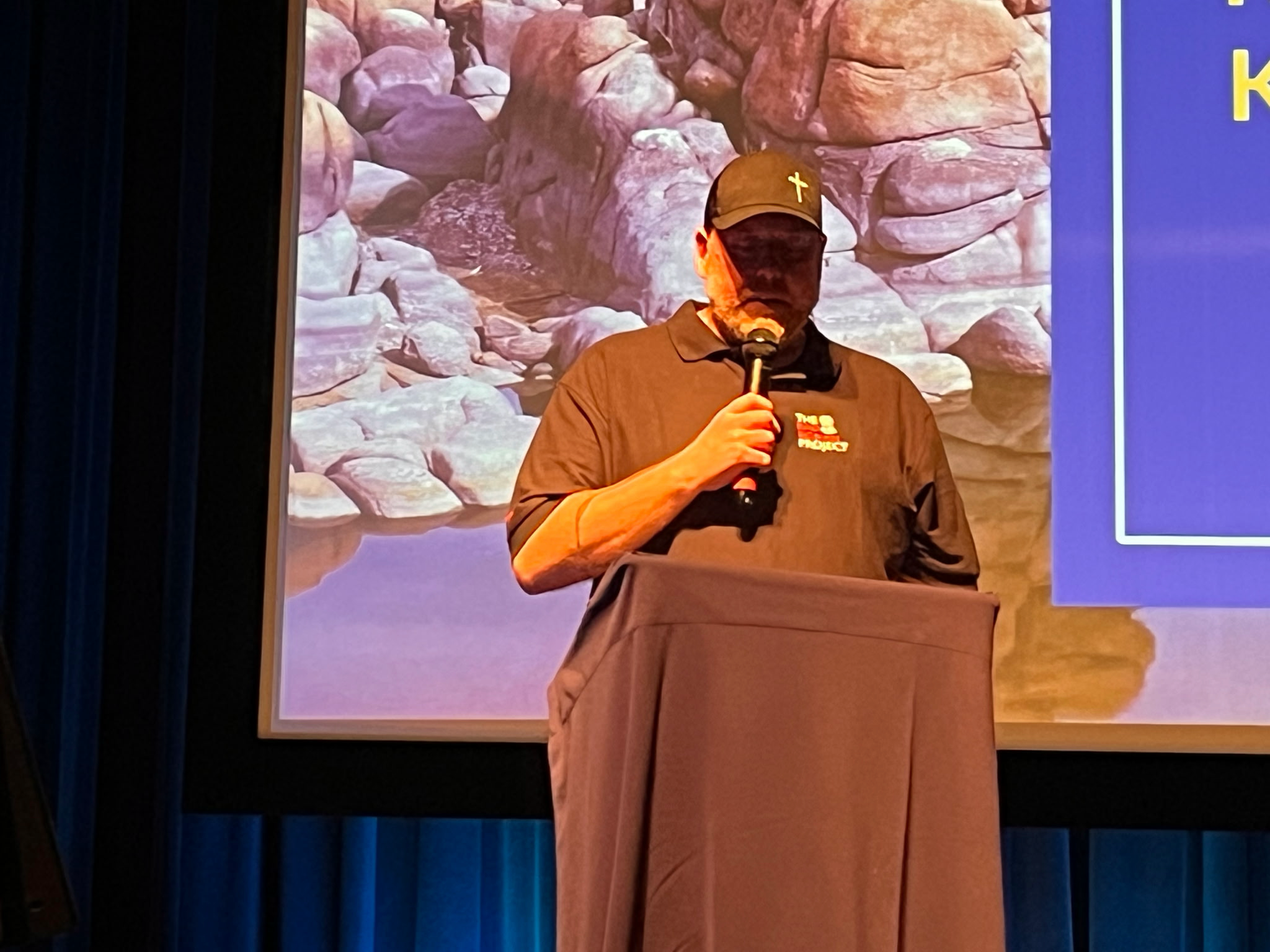
Craig on stage
Who told you that your neighbor who does not believe in God is your enemy?
Who told you that the Christian woman sitting in a church pew wants to control your life?
Was it actually your neighbor? Or was it someone on television who needs you angry enough to vote, donate, and choose a team?
The state depends on division. Without conflict, there is less fear. Without fear, there is less demand for control.
So the biggest questions we ask, ‘Is there a God? What does God want? How should we live?,’ get turned into legislation. Suddenly, we are no longer neighbors trying to understand one another. We are voting blocs fighting for control.
But what happens when we take political power out of the conversation?
How Disagreement Becomes a Weapon
Governments have always understood that divided people are easier to rule.
If we are fighting one another over religion, culture, and identity, we are less likely to look at the people collecting our money and expanding their power.
The process is simple.
First, pass a law about prayer in schools. Now Christians and atheists must fight over what other people’s children are allowed to hear.
Then pass laws that force one group to pay for choices the other group supports. Now private beliefs become public battles.
Finally, collect taxes from both groups while they blame each other for the conflict.
The state turns disagreement into a weapon and then sells us protection from the fight it helped create.
You may fear that your atheist neighbor wants to close your church. You may fear that your Christian neighbor wants to force you to follow her beliefs.
Maybe some people do want those things.
But they cannot force them on you without a government powerful enough to do it for them.
That is the real danger. We keep building a ring of power, then fighting over who gets to wear it.
What Happens When Nobody Gets to Rule?
The Bad Roman podcast has shown me that people with very different beliefs can sit together without trying to control one another.
We have talked with Christians, atheists, pastors, anarchists, libertarians, sheriffs, former political activists, and people who still participate in politics. Some guests would not enter a voting booth even if we offered them a lifetime supply of salsa.
We disagree.
Sometimes we disagree strongly.
We argue about God, morality, government, violence, and what happens after death. Then the recording ends, and nobody passes a law against the other person.
We shake hands. Sometimes we become friends. We remain neighbors.
Why?
Because there is no political prize on the table. Nobody gets to force the other person to bow after winning 51 percent of the vote.
All we have are our ideas, our words, and our willingness to listen.
That is not chaos. It is a conversation between human beings who are not trying to rule each other.
Where the Hatred Comes From
We have been trained to use the state as a missionary.
Christians are told that if we do not legislate morality, society will collapse.
Atheists are told that if they do not remove religion from public life, a theocracy will take over.
Both sides rush toward political power as if the next election is Armageddon.
But power does not care who controls it. It corrupts both sides.
That is why religious debates feel so threatening now. We are not only asking, “What do you believe?”
We are asking, “What will you do to me with the police once your side wins?”
Take away the power to force the other person, and the argument changes.
Now we are simply two people talking about whether God exists.
That conversation may be tense. It may never end in agreement. It may also become a friendship.
Put political force back into it, and the conversation becomes a war.
My Neighbor Is Not My Enemy
As a Christian, I believe Christ is King.
I also believe Jesus never asked Caesar to collect His tithe with a sword.
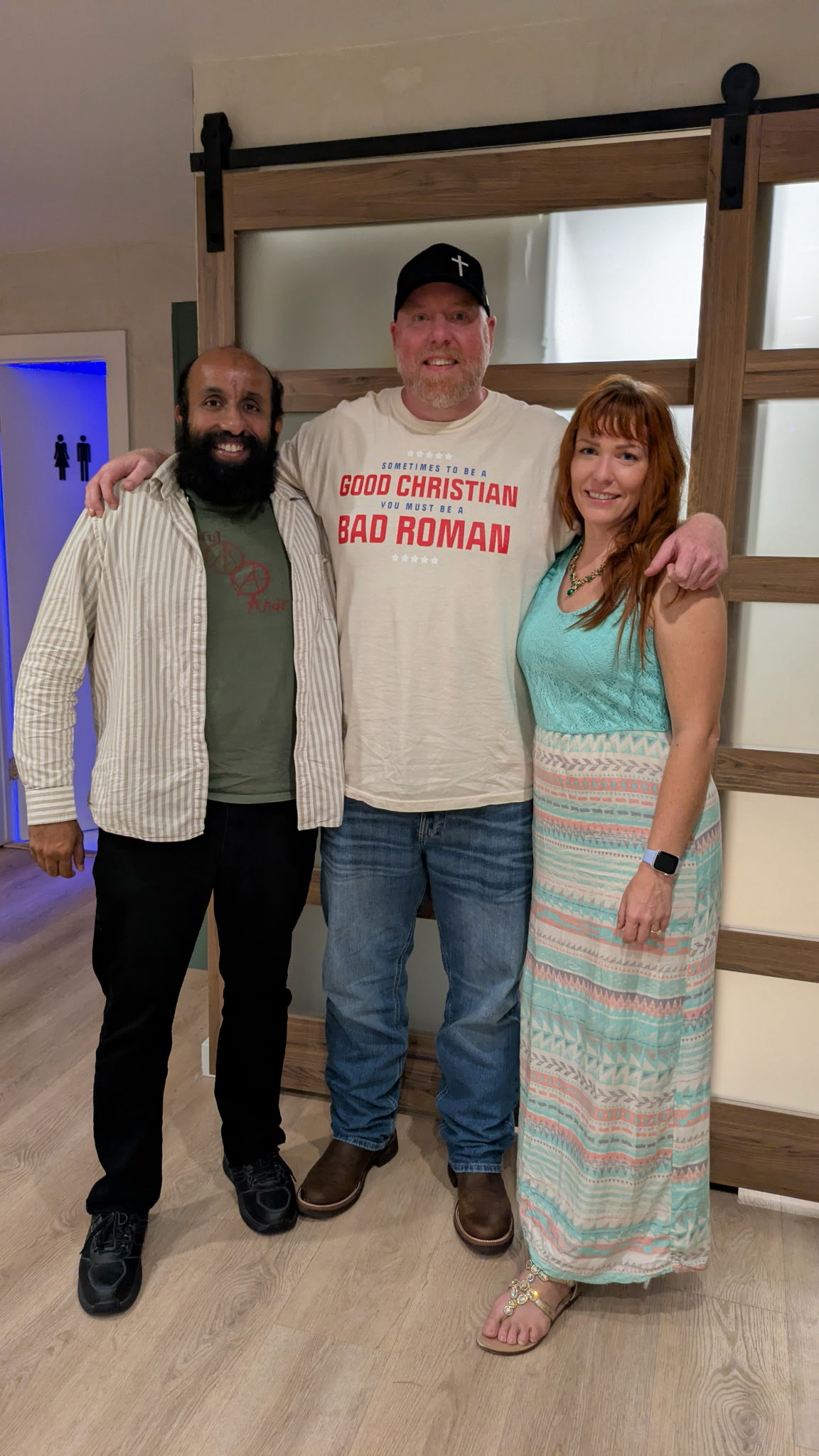
I have atheist friends who think I am wrong about the biggest question in the universe. They have still challenged me, sharpened my thinking, and made me better.
I may disagree with them about God, but I would still trust some of them with my house key and my cats.
Why?
Because Jesus did not tell me to build His Kingdom through tax codes, police, or political control. He told me to love my neighbor.
My neighbor does not need me to win a culture war. He needs me to tell the truth, keep my promises, respect his property, and listen when he speaks.
If your faith, or your lack of faith, needs the state to survive, it is no longer conviction. It is a subsidy.
Bad Roman does not exist to convert atheists by force or push Christians out of faith through law. It exists to show that we can have the argument without turning it into a cage match.
There Is a Third Option
The state tells us we have only two choices: dominate or be dominated.
Force your beliefs onto others, or wait for them to force theirs onto you.
That is a lie.
There is another option.
You do not rule me, and I do not rule you.
You can preach on a street corner. I can keep walking.
You can put up a billboard saying God is dead. I can disagree and drive past it.
You can raise your children according to your faith. Your neighbor can raise theirs according to a different belief.
We do not need permission from one another. We need to stop giving politicians the power to turn our disagreements into legal battles.
We can trade with one another. We can work together. We can argue over coffee instead of legislation. We can raise our children, bury our dead, and face God, or not, according to our own convictions.
Your atheist neighbor is not automatically your enemy.
Your Christian neighbor is not automatically your enemy.
The people who profit from making us fear one another need us to believe they are.
So stop attending the fight they arranged.
Go home. Share a meal. Start a podcast. Ask a question. Listen to the answer.
Love someone you disagree with.
Coexistence is not something the state creates for us. It is what we practice when we stop trying to rule one another.