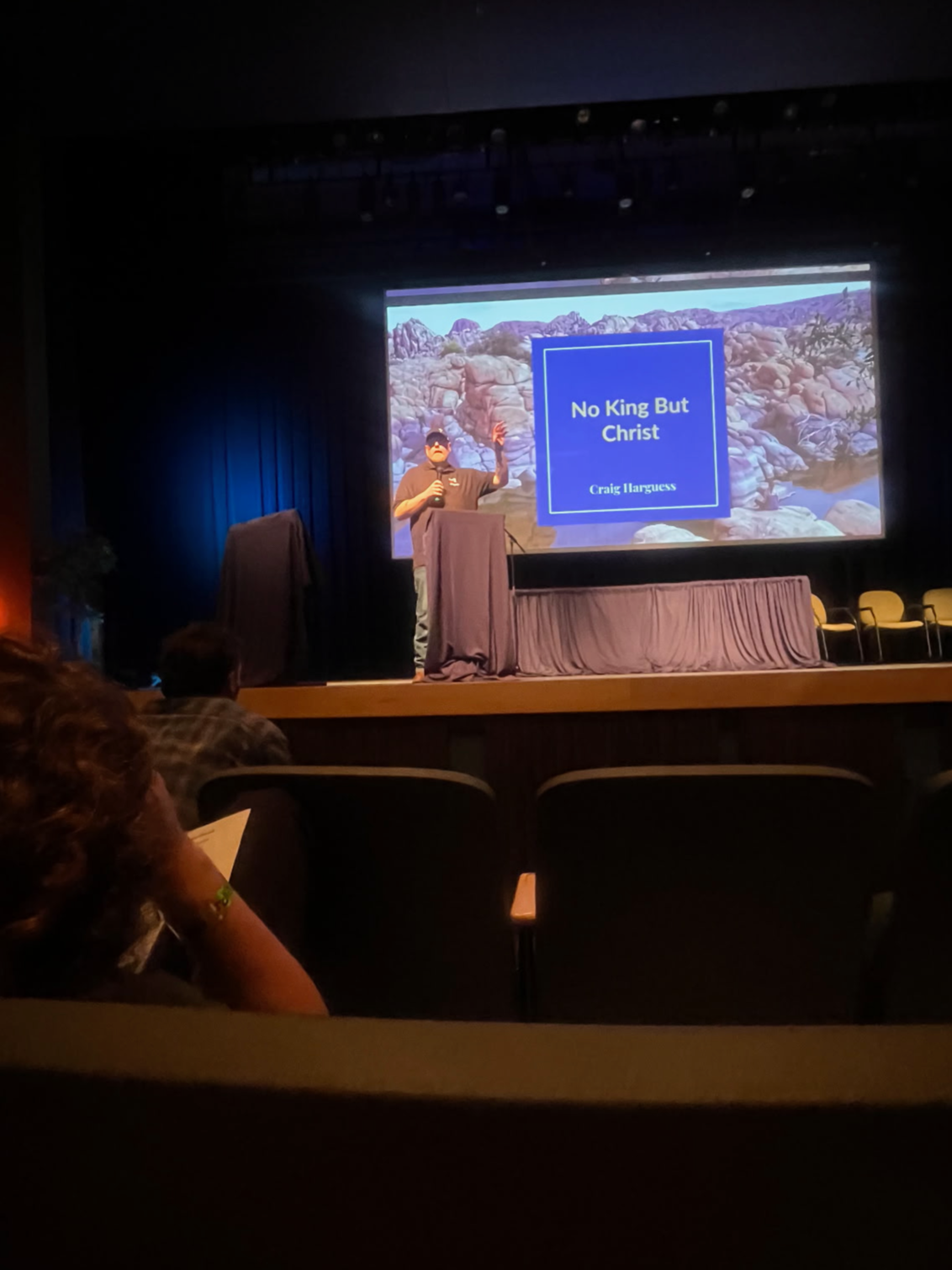
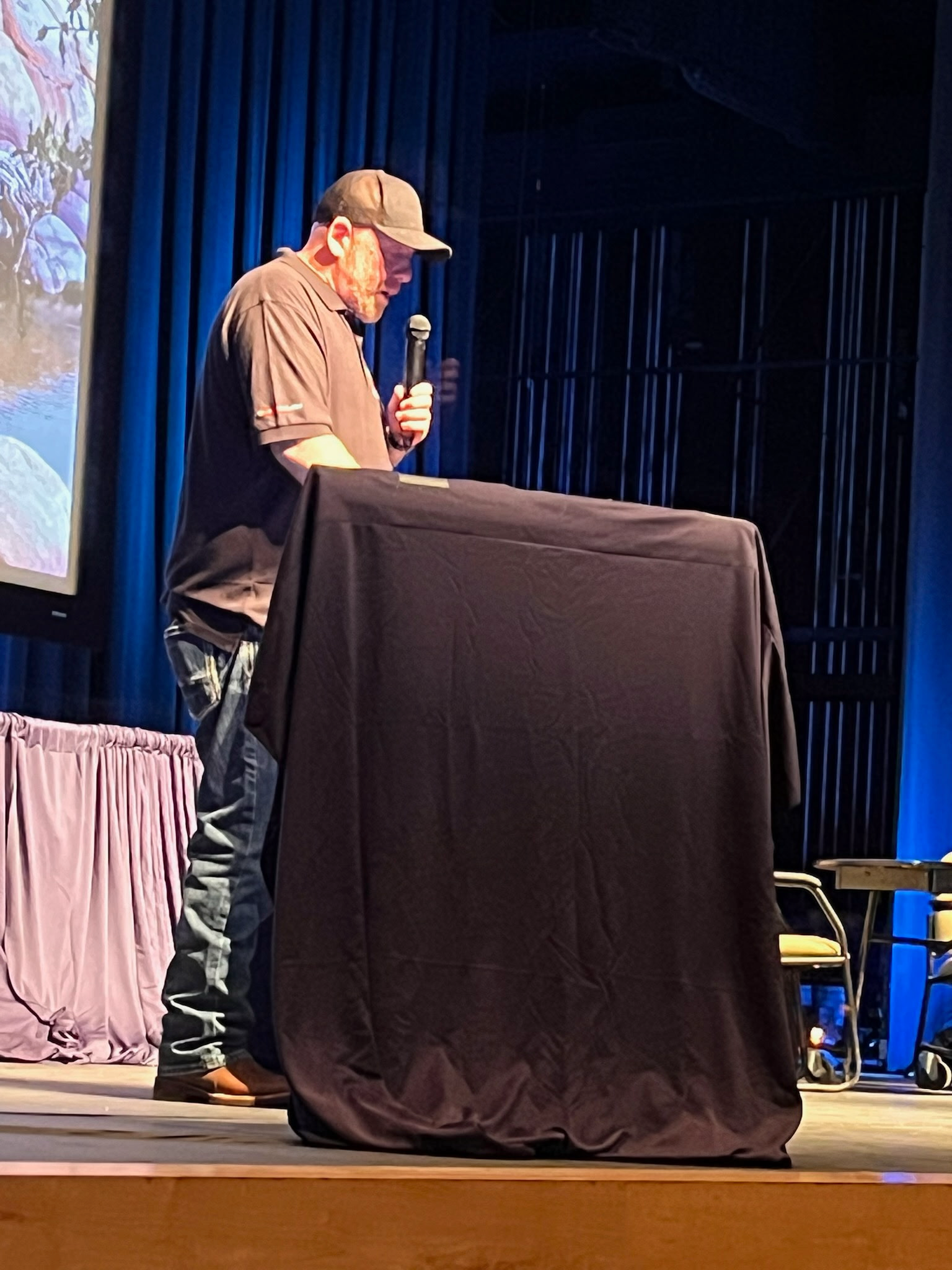
This was the final of three talks I gave at Approaching Humanity, a conference hosted by Larken and Amanda Rose.
I asked everyone to imagine a man who had spent 40 years in prison. One day, the warden opened his cell and told him he was free.
Instead of running out, the man panicked.
Where would he sleep? Who would tell him when to eat? What if he made the wrong choice?
So he begged to stay.
Not because prison was good, but because prison was familiar. Freedom was unknown.
We may laugh at that story, but many of us live the same way.
We say politicians are liars. We say the system is rigged. We complain about taxes, wars, debt, corruption, and broken promises.
Then election season arrives, and we line up to choose which rulers will control us next.
Why?
Because injustice we understand often feels safer than freedom we have never experienced.
Why the Cage Feels Safe
The state does not remain in power because it is always right. It remains because it is familiar.
We know what a tax bill looks like. We know what an election looks like. We know how government schools, courts, police, and agencies work.
We may dislike those systems, but we understand them.
A world without rulers leaves a blank space in our minds. We fill that space with images from disaster movies: riots, warlords, burning cities, and everyone fighting over the last can of beans (which we know do not belong in chili).
We rarely stop to ask whether those images are true.
We have simply been trained to believe that without rulers, there can be no order.
Trauma Bonding With Authority
When being ruled is all we have ever known, it starts to feel like safety.
A child raised by an abusive parent may still defend that parent. The parent is not good, but the parent is familiar. That is home.
We often speak about the state the same way.
“At least we have roads.”
“At least we are not Somalia.”
“At least our rulers are better than their rulers.”
We are not describing freedom. We are asking for a gentler hand on the leash.
The cage feels safe because we know where the walls are.
Learning to Feel Helpless
From childhood, many of us are trained to ask permission.
We ask permission to speak, move, eat, or use the bathroom. Later, we are told that voting is how adults solve problems.
After years of that training, our ability to imagine voluntary cooperation becomes weak.
So when someone asks, “Could we handle conflict without Congress?” our first response is not curiosity.
It is disbelief.
“That could never work.”
But is it truly impossible? Or have we simply been trained not to see it?
Who Are We Without a Political Team?
There is also a deeper fear.
Who are we without the state?
We call ourselves voters, citizens, taxpayers, Democrats, Republicans, conservatives, and progressives.
But those identities only exist in relation to a political system.
Freedom does not hand us a team jersey. It gives us a mirror.
Without politicians to blame or political teams to defend, responsibility comes back to us.
It comes back to me.
It comes back to you.
That can feel frightening because we have been taught not to trust ourselves or our neighbors.
We are told that power must be gathered at the top because ordinary people cannot cooperate without being controlled.
But is that actually how most of life works?
What Did Winning Change?
Before I became a voluntaryist, I spent plenty of time arguing politics online.
Team Red versus Team Blue.
One day I won an argument. I had the better facts, the better joke, and the sharper reply.
I won, and nothing changed.
The IRS still existed. Wars were still being funded. Government debt continued to grow. Politicians kept breaking their promises.
The only thing my victory changed was my blood pressure.
That forced me to ask a harder question:
What if the problem is not which political team controls the state?
What if the state itself is the problem?
That question did not bring instant relief. It felt like the floor disappeared beneath me.
If there were no politicians to manage everything, then responsibility would fall on us as neighbors.
Could I trust people to cooperate?
I had been taught that I could not.
Letting go of corrupt politicians was easy. Letting go of my belief that we needed politicians at all took much longer.
It is still a process.
No Rulers Does Not Mean No Rules
When I talk about a stateless society, I am not saying we should have no rules.
I am saying we should have no rulers.
You follow rules every day that no politician created.
You do not punch your waiter because Congress told you not to. You avoid doing it because it is wrong, because there are consequences, and because you want to live peacefully with other people.
You lock your door without waiting for the government to approve your defense plan.
You cooperate with coworkers, customers, friends, family members, and neighbors without a politician standing nearby.
Order does not require a throne.
Think about a farmers market.
A farmer grows tomatoes. A baker brings bread. Someone else sells honey.
No member of Congress decides how many loaves the baker must bring. Nobody forces you to buy the tomatoes. You look at the product, agree on a price, exchange money, and walk away.
If the food is bad, you do not return. If someone cheats customers, word spreads.
That is cooperation, accountability, and order without a ruler controlling every decision.
The most forced part of the entire market may be the permit the city charges the farmer to sell you carrots.
Remove the permit, and the carrots still appear.
Statelessness does not mean no order. It means order without a throne.
We already practice it. We just do not notice.
The Cost of Familiar Injustice
The danger of familiar injustice is that we slowly become used to it.
We get taxed, then accept higher taxes.
We get watched, then accept more cameras.
We get lied to, then stop expecting honesty.
The cage gets smaller a little at a time. Because the walls move slowly, we call it stability.
The cost of unfamiliar freedom is uncertainty.
The cost of familiar slavery is everything, billed to us through taxes, debt, war, surveillance, and dependence.
We Do Not Need to Burn Anything Down
So what do we do?
Do we burn the system down?
No.
Violence is the language of the state, and the state owns more weapons.
We can do what the early Christians did to Rome.
We can stop depending on it. We can outlive it. We can build something better.
That is why The Bad Roman Project exists.
The early Christians were considered bad Romans because they would not worship Caesar or call the emperor lord.
They were not trying to repair Rome. They were learning how to live under another King.
We can become bad at dependence, fear, and blind obedience.
We can become good at feeding people without waiting for a grant. Good at helping neighbors without asking permission. Good at building communities without political control.
We can say No King but Christ and mean it.
Sit With the Question
I am not demanding that you burn your voter card or move into the woods.
I am asking for something smaller.
Sit with the discomfort.
Picture your street, your workplace, and your family without someone ruling over you.
Notice the first emotion that appears.
If it is fear, pay attention to it.
That may be the chain rattling. That may be the familiar cage asking you not to leave.
You do not need every answer today. You only need to stop being afraid of the questions.
The door may have been open longer than we realized.
The cell is familiar. It may even feel like home.
But it is still a cell.
Walk out.
Related Podcast Episodes
Related Blogs