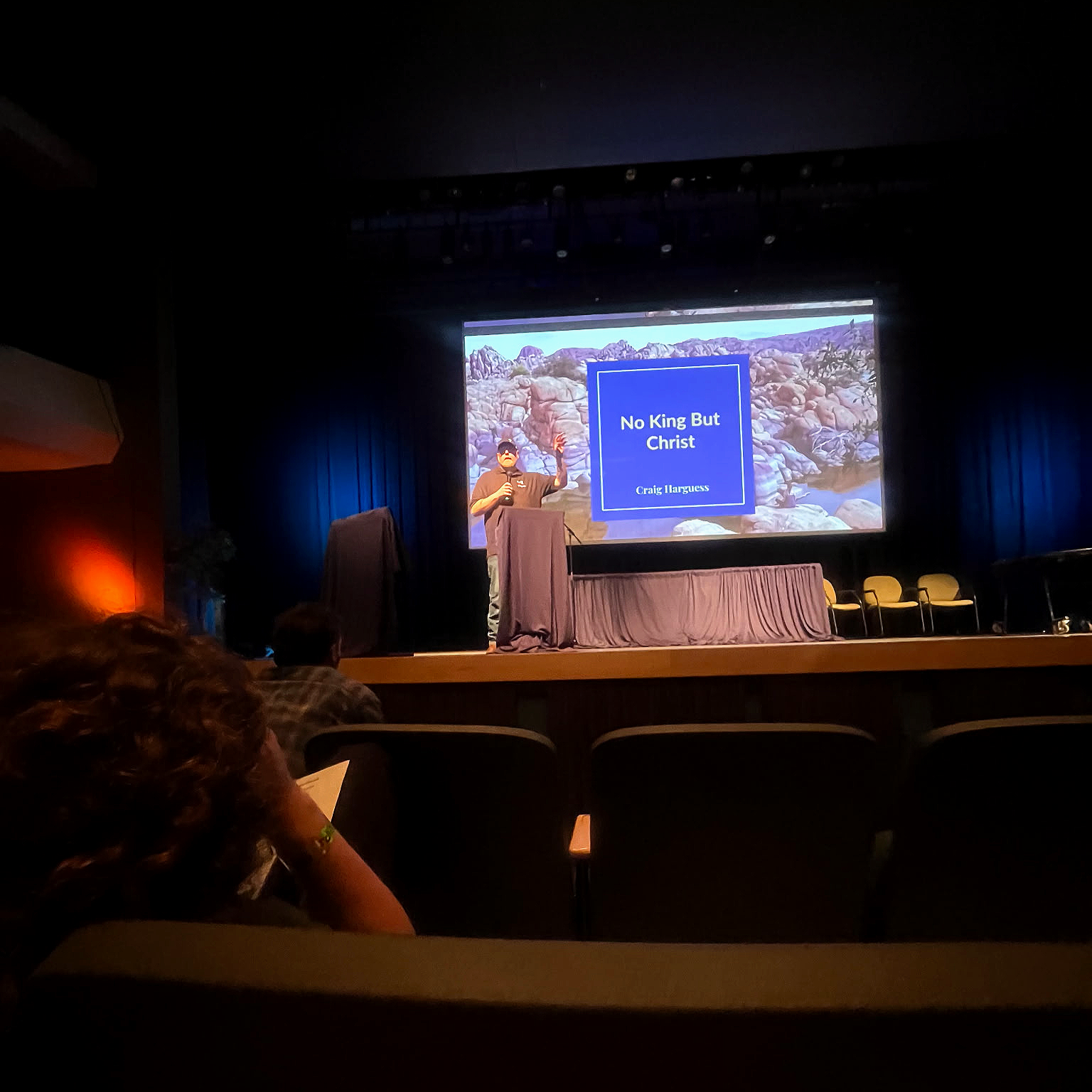

by Craig Harguess

Leaving the Comfort of the Cell

This was the final of three talks I gave at Approaching Humanity, a conference hosted by Larken and Amanda Rose.
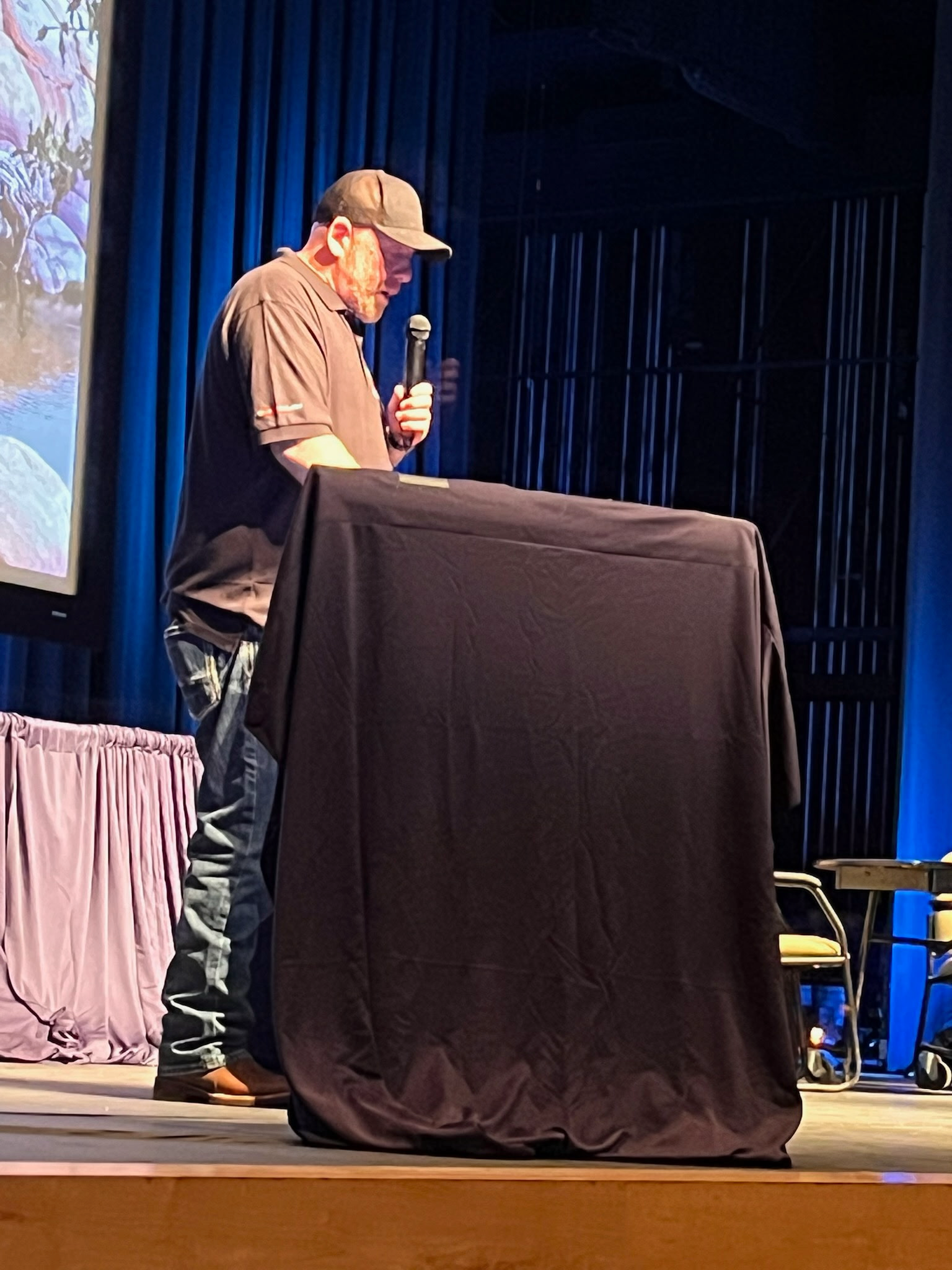
I asked everyone to imagine a man who had spent 40 years in prison. One day, the warden opened his cell and told him he was free.

Instead of running out, the man panicked.

Where would he sleep? Who would tell him when to eat? What if he made the wrong choice?

So he begged to stay.

Not because prison was good, but because prison was familiar. Freedom was unknown.

We may laugh at that story, but many of us live the same way.

We say politicians are liars. We say the system is rigged. We complain about taxes, wars, debt, corruption, and broken promises.

Then election season arrives, and we line up to choose which rulers will control us next.

Why?

Because injustice we understand often feels safer than freedom we have never experienced.

Why the Cage Feels Safe

The state does not remain in power because it is always right. It remains because it is familiar.

We know what a tax bill looks like. We know what an election looks like. We know how government schools, courts, police, and agencies work.

We may dislike those systems, but we understand them.

A world without rulers leaves a blank space in our minds. We fill that space with images from disaster movies: riots, warlords, burning cities, and everyone fighting over the last can of beans (which we know do not belong in chili).

We rarely stop to ask whether those images are true.

We have simply been trained to believe that without rulers, there can be no order.

Trauma Bonding With Authority

When being ruled is all we have ever known, it starts to feel like safety.

A child raised by an abusive parent may still defend that parent. The parent is not good, but the parent is familiar. That is home.

We often speak about the state the same way.

“At least we have roads.”

“At least we are not Somalia.”

“At least our rulers are better than their rulers.”

We are not describing freedom. We are asking for a gentler hand on the leash.

The cage feels safe because we know where the walls are.

Learning to Feel Helpless

From childhood, many of us are trained to ask permission.

We ask permission to speak, move, eat, or use the bathroom. Later, we are told that voting is how adults solve problems.

After years of that training, our ability to imagine voluntary cooperation becomes weak.

So when someone asks, “Could we handle conflict without Congress?” our first response is not curiosity.

It is disbelief.

“That could never work.”

But is it truly impossible? Or have we simply been trained not to see it?

Who Are We Without a Political Team?

There is also a deeper fear.

Who are we without the state?

We call ourselves voters, citizens, taxpayers, Democrats, Republicans, conservatives, and progressives.

But those identities only exist in relation to a political system.

Freedom does not hand us a team jersey. It gives us a mirror.

Without politicians to blame or political teams to defend, responsibility comes back to us.

It comes back to me.

It comes back to you.

That can feel frightening because we have been taught not to trust ourselves or our neighbors.

We are told that power must be gathered at the top because ordinary people cannot cooperate without being controlled.

But is that actually how most of life works?

What Did Winning Change?

Before I became a voluntaryist, I spent plenty of time arguing politics online.

Team Red versus Team Blue.

One day I won an argument. I had the better facts, the better joke, and the sharper reply.

I won, and nothing changed.
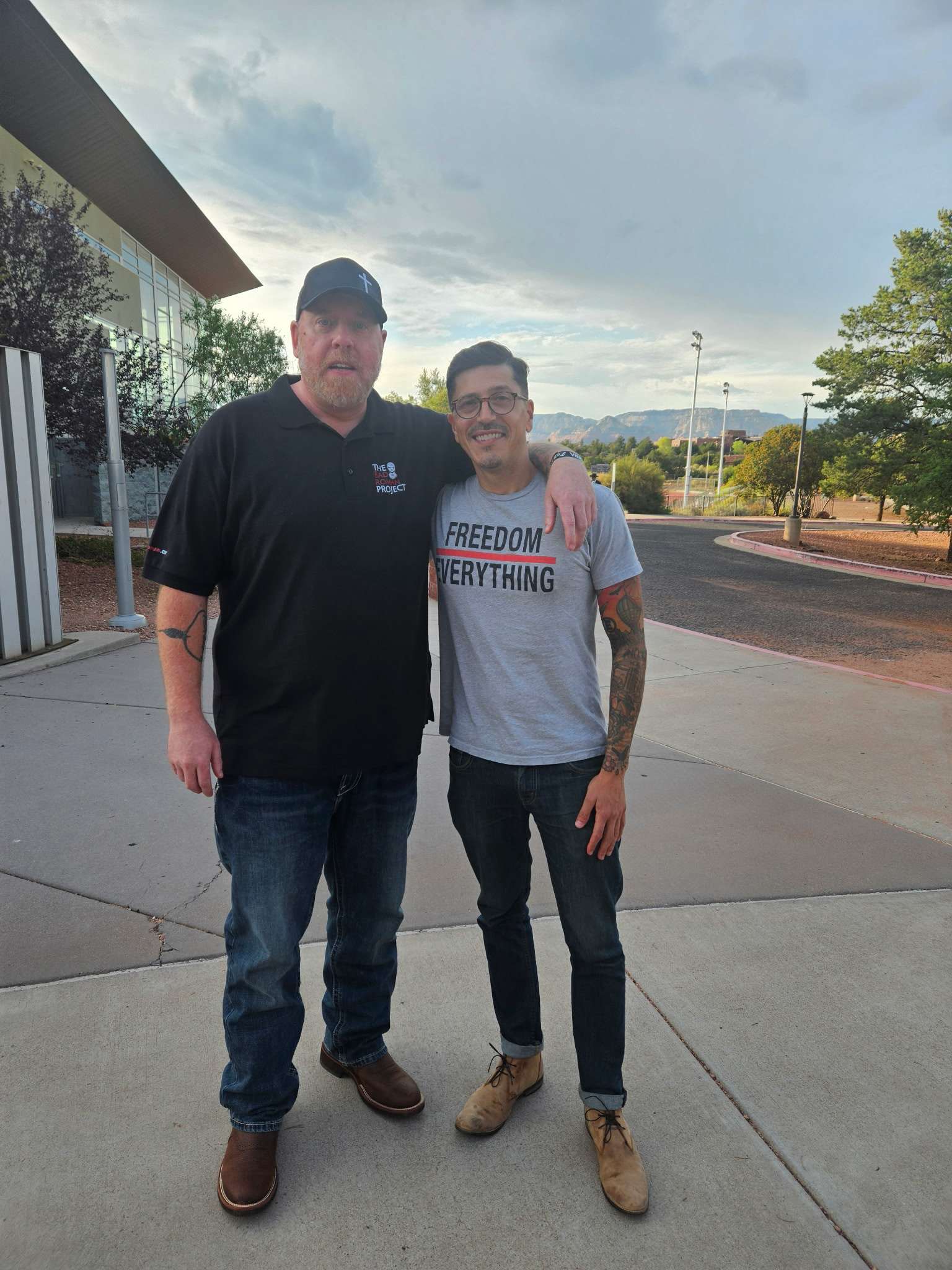
The IRS still existed. Wars were still being funded. Government debt continued to grow. Politicians kept breaking their promises.

The only thing my victory changed was my blood pressure.

That forced me to ask a harder question:

What if the problem is not which political team controls the state?

What if the state itself is the problem?

That question did not bring instant relief. It felt like the floor disappeared beneath me.

If there were no politicians to manage everything, then responsibility would fall on us as neighbors.

Could I trust people to cooperate?

I had been taught that I could not.

Letting go of corrupt politicians was easy. Letting go of my belief that we needed politicians at all took much longer.

It is still a process.

No Rulers Does Not Mean No Rules

When I talk about a stateless society, I am not saying we should have no rules.

I am saying we should have no rulers.

You follow rules every day that no politician created.

You do not punch your waiter because Congress told you not to. You avoid doing it because it is wrong, because there are consequences, and because you want to live peacefully with other people.

You lock your door without waiting for the government to approve your defense plan.

You cooperate with coworkers, customers, friends, family members, and neighbors without a politician standing nearby.

Order does not require a throne.

Think about a farmers market.

A farmer grows tomatoes. A baker brings bread. Someone else sells honey.

No member of Congress decides how many loaves the baker must bring. Nobody forces you to buy the tomatoes. You look at the product, agree on a price, exchange money, and walk away.

If the food is bad, you do not return. If someone cheats customers, word spreads.

That is cooperation, accountability, and order without a ruler controlling every decision.

The most forced part of the entire market may be the permit the city charges the farmer to sell you carrots.

Remove the permit, and the carrots still appear.

Statelessness does not mean no order. It means order without a throne.

We already practice it. We just do not notice.

The Cost of Familiar Injustice

The danger of familiar injustice is that we slowly become used to it.

We get taxed, then accept higher taxes.

We get watched, then accept more cameras.

We get lied to, then stop expecting honesty.

The cage gets smaller a little at a time. Because the walls move slowly, we call it stability.

The cost of unfamiliar freedom is uncertainty.

The cost of familiar slavery is everything, billed to us through taxes, debt, war, surveillance, and dependence.

We Do Not Need to Burn Anything Down

So what do we do?

Do we burn the system down?

No.

Violence is the language of the state, and the state owns more weapons.

We can do what the early Christians did to Rome.

We can stop depending on it. We can outlive it. We can build something better.

That is why The Bad Roman Project exists.

The early Christians were considered bad Romans because they would not worship Caesar or call the emperor lord.

They were not trying to repair Rome. They were learning how to live under another King.

We can become bad at dependence, fear, and blind obedience.

We can become good at feeding people without waiting for a grant. Good at helping neighbors without asking permission. Good at building communities without political control.

We can say No King but Christ and mean it.

Sit With the Question

I am not demanding that you burn your voter card or move into the woods.

I am asking for something smaller.

Sit with the discomfort.

Picture your street, your workplace, and your family without someone ruling over you.

Notice the first emotion that appears.

If it is fear, pay attention to it.

That may be the chain rattling. That may be the familiar cage asking you not to leave.

You do not need every answer today. You only need to stop being afraid of the questions.

The door may have been open longer than we realized.

The cell is familiar. It may even feel like home.

But it is still a cell.

Walk out.

Related Podcast Episodes
Related Blogs

Are We Picking Our Own Battles? Are Christians and Atheists Really Enemies?

This was the second of the three talks I gave at Approaching Humanity, a conference hosted by Larken and Amanda Rose. My question was simple:

Are Christians and atheists truly enemies, or have we been trained to treat one another that way?

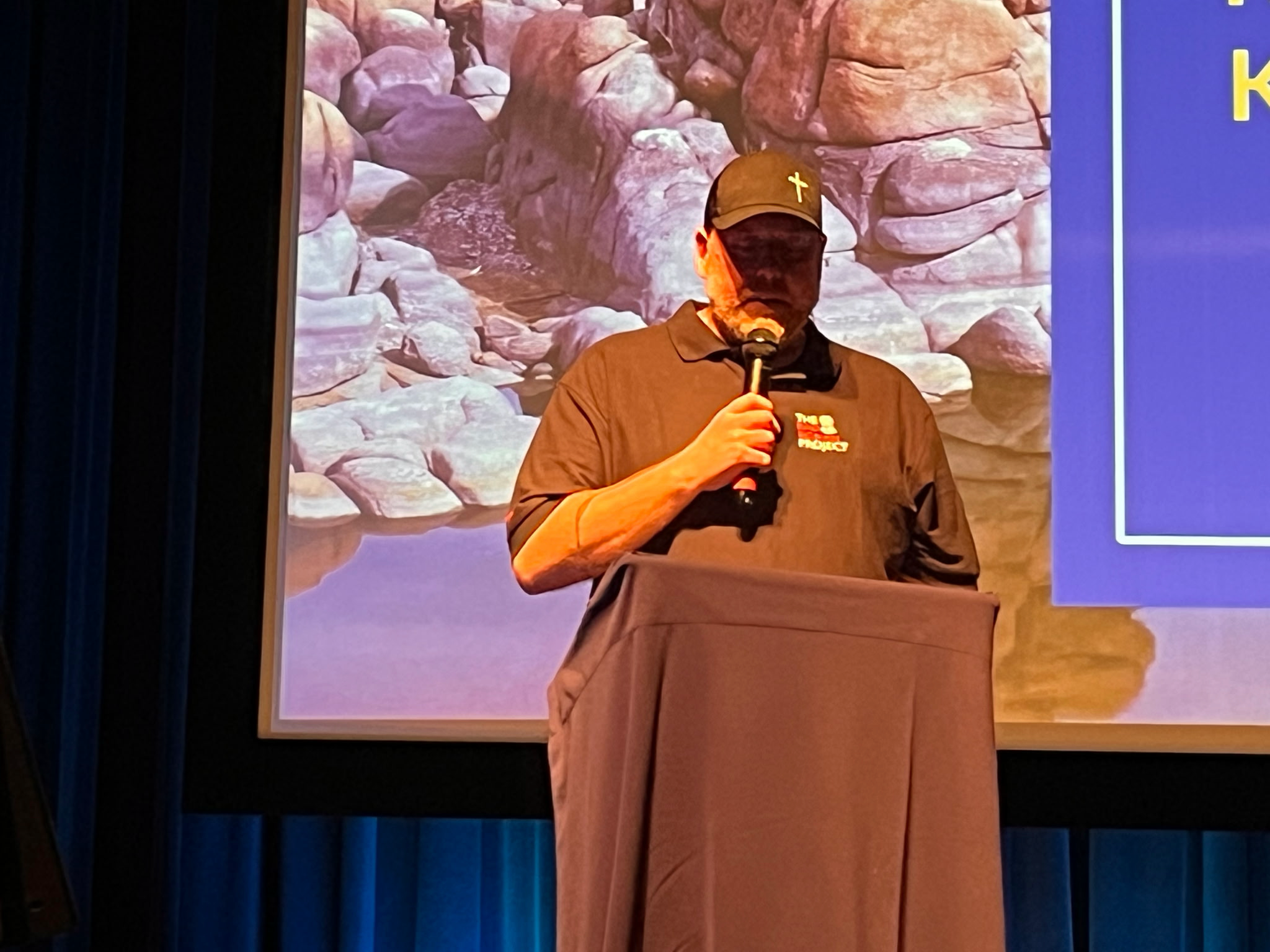
Craig on stage

Who told you that your neighbor who does not believe in God is your enemy?

Who told you that the Christian woman sitting in a church pew wants to control your life?

Was it actually your neighbor? Or was it someone on television who needs you angry enough to vote, donate, and choose a team?

The state depends on division. Without conflict, there is less fear. Without fear, there is less demand for control.

So the biggest questions we ask, ‘Is there a God? What does God want? How should we live?,’ get turned into legislation. Suddenly, we are no longer neighbors trying to understand one another. We are voting blocs fighting for control.

But what happens when we take political power out of the conversation?

How Disagreement Becomes a Weapon

Governments have always understood that divided people are easier to rule.

If we are fighting one another over religion, culture, and identity, we are less likely to look at the people collecting our money and expanding their power.

The process is simple.

First, pass a law about prayer in schools. Now Christians and atheists must fight over what other people’s children are allowed to hear.

Then pass laws that force one group to pay for choices the other group supports. Now private beliefs become public battles.

Finally, collect taxes from both groups while they blame each other for the conflict.

The state turns disagreement into a weapon and then sells us protection from the fight it helped create.

You may fear that your atheist neighbor wants to close your church. You may fear that your Christian neighbor wants to force you to follow her beliefs.

Maybe some people do want those things.

But they cannot force them on you without a government powerful enough to do it for them.

That is the real danger. We keep building a ring of power, then fighting over who gets to wear it.

What Happens When Nobody Gets to Rule?

The Bad Roman podcast has shown me that people with very different beliefs can sit together without trying to control one another.

We have talked with Christians, atheists, pastors, anarchists, libertarians, sheriffs, former political activists, and people who still participate in politics. Some guests would not enter a voting booth even if we offered them a lifetime supply of salsa.

We disagree.

Sometimes we disagree strongly.

We argue about God, morality, government, violence, and what happens after death. Then the recording ends, and nobody passes a law against the other person.

We shake hands. Sometimes we become friends. We remain neighbors.

Why?

Because there is no political prize on the table. Nobody gets to force the other person to bow after winning 51 percent of the vote.

All we have are our ideas, our words, and our willingness to listen.

That is not chaos. It is a conversation between human beings who are not trying to rule each other.

Where the Hatred Comes From

We have been trained to use the state as a missionary.

Christians are told that if we do not legislate morality, society will collapse.

Atheists are told that if they do not remove religion from public life, a theocracy will take over.

Both sides rush toward political power as if the next election is Armageddon.

But power does not care who controls it. It corrupts both sides.

That is why religious debates feel so threatening now. We are not only asking, “What do you believe?”

We are asking, “What will you do to me with the police once your side wins?”

Take away the power to force the other person, and the argument changes.

Now we are simply two people talking about whether God exists.

That conversation may be tense. It may never end in agreement. It may also become a friendship.

Put political force back into it, and the conversation becomes a war.

My Neighbor Is Not My Enemy

As a Christian, I believe Christ is King.

I also believe Jesus never asked Caesar to collect His tithe with a sword.

I have atheist friends who think I am wrong about the biggest question in the universe. They have still challenged me, sharpened my thinking, and made me better.

I may disagree with them about God, but I would still trust some of them with my house key and my cats.

Why?

Because Jesus did not tell me to build His Kingdom through tax codes, police, or political control. He told me to love my neighbor.

My neighbor does not need me to win a culture war. He needs me to tell the truth, keep my promises, respect his property, and listen when he speaks.

If your faith, or your lack of faith, needs the state to survive, it is no longer conviction. It is a subsidy.

Bad Roman does not exist to convert atheists by force or push Christians out of faith through law. It exists to show that we can have the argument without turning it into a cage match.

There Is a Third Option

The state tells us we have only two choices: dominate or be dominated.

Force your beliefs onto others, or wait for them to force theirs onto you.

That is a lie.

There is another option.

You do not rule me, and I do not rule you.

You can preach on a street corner. I can keep walking.

You can put up a billboard saying God is dead. I can disagree and drive past it.

You can raise your children according to your faith. Your neighbor can raise theirs according to a different belief.

We do not need permission from one another. We need to stop giving politicians the power to turn our disagreements into legal battles.

We can trade with one another. We can work together. We can argue over coffee instead of legislation. We can raise our children, bury our dead, and face God, or not, according to our own convictions.

Your atheist neighbor is not automatically your enemy.

Your Christian neighbor is not automatically your enemy.

The people who profit from making us fear one another need us to believe they are.

So stop attending the fight they arranged.

Go home. Share a meal. Start a podcast. Ask a question. Listen to the answer.

Love someone you disagree with.

Coexistence is not something the state creates for us. It is what we practice when we stop trying to rule one another.

No Gods Before Me: When the State Becomes a Rival King | What I Shared at Approaching Humanity

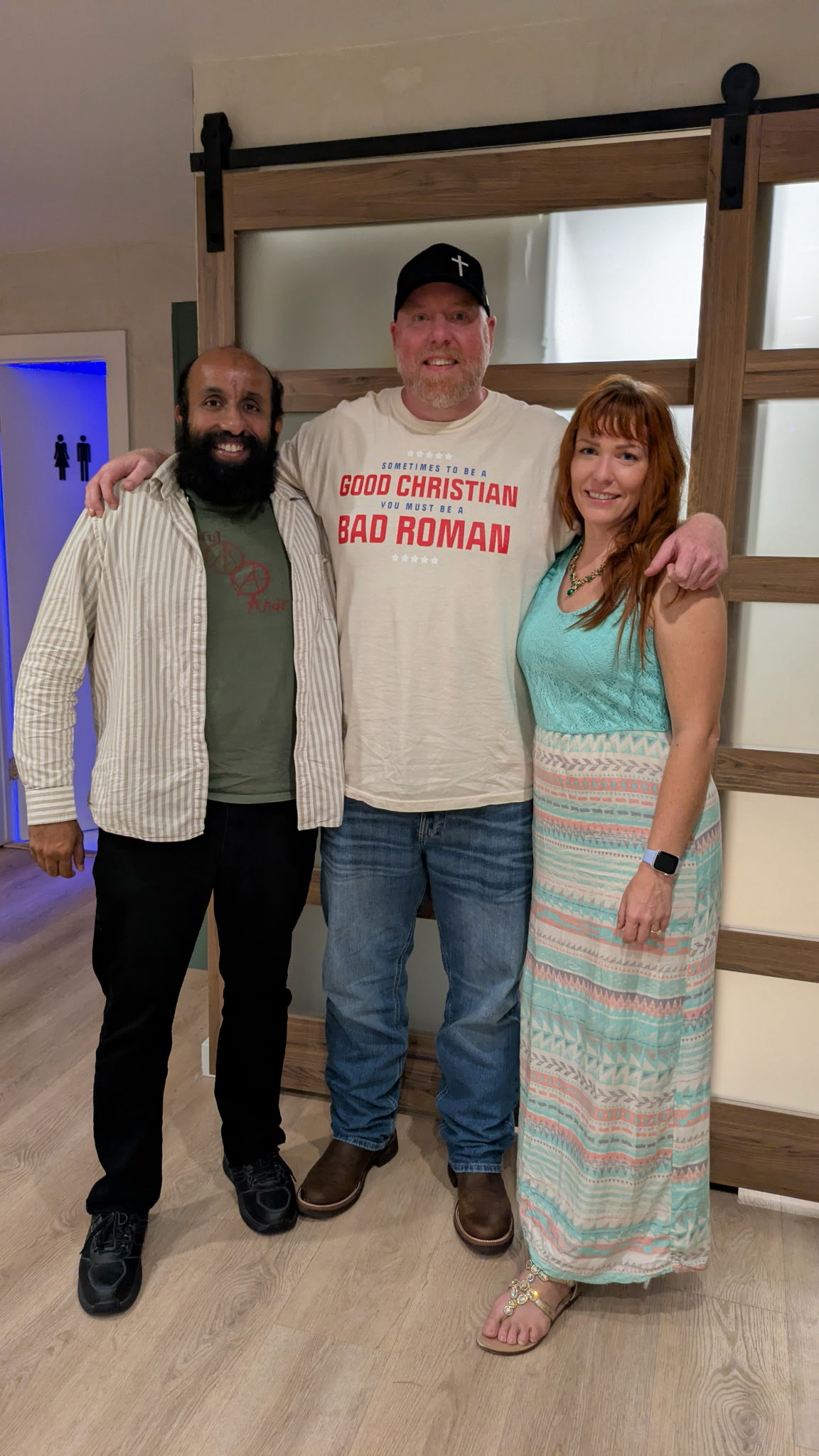
Craig with Larken and Amanada Rose

This was one of three talks I gave at Approaching Humanity, a conference hosted by Larken and Amanda Rose. We gathered to question coercion, authority, fear, and the systems that keep us from seeing one another as fully human.

I began by asking who in the room was Christian, who had left Christianity, and who had never claimed a religious faith.

I asked because this message cuts in every direction.

You may still call yourself a Christian. You may remember when you did. You may have never believed any of it. Either way, I wanted us to look honestly at one uncomfortable question:

Can we say Jesus is King while giving our loyalty to the state?

When the State Becomes a God

Exodus 20:3 says:

“You shall have no other gods before me.”

We often imagine a god as a statue or an ancient idol. But a god can be anything that receives our highest loyalty, our sacrifices, our fear, and our trust.

So what do we give the state?

We pledge allegiance to its flag. We give it part of our labor. We send our children to fight its wars. We accept its claim that it may regulate us, punish us, imprison us, and control our neighbors.

When we are afraid, we ask it to protect us. When we are struggling, we ask it to provide for us. When society feels broken, we wait for the next politician to save us.

At some point, we have to ask whether this is still just government.

When an institution demands our loyalty, sacrifice, fear, and faith, it begins to act like a god.

And if Christ is King, Washington, D.C., is not.

That is where The Bad Roman Project began for me. It did not begin with a desire to improve politics. It began with a theological crisis.

If Jesus truly sits on the throne, no president, political party, government agency, or nation can sit beside Him.

Are We Asking Caesar to Rule Our Neighbors?

I also challenged the idea that voting is automatically a sacred Christian duty.

When we vote, we are not only sharing an opinion. We are helping choose who will rule our neighbors, tax them, regulate them, and punish them when they refuse to obey.

We may hope our ruler will be kinder than the last one. We may call our choice the lesser evil. But we are still asking Caesar to rule.

In 1 Samuel 8, Israel demanded a king so it could be like the other nations. God warned the people that the king would take their sons, daughters, land, crops, and labor.

They asked for a king anyway.

We still face that temptation. We say Christ is King, but every election season we search for another ruler to protect us, defeat our enemies, and save the country.

The Flag and the Cross

I also asked us to think about the Pledge of Allegiance and the place national symbols hold in Christian life.

Allegiance means loyalty to a sovereign.

Can we promise that loyalty to a nation while saying Jesus is our only King?

Nations rise and fall. The Kingdom of God does not.

The flag represents a system maintained through laws, borders, taxation, prisons, armies, and force. The cross reveals a King who loved His enemies and gave His own life rather than taking theirs.

Those are not the same story.

We cannot simply place the cross above the flag and assume the problem is solved. The First Commandment does not say we may keep smaller gods as long as God remains at the top.

It says no other gods.

No King but Christ

Christian anarchism is not a call for chaos. It is a refusal to treat one person as the rightful ruler of another.

If Christ is King, no politician is.

Living that belief means we stop expecting the state to do the work Jesus gave us.

We feed hungry people directly. We care for families. We teach our children. We help our neighbors. We protect the vulnerable through relationships, generosity, and voluntary community.

Leaving electoral politics does not mean doing nothing.

It means replacing political action with Kingdom action.

We do not need to wait for a law before we love someone. We do not need a government program before we serve. We do not need permission from Caesar to obey Christ.

Scripture repeatedly asks us to choose whom we will serve.

We cannot have two kings. We cannot give ultimate loyalty to both Christ and Caesar. We cannot ask the state to become our protector, provider, and messiah while claiming that we place no gods before God.

No King but Christ is not merely a slogan. It is a call for you and me to live as though the First Commandment still means what it says.

The Early Church and the Foundations of Voluntaryism (Christian-Anarchism)

During the course of The Bad Roman project, I have become fascinated by the early church, and when I say early church, I’m talking about the first 300 to 400 years prior to Constantine. I am a full believer that we, as the church, should return to that old-time religion. When I say that, I don’t mean back in the 50’s and 60’s; I mean the true intent of the early church. So what I want to do with this article is show proof of the early church’s Anarchist actions. 

If you have followed our project for any amount of time, then you will be familiar with my stance, but this article isn’t for me, it’s for you to decide on your own. If we are to take the teachings of Christ seriously, then we should lean on the understanding of the folks who were a lot closer to the situation than we'll ever be. Yes, we have the Bible, which is a great resource in regards to following Christ, but what happened, and what was said beyond the Bible? Thankfully we have a wealth of information from those folks who were there. I will include a list of books I have read that helped me put this article together at the end so that you can check them out for yourself. We will look at several writings from those who witnessed  it first-hand and, in the case of Polycarp, endured persecution to the point of death.


We will start with Polycarp (69-156), who by all accounts, was taught directly by the Apostle John, giving him some significant credibility. Polycarp was a No King but Christ, Jesus-centric disciple. The torture of Polycarp by the state is pretty graphic in Arnold’s book, but it is necessary to understand just how devoted he was to Jesus; he knew without a doubt He is his King. Prior to his eventual arrest and torture, Polycarp immediately ordered food to be served to those arresting him, and they still took him to the proconsul.  Polycarp was “cut by scourges until the anatomy of [his] body was visible, even to the veins and arteries, [he] endured everything.” Here is where it gets more interesting. They tried like hell to get him to deny his faith, but he was stoic and did not comply.

I am not willing to do what you advise me.

They pushed him further,

Swear and I will release you! Curse Christ!

This is my favorite part….

Eighty-six years have I served him, and he has never done me any harm. How could I blaspheme my King and Savior?

This is a mic-drop moment for me! He clearly states who his King is, and it dang sure isn’t Caesar! They ended up trying to burn him to death, and when the fire didn’t consume him, they stabbed him to death.

Are you convinced of the Anarchist mentality of the early church yet? No? Let's continue.

Origen (185-254) is very interesting to me. Whenever we quote him on social media, the first pushback we get is “well, he was a universalist”, which is used as a pejorative and has absolutely nothing to do with his Jesus-centric understanding of the state. Origen was a student of Clement of Alexandria (150-215) and widely understood to be the most prolific writer of the pre-Nicene church, dictated around two thousand works. There is some controversy about Origen among modern scholars. They suggest that he did not oppose properly undertaken wars, but if you dig deeper into his writings that just doesn’t seem to be the case. One very important statement by Origen should put all of that to rest. He says, “if all the Romans become Christians, they will not war at all…. Christ forbade the killing of anyone.”

What I want to focus on with this article is the early Christian’s view of the State, and there are a couple of statements by Origen that should be heard loud and clear.

To those who ask us whence we have come or who we have for a leader, we say that we have come in accordance with the counsels of Jesus to cut down our warlike and arrogant swords of argument into ploughshares, and we convert into sickles the spears we formerly used in fighting. For we no longer take sword against a nation, nor do we learn any more to make war, having become sons of peace for the sake of Jesus, who is our leader, instead of following the ancestral customs in which were strangers to the covenants.

There is one key point in this quote that needs to be recognized, which is why I shared it. Origen made it clear who our leader is, and it is without a doubt Jesus. I absolutely love the No King but Christ in this message.

This next statement from Origen comes from his work titled Against Celsus. For context, Celsus was a 2nd century Greek philosopher and opponent of early Christianity. This statement is so much fun for me.  It really drives home the point of how the early Christians worked on the fringes of society, having no interest in engaging with political processes. 

The Christians form among themselves secret societies that exist outside the system of laws...an obscure and mysterious community founded on revolt and on the advantage that accrues from it.

Now that statement may raise some eyebrows because the word “revolt” is used, but think about what that means. It wasn’t a violent revolt like so many of us are accustomed to understanding; it was a peaceful revolt against the evils of the State. They just did not dirty their hands with these evils.

Now, let me tell you about my guy Tertullian (155-220). His writings have probably had the most influence on how I approach the Bad Roman project. When we started, we understood that we would be in your face about what we believe when it comes to #nokingbutchrist and love you along the way. So, if you want to understand why I approach this project the way I do, then read some Tertullian. No nonsense, and it really is what it is. His approach to the Roman Empire is absolutely fascinating to me and is seriously missing in the church today. 

Bercot’s description of Tertullian is spot on; he writes, “Fiery Christian writer in Carthage, North Africa” 

I love learning about these folks. The older I have gotten, the more interested in history I have become, and the history of the early Church is no exception. I feel like I was probably born in the wrong era, haha, but I’m thankful we have writings to lean on to get a sense of exactly what was going on back then. I said all of that to give a little background on Tertullian.

He was born into a pagan family in the city of Carthage, which was one of the four largest cities of the Roman Empire. He was very well educated in rhetoric, philosophy, law, and medicine. He worked for a time in Rome as a jurist and returned to Carthage. His conversion to Christianity is somewhat of a mystery but boom! He burst onto the scene with his writing Apology, from which the following texts are taken.

“We are charged with being irreligious people and, what is more, irreligious in respect to the emperors since we refuse to pay religious homage to their imperial majesties and to their genius and refuse to swear by them.

High treason is a crime of offense against the Roman religion. It is a crime of open irreligion, a raising of the hand to injure the deity… Christians are considered to be enemies of the State, enemies of the public well-being… In dealing with religious veneration of the second majesty, we Christians are accused of a second sacrilege because we do not celebrate the festivals of the Caesars among you.

We wage a battle when we are challenged to face the tribunals of law. There, in peril of life, we give testimony for the truth. Guards and informers bring up accusations against the Christians as sexual deviants and murderers, blasphemers and traitors, enemies of public life, desecrators of temples, and criminals against the religion of Rome. Look, you do not deal with us in accordance with the formalities of criminal cases even though you consider the Christian guilty of every crime and an enemy of the gods, emperors, laws, morals; yes, of the whole nature. “You do not,” so they tell us, “worship the gods, nor do you make sacrifices to the emperors.” Accordingly, we are charged with sacrilege and high treason. We are publicly accused of being atheists and criminals who are guilty of high treason.

Wow! Does this show you anything like what we see today? Don’t you wish people would call out the state worship that happens in churches today, just like this? Tertullian was well aware of the religion of the State, also known as statism.

In us, all ardor in the pursuit of glory and honor is dead. So we have no pressing inducement to take part in your public meetings. Nor is there anything more entirely foreign to us than affairs of state.

This quote is interesting to me because he makes it clear that the affairs of the state are entirely foreign to him and certainly should be for professing Christians. Let’s move on to more Tertullian…

All the powers and dignities of this world are only alien to, but are enemies of God. Through them, too, penalties prepared for the impious are ignored.

I’m not sure anything else can be said with regard to the state, but there is one more Tertullian quote I would like to share. This one may be my favorite…

I owe no duty to forum, campaign, or senate. I stay awake for no public function. I make no effort to occupy a platform. I am no office seeker. I have no desire to smell out political corruption. I shun the voters booth, the juryman’s bench. I break no laws and push no lawsuits; I will not serve as a magistrate or judge. I refuse to do military service. I desire to rule over no one- I have withdrawn from worldly politics! Now my only politics is spiritual- how that I might be anxious for nothing except to root out all worldly anxieties and care.

If these examples aren’t convincing you of how a Christian ought to relate to the State, then how about the very words of our King? Who outright rejected Satan’s temptation in Matt 4:1-11. Jesus had the biggest mic drop ever regarding this topic, and as Christians, isn’t He our ultimate example?

Were the early church Anarchists? From my understanding, I would conclude that the early church was indeed anarchist, but labels don’t matter much. What is certain, is that they knew exactly who their King is. In the end, that is the only thing that matters. Choose this day whom you will serve (Joshua 24:15). #nokingbutchrist 

There is so much more I could have put into this article. If you are interested in reading more about the early church and its beliefs, here are some book suggestions:

  1. The Early Christians In Their Own Words by Eberhard Arnold

  2. The Early Church on Killing by Ronald J. Sider

  3. A Dictionary of Early Christian Beliefs by David W. Bercot

  4. The Christians As The Romans Saw Them by Robert Louis Wilken

  5. Liberty in the Things of God by Robert Louis Wilken

Love y’all,

Craig Harguess

The Bad Roman FAQs

There are several questions that come up from folks new to our project, and I’m hoping to answer all of these questions here. Though I will add, I love the questions and by no means want them to stop, so please keep them coming!

“Craig, what are you doing? What is your reasoning behind The Bad Roman Project? What exactly is your goal? Why do you feel the need to express such an opinion to people who may not be on board? Are you concerned with alienating friends and family?” 

The Bad Roman Project is pushing on two years old now. After a conversation I had with Michael Storm, on his show Toward Anarchy, and a series of articles written by Nathan Moon for our blog, I have been inspired to answer the above questions in this article.

Let’s turn the world’s thinking upside down…

“Craig what are you doing?”

In short, I’m just trying my best to love my neighbor. As many of you already know, I spent the majority of my time as an active neo-conservative voter. As my understanding of how Anarchism works, and how it aligned with my faith grew, it hit me like a punch to my throat. “Oh, peace is what Anarchism espouses?” Well, that idea really threw a wrench in my neo-con understanding of politics. Living peacefully among other individuals was something secular, so why were non-secular Anarchists talking about it?

In my neo-con days I already knew, but actively chose to ignore, that peace was what Jesus is about and what He calls us to. I was so entangled by statism that my thinking probably went a bit like this: “Peace...huh?! We will have none of that, we have to make the sand glow to promote freedom and liberty abroad...right? I mean if Ted Cruz says so it has to be the case, right?” 

As I moved away from the political arena, I realized the consequences of my involvement, what I did was turn back to my Christian teachings and I realized very quickly in my journey to Christian-Anarchism just how wrong I was. The Bible is full of Jesus saying love your neighbor, how was I able to ignore that this whole time? These days I go by what Jesus says, not Ted Cruz, and Jesus says to love your neighbor. That is what I am doing.

“What is your reasoning behind The Bad Roman Project?”

This project was born out of my growing frustration with Christians, more specifically, their worship of Donald Trump in the 2016 election is the driving force behind why we started this project two years ago.

Do you remember when Obama was running for president? Do you remember the deity status he was given? I remember vividly because it was something I pointed out continuously while rooting for John McCain (God forgive me).

Why is this relevant? In the 2016 election, Trump was also made into a deity, this time by the right, and, in my opinion, the deification of Trump was and continues to be far worse. Obama will always be a deity to the Democrat party, but his following is minuscule relative to what I, and many others, saw with Trump. I couldn’t believe what I was witnessing among “conservatives” and their support for Trump. Imagine a “conservative” presidential candidate saying “the constitution is not always relevant”.

Even more concerning, as a Christian and Conservative, was when Trump declared: “I’ve never had a reason to ask God for forgiveness,” and this statement was completely ignored by professing Christians! Their response instead: “Well he is the lesser of two evils” and “not Hillary” were the battle cries. I knew I could not be the only Christian who wanted a better solution than choosing between two evils, I wanted to follow Jesus and this is what the Bad Roman Project aims to explore.

“What exactly is your goal?”

This is very simple for me and everyone involved with the project: No king but Christ. 

I have taken the absolute stance as a Christian that there is no king but Christ. Who is your king? Does your king have a letter by his or her name on a ballot? As a Christian, I realized I belong to a different kingdom and this is the ultimate goal of The Bad Roman Project, to be ambassadors for Christ within whatever nation-state we find ourselves in: No King but Christ. 

“Why do you feel the need to express such an opinion to people who may not be on board?”

I know this will sound cliche, but I love people. I’m not one to claim to know everything, but if I am able, through this project, to help fellow Christians, who may be where I was politically, return to a Jesus centric way of living, or at least plant the seed for it then I will be content. That is it. We do this for people who are seeking conversations not being had in mainstream media and for those who have questions about how their faith aligns with their politics.

“Are you concerned with alienating friends and family?”

This question has been tough for me because it has happened. I didn’t set out to alienate anyone but it has become an unfortunate byproduct of starting this project. That being said, yes it concerns me and I have been, at times, been reserved in conversation on purpose to avoid further alienating folks. But, at the same time, I won’t reserve my comments to caudle feelings when asked my opinion. I don't think it is fair to anyone if I feather my answers to any question. Anyone who knows me knows I'm honest in what I believe and it has cost me some very important friendships. And you know what? I’m ok with that. The truth seriously sets you free. It's not popular but it's indisputable and consistent. My focus is always on Jesus, and he never promised things would be easy, or he would not have said “love your enemies.”

Turn the world upside down.

Love yall,

Craig Harguess

It’s Time to #Refocus

Folks, it is time to #refocus. We are living through a period of time filled with events that the majority of us have never experienced. It is a time when friends have become foes. It is a time when families have become disconnected. It is a time when employees have been pitted against the employer. It is a time when children have been separated from their friends. It is a time that division has become the norm, and I think it is absolutely intentional by the “powers that be.” 

Now, don't get me wrong, I understand that people have been divided on different issues throughout history, but this is different. It feels different. Maybe social media makes it seem more than what it is? But, I don't think so. 

I remember talking with my mom leading up to the Trump/Biden showdown and she made a comment that was interesting to me. She said, as a child, her parents (my sweet Nana and Granddaddy) never discussed politics and if they did it certainly wasn't around the kids. Mom lived through the Civil Rights Movement and, even then, it wasn't as in your face as we see today. I don't say this to discourage parents from talking with their children about politics, rather I want to encourage it, especially from those of us who value freedom for our children. It is certainly a better option than public schools teaching our kids about politics. Folks, it is time to #refocus.

We see so many people scattered right now and who could blame them? It is a confusing time for everyone and folks want guidance. We want someone to make this insanity make sense, and the go-to, it seems, is the State. Since the inception of man-made governments, people have looked to them for guidance no matter despite the countless atrocities they have committed throughout history. But why? It reminds me of a quote attributed to Albert Einstein: 

“The definition of insanity is doing the same thing over and over and expecting different results”

It is time to #refocus. 

But where does this confusion come from? Confusion is from a lack of understanding and uncertainty. What drives uncertainty? Simply, fear, the unknown. Fear has a way of putting us in handcuffs with no way out. I suffer from extreme claustrophobia and just the thought of covering my face with anything freaks me out to no end, so you can only imagine the battles I have fought through these past few months. Creeping through a parking lot to make sure someone else isn't covering their face so I don't have to explain this very strange phobia that many don't understand. Did God create me with this phobia? I don't know, but I do know it is real. 

I also know that it was never a fear that affect anyone else until all of this started; it was just a thing that I never had to explain. When I think of fear in my life, I think of my baby brother TJ who died last year, something I will never stop talking about. TJ was terrified of this virus and took every precaution the State insisted on. He didn't die from Covid but the fear instilled by corporate media and the State forced him into self-isolation and he drank himself to death. I bring this up because fear needs to be recognized, where it comes from and its power over us. Fear, certainly, isn't from Jesus.

“I sought the Lord, and he answered me and delivered me from all my fears. Those who look to him are radiant, and their faces shall never be ashamed.” 

Psalm 34:4-5

It is time to #refocus

Before I continue, I want to make it clear, I am not only speaking to the reader of this article but to myself as well. I am just as guilty of this. To this day I listen to a lot of politically charged podcasts, and our own podcast could be lumped into that as well, which honestly is what got me to thinking over the last few days before writing this. I will not discourage folks from listening or paying attention to what is happening politically because it absolutely has an effect on each and every one of our lives. It is important to be informed. I say all of the time that “willful ignorance is the worst kind of ignorance”.

Ignorance in itself isn't bad, it just means you don't know. Willful ignorance is intentional. One recurring theme I have noticed while listening to these shows is “we need to work through the system to make this insanity make sense”. 

I’m not down with that, especially as a Christian. People are straining to hear the whisper amongst the screaming. People are seeking some hope while navigating the insanity. We know where that hope is, and it certainly won't be found in the halls of Congress or any Governor's mansion. That hope has and will continue to be found with Jesus. 

“I am the way and the truth and the life”  

John 14:6

Jesus is the most consistent King this world has ever seen, so why do so many Christians revert their faith back to the State? Don't get me wrong, I understand the allure. It is very tempting to work through the State to preserve Liberty but that's all it is, a temptation.

“And the devil took him up and showed him all the kingdoms of the world in a moment of time, and said to him, to you I will give all this authority and their glory, for it has been delivered to me, and I give it to whom I will. If you, then, will worship me, it will all be yours. And Jesus answered him, it is written, You shall worship the Lord your God, and Him only shall you serve”

Luke 4:5-8

Some of you may be saying, “well that just isn't practical today, lives are at stake!” Yes, I agree, lives are at stake! Liberty is fleeting! But where does life come from? Where does Liberty come from? One of my Bad Roman Project cohorts who has been with us from the jump is Abby Cleckner, and her favorite verse on Liberty is extracted from Galatians:

“Stand fast therefore in the liberty by which Christ has made us free, and do not be entangled again with a yoke of bondage." 

Galatians 5:1

One retort I get when mentioning this verse is, “well Paul is clearly talking about sin”, and I reply, “Of course he is. Check out 1 Samuel 8. When Israel demanded a king did God not see that as a rejection of Him? Is it not a sin to reject God? Paul talks about “yoke of bondage” go read 1 Samuel 8 again and God lists everything that will happen when we demand a king”.

 It is time to #refocus.

People are hurting. People are confused and scattered. People are seeking some consistency, and people are seriously seeking some hope. As Christians, we know where that hope is. Live a life that makes people ask you questions about why you aren't worried about government edicts. 

“Therefore I tell you, do not worry about your life, what you will eat or drink; or about your body, what you will wear. Is not life more than food, and the body more than clothes? Look at the birds of the air; they do not sow or reap or store away in barns, and yet your heavenly Father feeds them. Are you not much more valuable than they? Can any one of you by worrying add a single hour to your life?” 

Matthew 6:25-27

Our guy Jesus dropped some truth bombs. It is time to #refocus

Love y’all,

Craig Harguess

Constitutional Crisis: The Real Virus

My progression towards Anarchism began when I started studying the founding documents and the other writings by the authors of The United States Constitution. Little did I know that I was on a path that would turn my understanding of the political world upside down.

The Constitution is the document that outlines how the government is to establish and maintain its legitimacy and restrict it’s authority. The first ten amendments, known collectively as the Bill of Rights, are supposed to secure and protect our Liberty. Do I believe the Constitution has been proven ineffective? Yes. Do I believe if the Constitution was actually followed we would be in a better situation than we are today? Yes. Does this mean the constitution should be regarded as some God given authority? Absolutely not! It is probably best recognized as a rule book ratified by the States to create the Federal government. 

At the time of this writing, we are in a crisis, and that crisis is not Covid-19. We are in a Constitutional crisis. We are in a Loss of Liberty crisis.The Bill of Rights is being stripped right before our eyes, and it is happening with thunderous applause from Americans. I expect pushback from other Anarchists and Statists alike for this article and that's fine. Both will say, why do you care what the Constitution says--you are an Anarchist.

There is a very simple explanation for that and it goes something like this: I believe Anarchists have a real responsibility to have a working knowledge of the United States Constitution, because with it we can point to the numerous violations of the Constitution committed by the government in conversation with both Statist and non-Statist.

We will never convince a Statist that Anarchism is preferable to a centralized government without being able to point out the violations of our Liberty the federal and/or state governments  have and continue to commit. To do this we as Anarchists need a working knowledge of the Constitution--without that, Statists will continue to disregard our attempts at pointing out how a Voluntary society is preferable to a society that relies on a centralized government. 

Before we continue

I need to preface the rest of this article with this: my understanding of the Constitution is from an originalist point of view. I have no interest in Supreme Court rulings that are meant to determine the constitutionality of laws passed by Congress. Thomas Jefferson was adamant about who the final arbiters of the Constitution were and it is We the People. Not someone adorned in a black robe.

He made this clear in many letters written about his concern for Judicial tyranny.

“If [as the Federalists say] “the judiciary is the last resort in relation to the other departments of the government,”..., then indeed is our Constitution a complete felo de so. … The Constitution, on this hypothesis, is a mere thing of wax in the hands of the judiciary, which they may twist and shape into any form they may please. It should be remembered, as an axiom of eternal truth in politics, that whatever power in any government is independent, is absolute also; in theory only, at first, while the spirit of the people is up, but in practice, as fast as that relaxes. Independence can be trusted nowhere but with the people in mass. They are inherently independent of all but moral law…”

Letter to Judge Spencer Roane, Nov. 1819

“The judiciary of the United States is the subtle corps of sappers and miners constantly working underground to undermine our Constitution from a co-ordinate of a general supreme one  alone. This will lay all things at their feet… I will say, that” against this every man should raise his voice,” and, more, should uplift his arm…”

Letter to Thomas Ritchie, Sept. 1820

The oath

Politicians of all parties, police officers, and soldiers in the military all swear the same oath to protect and uphold the Constitution.This oath makes it  necessary to understand the original intention behind the Constitution, the same intention that is being violated daily by those who swear an oath to it. 

I completely agree with Lysander Spooner’s assessment of the Constitution, when he says:

"...whether the Constitution really be one thing, or another, this much is certain - that it has either authorized such a government as we have had, or has been powerless to prevent it. In either case, it is unfit to exist." 

And to quote my favorite founder, Patrick Henry, who himself refused to sign the Constitution:

“It is said eight states have adopted this plan. I declare that if twelve states and a half had adopted it, I would, with manly firmness, and in spite of an erring world, reject it….Will the abandonment of your most sacred rights tend to the security of your liberty? Liberty, the greatest of all earthly blessing- give us that precious jewel, and you may take everything else!”

Virginia Ratifying Convention June 5, 1788

That being said I still believe we should have a working knowledge of the Constitution. We have to, as Anarchists, be capable of pointing out to someone when they are defending government actions that violate the Constitution. People are waking up to our awful situation, but they need some direction. The Constitution isn't difficult to understand, especially if you approach it by reading what was put down in various State responses.

James Madison served as one of the chief architects of the Constitution and championed the Bill of Rights. He took extensive notes of the proceedings of the Federal Convention and insisted that the document be interpreted according to the understanding of its ratifiers. He believed the records of the state ratification conventions provided the best evidence of the Constitution's original meaning, saying:

“Whatever veneration might be entertained for the body of men who formed our Constitution, the sense of that body could never be regarded as the oracular guide in expounding the  Constitution. As the instrument came from them it was nothing more than the draft of a plan, nothing but a dead letter, until life and validity were breathed into it by the voice of the people, speaking through the several State Conventions. If we were to look, therefore, for the meaning of the instrument beyond the face of the instrument, we must look for it, not in the General Convention, which proposed, but in the State Conventions, which accepted and ratified the Constitution.”

How’s the Constitution today? Let's examine the 1st amendment  

“Congress shall make no law respecting an establishment of religion, or prohibiting the free exercise thereof; or abridging the freedom of speech, or of the press; or the right of the people peaceably to assemble, and to petition the Government for a redress of grievances”

We are witnessing this amendment being violated by governors and law enforcement officers alike, both of which, we should remember, have taken oaths to uphold this “sacred” document . For instance, look at the pastor in Tampa who was arrested for holding a church service or the multiple reports of folks being given citations for hanging out with family and friends. One such example is a father being detained for playing catch with his 6 year old daughter in a Colorado park.

Let's examine the 4th amendment

“The right of the people to be secure in their persons, and effects, against unreasonable searches and seizures, shall not be violated, and no Warrants shall issue, but upon probable cause, supported by Oath or affirmation, and particularly describing the place to be searched, and the persons or things to be seized.”

In Rhode Island, the governor announced that the national guard will be conducting house to house searches to hunt down New Yorkers seeking refuge in their state. In addition, Rhode Island police officers will be pulling over every vehicle they see with a New York license plate.  This order was rescinded due to a lawsuit threatened by NY governor Cuomo, which in itself is laughable considering his continued violations of the 4th amendment

Let's examine the 5th amendment

“No person shall be held to answer for a capital, or otherwise infamous crime, unless on a presentment or indictment of a Grand Jury, except in cases arising in the land or naval forces, or in in the Militia, when in actual service in time of War or public danger; nor shall any person be subject  for the same offense to be twice put in jeopardy of life or limb; nor shall be compelled in any criminal case to be a witness against himself, nor be deprived of life, liberty, or property, without due process of law; nor shall private property be taken for public use, without just compensation.”

“Due Process” is defined by the legal requirement that the state must respect all legal rights that are owed to a person. Upon examination of this article, we should be able to admit that every stay-at-home order and business obliged to close due to state-force clear violation of the 5th amendment.

We have a real opportunity as Anarchists here 

Our rights are not suspended due to a pandemic and with a working knowledge of the Constitution, we as Anarchists/Voluntarists can begin to point out the multitude of violations the state has made against its own rules. 

Before we can begin to point out what a free society could look like, we must meet people where they are. Your average American will not take the time to research the original intent of the Constitution, but will choose to listen to what their favorite politician or mainstream media outlet says regarding the content of the Constitution, making it even more important to have this type of knowledge.

I applaud anyone who can help point folks to Liberty without pointing out the many contradictions and violations of the state. Studying the constitution has allowed me to better explain the infringements being made on our individual and collective rights, both as Americans and, for many of you reading this, Christians. 

Love Y’all!