Sometimes we say we follow Jesus… but we still want a “strong guy” to save us. We want someone who will fight, punish our enemies, and “fix the country.” But what if that hope is closer to Barabbas than to Jesus?
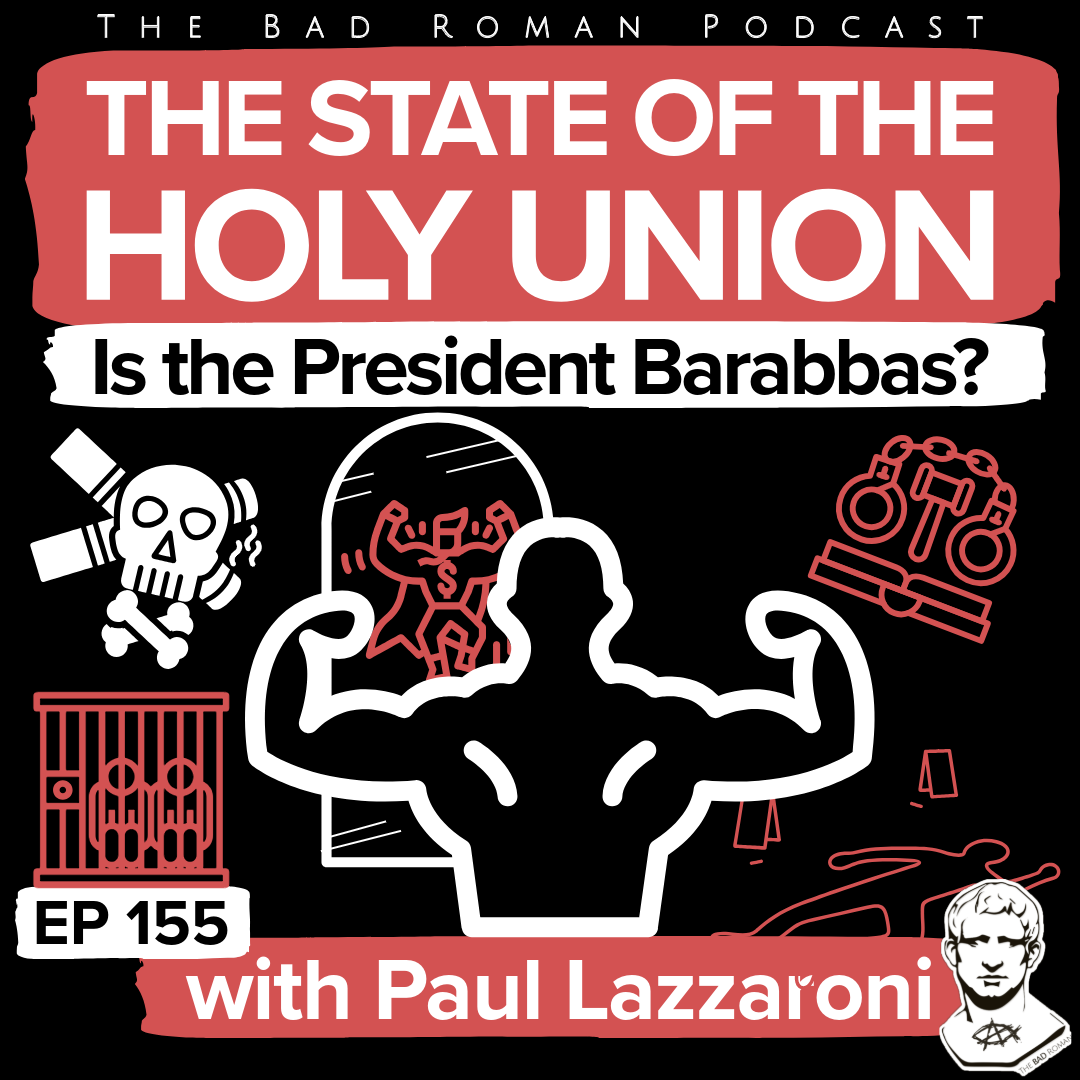
In this episode, Craig talks with Paul Lazzaroni (Cross and Cornerstone / No King but Christ Network) about a big idea from Paul’s article, “Is Trump Barabbas?” The point isn’t mainly about one politician. It’s about a mindset. The crowd picked Barabbas. Someone tied to violence and revolt instead of Jesus. And if we’re honest, we can still want that kind of “savior” today. So we ask: Are we being shaped by the Kingdom of God… or by the kingdoms of this world?
The Barabbas Temptation
Barabbas wasn’t just “some other guy.” He stood for a certain kind of rescue: power, force, control. The kind of rescue that feels fast and strong.
Paul and Craig talk about how easy it is for Christians to drift into that way of thinking. We may not say, “Give us Barabbas,” out loud. But we can say it with our cravings. Craving a leader who will “win” for us, crush the “bad guys,” and make our fears go away.
Jesus doesn’t offer that kind of victory. He offers a cross. And that’s the problem… and the invitation.
When Politics Becomes Discipleship
Paul shares that he doesn’t vote and tries not to live inside political arguments. Not because he doesn’t care, but because he doesn’t want politics to become what shapes him. Craig comes at it from another angle: he’s loud about this stuff because he’s watching Christians tie their faith to state power, and it keeps hurting people.
Here’s one of the main questions underneath the whole episode:
If Jesus teaches enemy-love, mercy, and humility… why do Christians so often chase power, punishment, and control?
And another question:
When we say “we’re protecting our country,” are we protecting our neighbors, or protecting our own comfort?
God’s Slow Work: From Slavery Thinking to Freedom Living
Craig asks Paul to lay down some Bible groundwork, especially around Israel leaving Egypt and being formed in the wilderness. Paul’s point is simple: people who lived under slavery don’t suddenly know how to live free. They have to be healed. Re-trained. Re-shaped.
That changes how we think about Scripture and law. Instead of reading the Old Testament like “God’s dream is control,” Paul points toward a story of God patiently forming a people who learn justice, care for the vulnerable, and a different way to live together.
That matters today because Christian nationalism often sounds like Egypt thinking with Bible words:
“Force people to be good.”
“Control society.”
“Win at all costs.”
But God’s way is slower, and it looks a lot more like Jesus.
Modern Babylon: A Place or a Pattern?
The Bible uses “Babylon” as a picture of empire: a system that trains people to trust power, money, fear, and violence.
Craig and Paul ask whether America slips into acting like “a modern Babylon.” Not as a simple insult, but as a warning. Because Babylon isn’t only “out there.” It can be in us. It can shape what we think “safety” means. It can shape what we think “good” means. It can even shape what we think “Christian” means.
So we’re left with a hard but honest question: Are we trying to build God’s Kingdom… or are we helping Babylon feel holy?
The Kind of King We Keep Asking For
One of the hardest parts of this conversation is realizing this: we don’t only want safety. We often want control. We want a king who will make the world feel simple again: good guys vs. bad guys, winners vs. losers.
But Jesus keeps refusing to be that kind of king. He doesn’t grab power. He doesn’t build His kingdom with threats. He doesn’t save the world by hurting the “right people.” That’s why Barabbas is such a strong picture. Barabbas is the kind of “rescuer” the crowd understands.
Jesus is the kind they don’t.
So the question is not just, “Who do we vote for?” It’s, “What kind of king do we secretly want?”
Good News Has A Target
Craig and Paul circle back to a simple test that cuts through a lot of noise: Is it good news for the poor? For the oppressed? For the outsider?
Jesus’ mission isn’t vague. He doesn’t just say “be nice.” He announces freedom, healing, mercy, and justice. That kind of good news has real faces: the hungry, the prisoner, the immigrant, the exploited, the outcast. If our “Christian” politics mainly protects the comfortable and punishes the vulnerable, something is backwards.
This is where Christian nationalism gets exposed. It often sounds like “God and country,” but it doesn’t always sound like Jesus.
No King But Christ Means We Live Different
If we say “Jesus is Lord,” that can’t just be a slogan. It has to show up in how we treat people, how we talk about enemies, and what we’re willing to do without the government’s help.
“No King but Christ” doesn’t mean we stop caring about the world. It means we stop believing power is the savior. It means we stop acting like fear gets the final word. And it means we practice the Kingdom right now, small, real, local, and brave.
Not with a flag. Not with threats. Not with “winning.” But with the kind of love Jesus actually taught.
Highlights & Takeaways
The “Barabbas mindset” is wanting a savior who uses power and force instead of the way of Jesus.
This isn’t just about one politician—it’s about what we crave when we’re afraid.
If politics is shaping our hearts more than Jesus is, something is off.
God’s story in Scripture is often slow formation, not quick domination.
“Babylon” is an empire pattern—fear, control, and violence dressed up as “order.”
A good test: Is what we’re supporting good news for the poor, the oppressed, and the outsider? If not, it probably isn’t Jesus’ way.
Following Jesus means we don’t need a flag to tell us who we are.
🤝 Connect with Paul Lazzaroni 🤝
Cross and Cornerstone (Website / Blog + Articles)
C&C Facebook Page
No King but Christ Network (Paul’s work is featured there): nokingbutchristnetwork.com
Paul’s Personal Pages
Listen & Reflect
Listen: Pay attention to the moments where you feel the pull toward “we need a strong leader.” What emotion is underneath that: fear, anger, exhaustion?
Reflect: Where have we accepted the idea that “the state will love our neighbor for us”? What would it look like to take that responsibility back?
Read: Re-read Luke 23 (Jesus and Barabbas). Then read Matthew 5 (especially enemy-love). Ask: Which way looks more like my life right now?
Practice: Do one small, real act of love that doesn’t depend on elections: help someone, forgive someone, feed someone, show up for someone. Let Jesus shape your reflexes.
Episode Timestamps:
(0:00) Jesus or Caesar?
state power / coercion
violence vs cross-shaped love
allegiance, obedience, faithful resistance
(0:45) Meet Paul Lazzaroni
No King but Christ Network
Paul’s background + why he’s here
Cross and Cornerstone connection
(1:27) “Is Trump Barabbas?”
title as provocation
not about one person
Barabbas as symbol / warning
(2:20) The Barabbas Mindset
strongman savior instinct
fear → anger → control
“revolt for us” vs “take up your cross”
(8:36) Why Paul Doesn’t Vote
informed vs formed
political identity vs Kingdom identity
stepping back from the outrage machine
(17:57) Wilderness First
Exodus / slavery mindset
formation before “law”
Leviticus groundwork, God re-shaping a people
(47:30) Modern Babylon
Babylon as system / pattern
empire imagination
fear, control, violence dressed up as “order”
(47:57) Mindsets and Mimic Kingdoms
tribal belonging / “our team”
empire logic: power promises salvation
winning vs faithfulness, control vs Spirit
(53:33) What Is Cross and Cornerstone?
website + blog/articles hub
learning-in-public: what Paul’s studying + wrestling through
resources for folks not finding this in church
(55:32) Why “Cornerstone”?
rejected stone / Jesus as foundation
Paul’s story: rejecting, returning, grace
identity built on Christ, not empire
(57:16) Writing, Learning, Humility
learning through writing
“journey of humility”
Scripture forming us (not agendas)
Sit with Discomfort
If this episode made you uncomfortable, you’re not alone. That might be the Spirit pulling us away from the crowd, and back toward Jesus.
Related Episodes


Related Blog Post

