Leaving the Comfort of the Cell

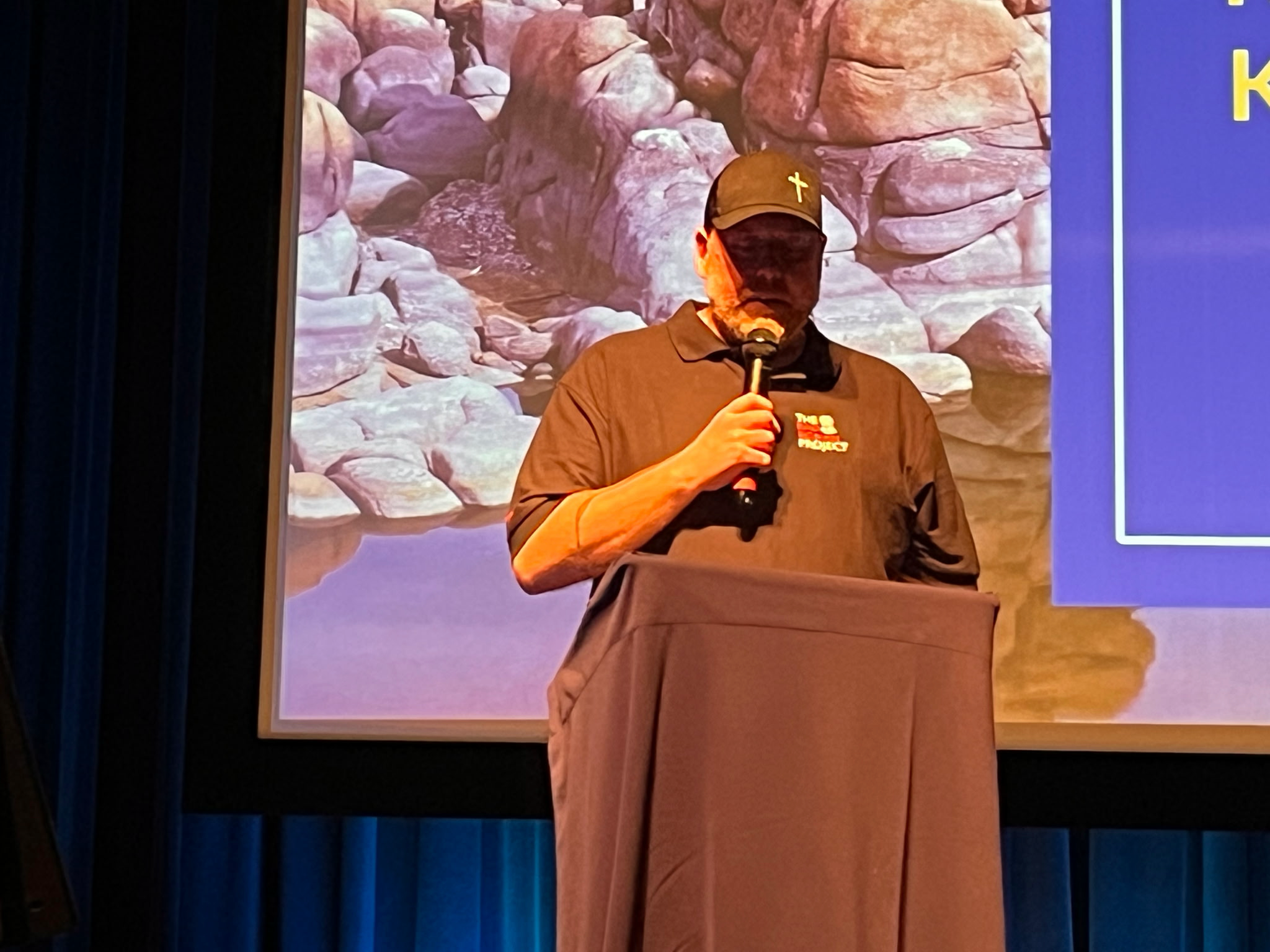
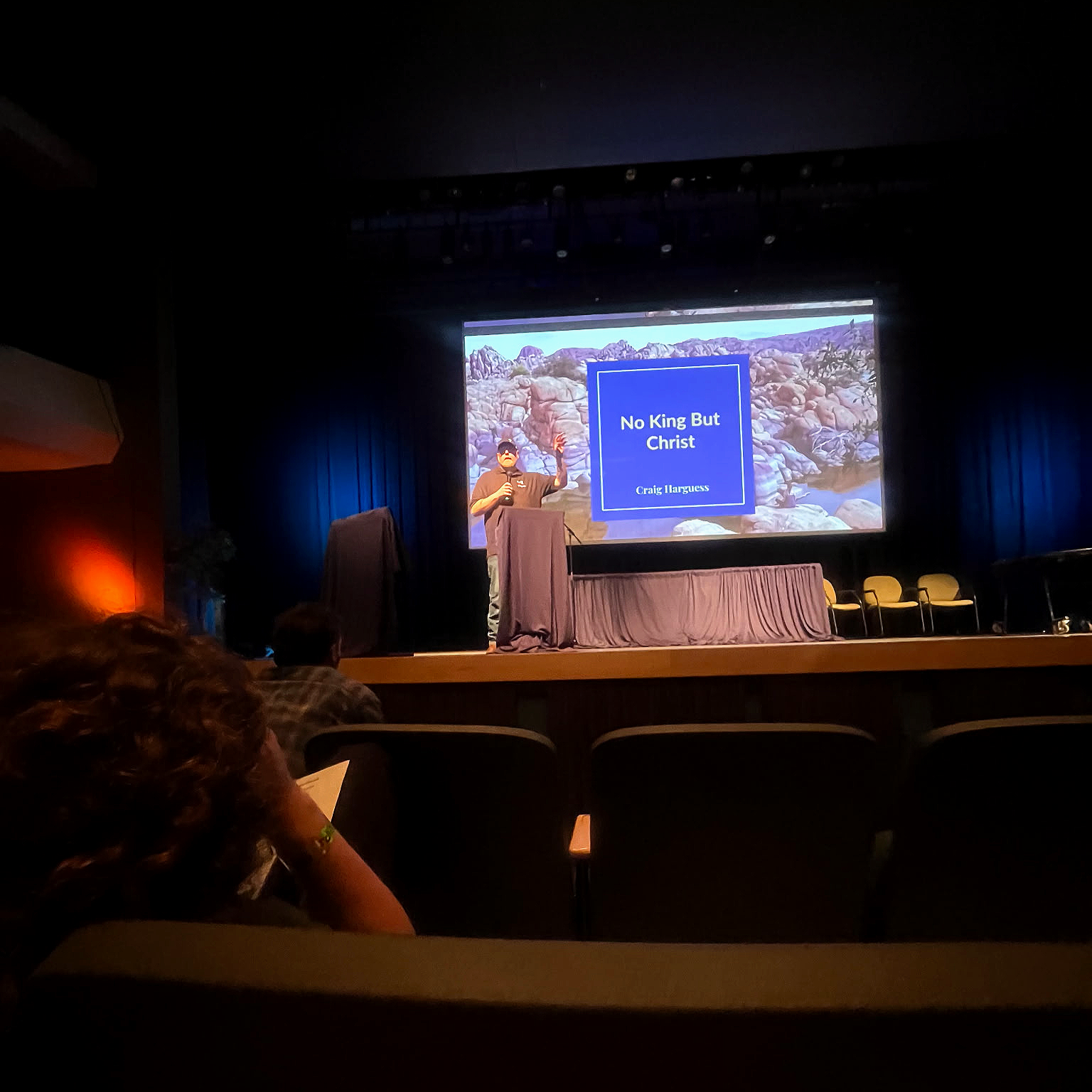
This was the final of three talks I gave at Approaching Humanity, a conference hosted by Larken and Amanda Rose.

I asked everyone to imagine a man who had spent 40 years in prison. One day, the warden opened his cell and told him he was free.

Instead of running out, the man panicked.

Where would he sleep? Who would tell him when to eat? What if he made the wrong choice?

So he begged to stay.

Not because prison was good, but because prison was familiar. Freedom was unknown.

We may laugh at that story, but many of us live the same way.

We say politicians are liars. We say the system is rigged. We complain about taxes, wars, debt, corruption, and broken promises.

Then election season arrives, and we line up to choose which rulers will control us next.

Why?

Because injustice we understand often feels safer than freedom we have never experienced.

Why the Cage Feels Safe

The state does not remain in power because it is always right. It remains because it is familiar.

We know what a tax bill looks like. We know what an election looks like. We know how government schools, courts, police, and agencies work.

We may dislike those systems, but we understand them.

A world without rulers leaves a blank space in our minds. We fill that space with images from disaster movies: riots, warlords, burning cities, and everyone fighting over the last can of beans.

We rarely stop to ask whether those images are true.

We have simply been trained to believe that without rulers, there can be no order.

Trauma Bonding With Authority

When being ruled is all we have ever known, it starts to feel like safety.

A child raised by an abusive parent may still defend that parent. The parent is not good, but the parent is familiar. That is home.

We often speak about the state the same way.

“At least we have roads.”

“At least we are not Somalia.”

“At least our rulers are better than their rulers.”

We are not describing freedom. We are asking for a gentler hand on the leash.

The cage feels safe because we know where the walls are.

Learning to Feel Helpless

From childhood, many of us are trained to ask permission.

We ask permission to speak, move, eat, or use the bathroom. Later, we are told that voting is how adults solve problems.

After years of that training, our ability to imagine voluntary cooperation becomes weak.

So when someone asks, “Could we handle conflict without Congress?” our first response is not curiosity.

It is disbelief.

“That could never work.”

But is it truly impossible? Or have we simply been trained not to see it?

Who Are We Without a Political Team?

There is also a deeper fear.

Who are we without the state?

We call ourselves voters, citizens, taxpayers, Democrats, Republicans, conservatives, and progressives.

But those identities only exist in relation to a political system.

Freedom does not hand us a team jersey. It gives us a mirror.

Without politicians to blame or political teams to defend, responsibility comes back to us.

It comes back to me.

It comes back to you.

That can feel frightening because we have been taught not to trust ourselves or our neighbors.

We are told that power must be gathered at the top because ordinary people cannot cooperate without being controlled.

But is that actually how most of life works?

What Did Winning Change?

Before I became a voluntaryist, I spent plenty of time arguing politics online.

Team Red versus Team Blue.

One day I won an argument. I had the better facts, the better joke, and the sharper reply.

I won, and nothing changed.

The IRS still existed. Wars were still being funded. Government debt continued to grow. Politicians kept breaking their promises.

The only thing my victory changed was my blood pressure.

That forced me to ask a harder question:

What if the problem is not which political team controls the state?

What if the state itself is the problem?

That question did not bring instant relief. It felt like the floor disappeared beneath me.

If there were no politicians to manage everything, then responsibility would fall on us as neighbors.

Could I trust people to cooperate?

I had been taught that I could not.

Letting go of corrupt politicians was easy. Letting go of my belief that we needed politicians at all took much longer.

It is still a process.

No Rulers Does Not Mean No Rules

When I talk about a stateless society, I am not saying we should have no rules.

I am saying we should have no rulers.

You follow rules every day that no politician created.

You do not punch your waiter because Congress told you not to. You avoid doing it because it is wrong, because there are consequences, and because you want to live peacefully with other people.

You lock your door without waiting for the government to approve your defense plan.

You cooperate with coworkers, customers, friends, family members, and neighbors without a politician standing nearby.

Order does not require a throne.

Think about a farmers market.

A farmer grows tomatoes. A baker brings bread. Someone else sells honey.

No member of Congress decides how many loaves the baker must bring. Nobody forces you to buy the tomatoes. You look at the product, agree on a price, exchange money, and walk away.

If the food is bad, you do not return. If someone cheats customers, word spreads.

That is cooperation, accountability, and order without a ruler controlling every decision.

The most forced part of the entire market may be the permit the city charges the farmer to sell you carrots.

Remove the permit, and the carrots still appear.

Statelessness does not mean no order. It means order without a throne.

We already practice it. We just do not notice.

The Cost of Familiar Injustice

The danger of familiar injustice is that we slowly become used to it.

We get taxed, then accept higher taxes.

We get watched, then accept more cameras.

We get lied to, then stop expecting honesty.

The cage gets smaller a little at a time. Because the walls move slowly, we call it stability.

The cost of unfamiliar freedom is uncertainty.

The cost of familiar slavery is everything, billed to us through taxes, debt, war, surveillance, and dependence.

We Do Not Need to Burn Anything Down

So what do we do?

Do we burn the system down?

No.

Violence is the language of the state, and the state owns more weapons.

We can do what the early Christians did to Rome.

We can stop depending on it. We can outlive it. We can build something better.

That is why The Bad Roman Project exists.

The early Christians were considered bad Romans because they would not worship Caesar or call the emperor lord.

They were not trying to repair Rome. They were learning how to live under another King.

We can become bad at dependence, fear, and blind obedience.

We can become good at feeding people without waiting for a grant. Good at helping neighbors without asking permission. Good at building communities without political control.

We can say No King but Christ and mean it.

Sit With the Question

I am not demanding that you burn your voter card or move into the woods.

I am asking for something smaller.

Sit with the discomfort.

Picture your street, your workplace, and your family without someone ruling over you.

Notice the first emotion that appears.

If it is fear, pay attention to it.

That may be the chain rattling. That may be the familiar cage asking you not to leave.

You do not need every answer today. You only need to stop being afraid of the questions.

The door may have been open longer than we realized.

The cell is familiar. It may even feel like home.

But it is still a cell.

Walk out.

Related Podcast Episodes

Related Blogs

Are We Picking Our Own Battles? Are Christians and Atheists Really Enemies?

This was the second of the three talks I gave at Approaching Humanity, a conference hosted by Larken and Amanda Rose. My question was simple:

Are Christians and atheists truly enemies, or have we been trained to treat one another that way?

Craig on stage

Who told you that your neighbor who does not believe in God is your enemy?

Who told you that the Christian woman sitting in a church pew wants to control your life?

Was it actually your neighbor? Or was it someone on television who needs you angry enough to vote, donate, and choose a team?

The state depends on division. Without conflict, there is less fear. Without fear, there is less demand for control.

So the biggest questions we ask, ‘Is there a God? What does God want? How should we live?,’ get turned into legislation. Suddenly, we are no longer neighbors trying to understand one another. We are voting blocs fighting for control.

But what happens when we take political power out of the conversation?

How Disagreement Becomes a Weapon

Governments have always understood that divided people are easier to rule.

If we are fighting one another over religion, culture, and identity, we are less likely to look at the people collecting our money and expanding their power.

The process is simple.

First, pass a law about prayer in schools. Now Christians and atheists must fight over what other people’s children are allowed to hear.

Then pass laws that force one group to pay for choices the other group supports. Now private beliefs become public battles.

Finally, collect taxes from both groups while they blame each other for the conflict.

The state turns disagreement into a weapon and then sells us protection from the fight it helped create.

You may fear that your atheist neighbor wants to close your church. You may fear that your Christian neighbor wants to force you to follow her beliefs.

Maybe some people do want those things.

But they cannot force them on you without a government powerful enough to do it for them.

That is the real danger. We keep building a ring of power, then fighting over who gets to wear it.

What Happens When Nobody Gets to Rule?

The Bad Roman podcast has shown me that people with very different beliefs can sit together without trying to control one another.

We have talked with Christians, atheists, pastors, anarchists, libertarians, sheriffs, former political activists, and people who still participate in politics. Some guests would not enter a voting booth even if we offered them a lifetime supply of salsa.

We disagree.

Sometimes we disagree strongly.

We argue about God, morality, government, violence, and what happens after death. Then the recording ends, and nobody passes a law against the other person.

We shake hands. Sometimes we become friends. We remain neighbors.

Why?

Because there is no political prize on the table. Nobody gets to force the other person to bow after winning 51 percent of the vote.

All we have are our ideas, our words, and our willingness to listen.

That is not chaos. It is a conversation between human beings who are not trying to rule each other.

Where the Hatred Comes From

We have been trained to use the state as a missionary.

Christians are told that if we do not legislate morality, society will collapse.

Atheists are told that if they do not remove religion from public life, a theocracy will take over.

Both sides rush toward political power as if the next election is Armageddon.

But power does not care who controls it. It corrupts both sides.

That is why religious debates feel so threatening now. We are not only asking, “What do you believe?”

We are asking, “What will you do to me with the police once your side wins?”

Take away the power to force the other person, and the argument changes.

Now we are simply two people talking about whether God exists.

That conversation may be tense. It may never end in agreement. It may also become a friendship.

Put political force back into it, and the conversation becomes a war.

My Neighbor Is Not My Enemy

As a Christian, I believe Christ is King.

I also believe Jesus never asked Caesar to collect His tithe with a sword.

I have atheist friends who think I am wrong about the biggest question in the universe. They have still challenged me, sharpened my thinking, and made me better.

I may disagree with them about God, but I would still trust some of them with my house key and my cats.

Why?

Because Jesus did not tell me to build His Kingdom through tax codes, police, or political control. He told me to love my neighbor.

My neighbor does not need me to win a culture war. He needs me to tell the truth, keep my promises, respect his property, and listen when he speaks.

If your faith, or your lack of faith, needs the state to survive, it is no longer conviction. It is a subsidy.

Bad Roman does not exist to convert atheists by force or push Christians out of faith through law. It exists to show that we can have the argument without turning it into a cage match.

There Is a Third Option

The state tells us we have only two choices: dominate or be dominated.

Force your beliefs onto others, or wait for them to force theirs onto you.

That is a lie.

There is another option.

You do not rule me, and I do not rule you.

You can preach on a street corner. I can keep walking.

You can put up a billboard saying God is dead. I can disagree and drive past it.

You can raise your children according to your faith. Your neighbor can raise theirs according to a different belief.

We do not need permission from one another. We need to stop giving politicians the power to turn our disagreements into legal battles.

We can trade with one another. We can work together. We can argue over coffee instead of legislation. We can raise our children, bury our dead, and face God, or not, according to our own convictions.

Your atheist neighbor is not automatically your enemy.

Your Christian neighbor is not automatically your enemy.

The people who profit from making us fear one another need us to believe they are.

So stop attending the fight they arranged.

Go home. Share a meal. Start a podcast. Ask a question. Listen to the answer.

Love someone you disagree with.

Coexistence is not something the state creates for us. It is what we practice when we stop trying to rule one another.

No Gods Before Me: When the State Becomes a Rival King | What I Shared at Approaching Humanity

Craig with Larken and Amanada Rose

This was one of three talks I gave at Approaching Humanity, a conference hosted by Larken and Amanda Rose. We gathered to question coercion, authority, fear, and the systems that keep us from seeing one another as fully human.

I began by asking who in the room was Christian, who had left Christianity, and who had never claimed a religious faith.

I asked because this message cuts in every direction.

You may still call yourself a Christian. You may remember when you did. You may have never believed any of it. Either way, I wanted us to look honestly at one uncomfortable question:

Can we say Jesus is King while giving our loyalty to the state?

When the State Becomes a God

Exodus 20:3 says:

“You shall have no other gods before me.”

We often imagine a god as a statue or an ancient idol. But a god can be anything that receives our highest loyalty, our sacrifices, our fear, and our trust.

So what do we give the state?

We pledge allegiance to its flag. We give it part of our labor. We send our children to fight its wars. We accept its claim that it may regulate us, punish us, imprison us, and control our neighbors.

When we are afraid, we ask it to protect us. When we are struggling, we ask it to provide for us. When society feels broken, we wait for the next politician to save us.

At some point, we have to ask whether this is still just government.

When an institution demands our loyalty, sacrifice, fear, and faith, it begins to act like a god.

And if Christ is King, Washington, D.C., is not.

That is where The Bad Roman Project began for me. It did not begin with a desire to improve politics. It began with a theological crisis.

If Jesus truly sits on the throne, no president, political party, government agency, or nation can sit beside Him.

Are We Asking Caesar to Rule Our Neighbors?

I also challenged the idea that voting is automatically a sacred Christian duty.

When we vote, we are not only sharing an opinion. We are helping choose who will rule our neighbors, tax them, regulate them, and punish them when they refuse to obey.

We may hope our ruler will be kinder than the last one. We may call our choice the lesser evil. But we are still asking Caesar to rule.

In 1 Samuel 8, Israel demanded a king so it could be like the other nations. God warned the people that the king would take their sons, daughters, land, crops, and labor.

They asked for a king anyway.

We still face that temptation. We say Christ is King, but every election season we search for another ruler to protect us, defeat our enemies, and save the country.

The Flag and the Cross

I also asked us to think about the Pledge of Allegiance and the place national symbols hold in Christian life.

Allegiance means loyalty to a sovereign.

Can we promise that loyalty to a nation while saying Jesus is our only King?

Nations rise and fall. The Kingdom of God does not.

The flag represents a system maintained through laws, borders, taxation, prisons, armies, and force. The cross reveals a King who loved His enemies and gave His own life rather than taking theirs.

Those are not the same story.

We cannot simply place the cross above the flag and assume the problem is solved. The First Commandment does not say we may keep smaller gods as long as God remains at the top.

It says no other gods.

No King but Christ

Christian anarchism is not a call for chaos. It is a refusal to treat one person as the rightful ruler of another.

If Christ is King, no politician is.

Living that belief means we stop expecting the state to do the work Jesus gave us.

We feed hungry people directly. We care for families. We teach our children. We help our neighbors. We protect the vulnerable through relationships, generosity, and voluntary community.

Leaving electoral politics does not mean doing nothing.

It means replacing political action with Kingdom action.

We do not need to wait for a law before we love someone. We do not need a government program before we serve. We do not need permission from Caesar to obey Christ.

Scripture repeatedly asks us to choose whom we will serve.

We cannot have two kings. We cannot give ultimate loyalty to both Christ and Caesar. We cannot ask the state to become our protector, provider, and messiah while claiming that we place no gods before God.

No King but Christ is not merely a slogan. It is a call for you and me to live as though the First Commandment still means what it says.

A Sola the Reformers Missed - "Sola Ecclesia"

And he put all things under his feet and appointed him head over all things through the agency of the ἐκκλησίᾳ (church), which is his body, the fullness of him who fills all in all.

Ephesians 1:22-23

I'll begin with a bold assertion:

"Sola Ecclesia" - The assembly of Jesus' people (i.e., the church) is the only legitimate form of human government in existence since the day Jesus ascended to his throne... and it is vastly different from the kingdoms of this world. If that shocks you—or even if you just "don't get it"—you may want to read the article below.

Hoping to persuade you that the reformers missed an important Sola, I'll start with a parable:

Have you ever watched a 3D movie?

As you walk into the theater, an usher hands you a pair of glasses with lenses polarized at different angles. Your left eye sees one image and your right eye another, bringing the movie to life in glorious full color, blowing you away with dramatic real-world depth and dimension.

Imagine now, if you will, that you're a famous movie critic. A rival studio knows you're coming to the theater. To ensure a bad review, they've bribed an usher to watch for your arrival. As you walk in, he hands you a different kind of glasses. They look like the ones everyone else has, but the left lens is blue and the right lens is red.

When the movie starts, instead of a blockbuster in glorious color and realistic depth, you see a flat and rather blurry distortion. Scenes that should leap out at you confuse you instead. Rather than merging, images are split, and you see two different things. At times, the rose-colored optimism of the red lens colors the story, while the mood at other times is falsely darkened by the blue.

We've been reading the bible through the wrong lenses.

In the parable above, the theater is our life. The blockbuster is the bible. Satan operates the rival studio, and the usher is a university-funded bible translation committee. Our understanding of scripture has been distorted by the lenses of several wrong turns in history and theological tradition.

Though they corrected a great deal, the Reformers missed this Sola. They were still seeing scripture through distorting lenses fitted when Constantine "legalized" Christianity. As a result of that sea change, the church got into bed with the kingdoms of Satan, resulting in an adulterous alignment of the church's interests with those of the human state.

My goal today is to give you a better fitting and functioning pair of lenses through which to read the bible. But first, a disclaimer.

What "Sola Ecclesia" is not...

Previous versions of "Sola Ecclesia" are not what I'm championing. Mine is not the "Sola Ecclesia" of the Catholic church. Nor that of Reformation Magazine. Nor that of the OPC. Nor any other "Sola Ecclesia" I'm aware of, or have so far located by searching, though I welcome any references you may offer for my ongoing study.

And I'm not asking you to embrace "Sola Ecclesia"—yet...

...but if you claim an "open mind," or aspire to life-long learning, then you needs must investigate new perspectives, right?

What I am asking is that you make a sincere effort to understand "Sola Ecclesia" and keep this alternate pair of lenses—a different prescription—on hand. As you read the scriptures daily, pick up these "Sola Ecclesia" spectacles from time to time and ask yourself, "How would I understand this passage differently IF this prescription turns out to be better than my old one?"

At this point, you're probably thinking...

"So, give me the lenses, already..."

I already have. The proper lens to view scripture through is the assertion in the preface to this article:

"Sola Ecclesia" - The assembly of Jesus' people (i.e., the church) is the only legitimate form of human government in existence since the day Jesus ascended to his throne.

However, for clarity, I'll restate and expand on that statement in several different ways, beginning with this article, and (God willing) I'll dive deeper in some articles to come.

The assembly (Greek: ἐκκλησίᾳ)—known to you all your life as "the church"—is the only governance structure authorized by Jesus/God at the present time. What most of us have previously thought of as "civil government" is in all truth Satan's kingdom in action. God intends that his assemblies supplant and displace satanic rule, not participate in or attempt to reform it (Luke 22:24-30).

What does this mean for our bible reading?

When in the New Testament you read of rulers, officials, governors, etc., you've been conditioned to assume certain passages are about 'civil government.' However, you may actually be reading about the Assembly of Jesus and his followers, i.e. about the church and its members and officials (e.g. Titus 2:11-3:7).

ONLY—if the context makes it unequivocally clear—should you conclude that an earthly government is being spoken of. And, in some of those cases, you'll find it's quite clear that the rulers are demonic powers (e.g. Ephesians 6:10-13, 1 Corinthians 2:8).

Earthly governments are, of course, in view in historical narratives that explicitly mention, for example, Roman military personnel, named tyrants, or synagogue rulers (e.g. Matthew 27:1-2). Otherwise, please (especially when reading the letters written to the saints by Paul, Peter, James, and Jude, and when reading Hebrews) try to start with the assumption that the governance being discussed or described is that of the assembly (church) itself. See how that change of perspective would change your understanding of the passage.

"But isn't this blatant eisegesis?"

No more than what you're already doing. Be honest with yourself; you're already bringing a systematic theology to your reading of scripture. Besides, your entire life history as a believer, all your social and political experience, has preconditioned you to interpret the bible in a certain way. If nothing else, trying to see scripture through a different lens may help you toward the general goal of better understanding other viewpoints. And, why worry? You're only doing this on a trial basis, right?

So, remove your "standard-issue" spectacles,

at least for a while. Admit they may be causing you to see things that aren't there. Switch glasses momentarily and open your mind just enough to understand this possible alternative.

Stop (for a change) viewing the world as dichotomized into "church" and "state," "heavenly kingdom" and "earthly kingdom," "sacred" and "secular." For just a little while, especially stop thinking in reformed/Calvinist terms of "church government" versus "civil government." Consider the possibility that these constructs may (at least since Calvin’s 16th Century writings) be mere assumptions and traditions.

Equally mind-sapping false dichotomies are those of left versus right, donkey versus elephant, commie versus (your choice) democracy or republic, etc. This kind of thinking serves only to distract you from the real dichotomy, the one magnificently and clearly expressed in Psalm 2. These petty quarrels are the result of Satan whispering in your ear, "Look, over here!... Pay no attention to that truth behind the curtain."

Try on a pair of "Sola Ecclesia" glasses.

With the right pair of glasses, you can relegate all human governance as we've known it to its proper place. You can begin to see all territorial states as endless variations on the satanically controlled kingdoms of this world age. While some "forms of government" (e.g. democracies, monarchies, republics) may be better or worse than others, they are all corrupt and irremediable enemies of truth and righteousness.

Instead, as you read the New Testament, think in terms of God's Kingdom versus Satan's kingdom. Consider the unbridgeable gap between these two kingdoms. Consider leaving Satan and all his minions—human or otherwise—to their own devices. Stop participating in politics and instead focus on creating and building up Godly governance systems as Jesus' beloved people, guided by the Word of God. We can show the world "how it's done," and in the process attract lost humanity to a new and better way of life.

For me, this perspective change has made all the difference.

My global, holographic view of scripture and life has become more sensibly consistent than ever. I'm ready to help create and participate new and Godly governance groups (i.e. the assemblies formerly known as 'churches') that dynamically advance the Kingdom of God in this world. How about you?

Can you begin to see it?

We'll explore more of the meaning of "Sola Ecclesia" in upcoming articles, God willing. How this viewpoint better harmonizes all of scripture, and what it might mean—practically speaking—in our churches and in our day-to-day lives.


ABOUT THE AUTHOR

Duncan has been haunting libraries since the age of two, and is a habitual science
fiction reader. His innate drive to know what makes things tick has driven him to
dismantle and decipher both technological artifacts and systematic theologies.

A Jack of all trades, Duncan has been a carpenter, technical writer, engineer, and political pundit, though he has since abandoned politics for pure crypto-thearchy. His current passion is reading through the New Testament in Greek and attempting to persuade fellow Christians of the incredibly Good News that the Kingdom of God can be a here and now reality if only we would begin to realize and live for it.

To discuss the Kingdom of Heaven with Duncan, you can reach him on his blog or by email at creator@sidefire.com.

Related Blog Post

Relates Podcast Episodes

The Early Church and the Foundations of Voluntaryism (Christian-Anarchism)

During the course of The Bad Roman project, I have become fascinated by the early church, and when I say early church, I’m talking about the first 300 to 400 years prior to Constantine. I am a full believer that we, as the church, should return to that old-time religion. When I say that, I don’t mean back in the 50’s and 60’s; I mean the true intent of the early church. So what I want to do with this article is show proof of the early church’s Anarchist actions. 

If you have followed our project for any amount of time, then you will be familiar with my stance, but this article isn’t for me, it’s for you to decide on your own. If we are to take the teachings of Christ seriously, then we should lean on the understanding of the folks who were a lot closer to the situation than we'll ever be. Yes, we have the Bible, which is a great resource in regards to following Christ, but what happened, and what was said beyond the Bible? Thankfully we have a wealth of information from those folks who were there. I will include a list of books I have read that helped me put this article together at the end so that you can check them out for yourself. We will look at several writings from those who witnessed  it first-hand and, in the case of Polycarp, endured persecution to the point of death.


We will start with Polycarp (69-156), who by all accounts, was taught directly by the Apostle John, giving him some significant credibility. Polycarp was a No King but Christ, Jesus-centric disciple. The torture of Polycarp by the state is pretty graphic in Arnold’s book, but it is necessary to understand just how devoted he was to Jesus; he knew without a doubt He is his King. Prior to his eventual arrest and torture, Polycarp immediately ordered food to be served to those arresting him, and they still took him to the proconsul.  Polycarp was “cut by scourges until the anatomy of [his] body was visible, even to the veins and arteries, [he] endured everything.” Here is where it gets more interesting. They tried like hell to get him to deny his faith, but he was stoic and did not comply.

I am not willing to do what you advise me.

They pushed him further,

Swear and I will release you! Curse Christ!

This is my favorite part….

Eighty-six years have I served him, and he has never done me any harm. How could I blaspheme my King and Savior?

This is a mic-drop moment for me! He clearly states who his King is, and it dang sure isn’t Caesar! They ended up trying to burn him to death, and when the fire didn’t consume him, they stabbed him to death.

Are you convinced of the Anarchist mentality of the early church yet? No? Let's continue.

Origen (185-254) is very interesting to me. Whenever we quote him on social media, the first pushback we get is “well, he was a universalist”, which is used as a pejorative and has absolutely nothing to do with his Jesus-centric understanding of the state. Origen was a student of Clement of Alexandria (150-215) and widely understood to be the most prolific writer of the pre-Nicene church, dictated around two thousand works. There is some controversy about Origen among modern scholars. They suggest that he did not oppose properly undertaken wars, but if you dig deeper into his writings that just doesn’t seem to be the case. One very important statement by Origen should put all of that to rest. He says, “if all the Romans become Christians, they will not war at all…. Christ forbade the killing of anyone.”

What I want to focus on with this article is the early Christian’s view of the State, and there are a couple of statements by Origen that should be heard loud and clear.

To those who ask us whence we have come or who we have for a leader, we say that we have come in accordance with the counsels of Jesus to cut down our warlike and arrogant swords of argument into ploughshares, and we convert into sickles the spears we formerly used in fighting. For we no longer take sword against a nation, nor do we learn any more to make war, having become sons of peace for the sake of Jesus, who is our leader, instead of following the ancestral customs in which were strangers to the covenants.

There is one key point in this quote that needs to be recognized, which is why I shared it. Origen made it clear who our leader is, and it is without a doubt Jesus. I absolutely love the No King but Christ in this message.

This next statement from Origen comes from his work titled Against Celsus. For context, Celsus was a 2nd century Greek philosopher and opponent of early Christianity. This statement is so much fun for me.  It really drives home the point of how the early Christians worked on the fringes of society, having no interest in engaging with political processes. 

The Christians form among themselves secret societies that exist outside the system of laws...an obscure and mysterious community founded on revolt and on the advantage that accrues from it.

Now that statement may raise some eyebrows because the word “revolt” is used, but think about what that means. It wasn’t a violent revolt like so many of us are accustomed to understanding; it was a peaceful revolt against the evils of the State. They just did not dirty their hands with these evils.

Now, let me tell you about my guy Tertullian (155-220). His writings have probably had the most influence on how I approach the Bad Roman project. When we started, we understood that we would be in your face about what we believe when it comes to #nokingbutchrist and love you along the way. So, if you want to understand why I approach this project the way I do, then read some Tertullian. No nonsense, and it really is what it is. His approach to the Roman Empire is absolutely fascinating to me and is seriously missing in the church today. 

Bercot’s description of Tertullian is spot on; he writes, “Fiery Christian writer in Carthage, North Africa” 

I love learning about these folks. The older I have gotten, the more interested in history I have become, and the history of the early Church is no exception. I feel like I was probably born in the wrong era, haha, but I’m thankful we have writings to lean on to get a sense of exactly what was going on back then. I said all of that to give a little background on Tertullian.

He was born into a pagan family in the city of Carthage, which was one of the four largest cities of the Roman Empire. He was very well educated in rhetoric, philosophy, law, and medicine. He worked for a time in Rome as a jurist and returned to Carthage. His conversion to Christianity is somewhat of a mystery but boom! He burst onto the scene with his writing Apology, from which the following texts are taken.

“We are charged with being irreligious people and, what is more, irreligious in respect to the emperors since we refuse to pay religious homage to their imperial majesties and to their genius and refuse to swear by them.

High treason is a crime of offense against the Roman religion. It is a crime of open irreligion, a raising of the hand to injure the deity… Christians are considered to be enemies of the State, enemies of the public well-being… In dealing with religious veneration of the second majesty, we Christians are accused of a second sacrilege because we do not celebrate the festivals of the Caesars among you.

We wage a battle when we are challenged to face the tribunals of law. There, in peril of life, we give testimony for the truth. Guards and informers bring up accusations against the Christians as sexual deviants and murderers, blasphemers and traitors, enemies of public life, desecrators of temples, and criminals against the religion of Rome. Look, you do not deal with us in accordance with the formalities of criminal cases even though you consider the Christian guilty of every crime and an enemy of the gods, emperors, laws, morals; yes, of the whole nature. “You do not,” so they tell us, “worship the gods, nor do you make sacrifices to the emperors.” Accordingly, we are charged with sacrilege and high treason. We are publicly accused of being atheists and criminals who are guilty of high treason.

Wow! Does this show you anything like what we see today? Don’t you wish people would call out the state worship that happens in churches today, just like this? Tertullian was well aware of the religion of the State, also known as statism.

In us, all ardor in the pursuit of glory and honor is dead. So we have no pressing inducement to take part in your public meetings. Nor is there anything more entirely foreign to us than affairs of state.

This quote is interesting to me because he makes it clear that the affairs of the state are entirely foreign to him and certainly should be for professing Christians. Let’s move on to more Tertullian…

All the powers and dignities of this world are only alien to, but are enemies of God. Through them, too, penalties prepared for the impious are ignored.

I’m not sure anything else can be said with regard to the state, but there is one more Tertullian quote I would like to share. This one may be my favorite…

I owe no duty to forum, campaign, or senate. I stay awake for no public function. I make no effort to occupy a platform. I am no office seeker. I have no desire to smell out political corruption. I shun the voters booth, the juryman’s bench. I break no laws and push no lawsuits; I will not serve as a magistrate or judge. I refuse to do military service. I desire to rule over no one- I have withdrawn from worldly politics! Now my only politics is spiritual- how that I might be anxious for nothing except to root out all worldly anxieties and care.

If these examples aren’t convincing you of how a Christian ought to relate to the State, then how about the very words of our King? Who outright rejected Satan’s temptation in Matt 4:1-11. Jesus had the biggest mic drop ever regarding this topic, and as Christians, isn’t He our ultimate example?

Were the early church Anarchists? From my understanding, I would conclude that the early church was indeed anarchist, but labels don’t matter much. What is certain, is that they knew exactly who their King is. In the end, that is the only thing that matters. Choose this day whom you will serve (Joshua 24:15). #nokingbutchrist 

There is so much more I could have put into this article. If you are interested in reading more about the early church and its beliefs, here are some book suggestions:

  1. The Early Christians In Their Own Words by Eberhard Arnold

  2. The Early Church on Killing by Ronald J. Sider

  3. A Dictionary of Early Christian Beliefs by David W. Bercot

  4. The Christians As The Romans Saw Them by Robert Louis Wilken

  5. Liberty in the Things of God by Robert Louis Wilken

Love y’all,

Craig Harguess

The Not So Triumphal Entry

It was the week leading up to Passover and preparations were already well underway. The city of Jerusalem was swarming with people. This was one of three annual feasts where Jews from across the world would come to Jerusalem to remember God’s faithfulness to his people. These feasts were a time of joy, but they were also a time of trepidation.

Many Zealots were among the crowds, violent freedom fighters who sought to overthrow the Romans. They used the feasts to stage political protests, and these would often lead to deadly riots. They reasoned that Passover in particular was supposed to celebrate the liberation of Israel from Egypt, and it was a fitting time to fight for liberation from Rome. In light of this, it is not surprising that tensions were high during Passover. Large contingents of soldiers would be sent in for these days, an ever-present reminder of the terrifying power of the Romans.

PASSOVER SPELT OUT IN SCRABBLE BLOCKS

The Sunday before Passover was particularly special because this was the day Moses appointed for choosing the lamb that would be slain for the family (Exodus 12.3).

The lamb had to be completely spotless, and so it was that thousands of Jews spent the day searching for the perfect lamb. They knew God would only bless them if they were obedient to his commands.

Just outside Jerusalem, at the Mount of Olives, Jesus and his disciples are preparing to enter the city to choose their lamb. We pick up the story in Luke 19.

When he drew near to Bethphage and Bethany, at the mount that is called Olivet, he sent two of the disciples, saying, “Go into the village in front of you, where on entering you will find a colt tied, on which no one has ever yet sat. Untie it and bring it here. If anyone asks you, ‘Why are you untying it?’ you shall say this: ‘The Lord has need of it.’” So those who were sent went away and found it just as he had told them. And as they were untying the colt, its owners said to them, “Why are you untying the colt?” And they said, “The Lord has need of it.” And they brought it to Jesus, and throwing their cloaks on the colt, they set Jesus on it. And as he rode along, they spread their cloaks on the road.

Luke 19.29-36

In order to fully understand this story it’s important to have an understanding of the cultural context in which it takes place. To begin, Jesus was a Jewish Rabbi, and he spent much of his time teaching devout Jews from their Scriptures, which they called Tanakh (we call it the Old Testament). The Jewish people at this time were very religious and they knew their text very well. Many of them had large sections of it memorized and they would often recite the text to make a theological point or teaching.

Hebrew text under magnifine glass

One of the teaching techniques that was used in this time was called “Remez”, which in Hebrew means “hint” or “clue”. If a teacher wanted to make a point using a passage of Scripture they would allude (hint) to the passage either by performing an action it describes or by quoting a line from it.

The disciples, being dutiful students, would pick up on the clue and they would call to mind the rest of the passage. Often the teacher’s point would be contained in the verse just before or just after his hint. Thus, in order to fully understand the teacher’s message, you need to know the context of the passage they are referencing. Jesus uses this technique much more than we realize. Many times we simply don’t know the Bible well enough to pick up on all the subtle references. Fortunately, the disciples did.

This took place to fulfill what was spoken by the prophet, saying,

‘Say to the daughter of Zion, ‘Behold, your king is coming to you, humble, and mounted on a donkey, on a colt, the foal of a beast of burden.’

Matthew 21.4-5

Matthew points out that Jesus is giving us a clue about what he was doing. By riding into Jerusalem on a colt, Jesus was acting out the text of Zechariah 9. This is significant for a number of reasons. First, Jesus is saying that he is the king of Israel. He is the long-awaited messiah that will bring salvation to the Jewish people.

But there’s something more. Normally one would expect a king to ride into a city on a dazzling warhorse (Jeremiah 17.25). Instead, Jesus chose to enter on a donkey. At first glance, one may be tempted to think that the donkey represented his humility, but this is unlikely because only wealthy people had donkeys in the time of Jesus. However, the donkey is still significant for another reason.

donkey carying load

In the ancient near east, there was a custom that kings would ride into town on a horse if they intended to wage war but they would ride on a donkey if they came in peace.

Throughout the Bible, horses are almost exclusively used for military purposes (Exodus 15.19, Psalm 33.17, Psalm 76.6, Psalm 147.10, Proverbs 21.31, Jeremiah 8.6, Jeremiah 51.21, Zechariah 10.3, Revelation 6.4) while donkeys are often used for peaceful travel (Judges 10.4, Judges 12.14, 2 Samuel 17.23, 2 Samuel 19.26).

This practice gave rise to the idea that the donkey was an animal of peace while the horse was an animal of war. Thus, if Jesus had intended to arrive as a conquering king he most certainly would have ridden a horse.

It is also notable that Jesus chose not to wear any royal robes or armor. Surely if he wanted to “look the part” this would have been a good time to show off his magnificence. Instead, Jesus wore his normal clothes and rode on a very normal donkey. Rather than coming to wage war, Jesus alludes to Zechariah to emphasize that his kingdom will be a kingdom of peace. The next verse underscores this idea.

I will cut off the chariot from Ephraim and the war horse from Jerusalem; and the battle bow shall be cut off, and he shall speak peace to the nations; his rule shall be from sea to sea, and from the River to the ends of the earth.

Zechariah 9.10

Interestingly, Zechariah 9 is itself an allusion to 1 Kings 1. In that chapter, we read of Solomon, the son of David, ridding into Gihon on a donkey to be anointed as king (1 Kings 1.38). Solomon (whose name means peace) would go on to establish the most peaceful and prosperous reign Israel had ever experienced, a reign that came to characterize people’s expectations of the messiah.

From these texts, we can get an understanding of Jesus’ message. He enters Jerusalem as the “son of David” who has come to bring peace, not with a warhorse, but with a simple donkey. While he does not shy away from proclaiming himself as their king, he is showing them that his kingdom will not establish peace through violence. It will not be built with horses and bloodshed.

Let’s follow the story a little further.

As he was drawing near – already on the way down the Mount of Olives – the whole multitude of his disciples began to rejoice and praise God with a loud voice for all the mighty works that they had seen,

Luke 19.37

The crowd followed because of the works they had seen, as John tells us.

The crowd that had been with him when he called Lazarus out of the tomb and raised him from the dead continued to bear witness. The reason why the crowd went to meet him was that they heard he had done this sign.

John 12.17-18

The crowd heard that Jesus had just raised Lazarus from the dead. They figured that this must mean he was the promised messiah. Thus they exclaimed:

Blessed is the King who comes in the name of the Lord! Peace in heaven and glory in the highest!

Luke 19.38

The spreading of cloaks was also an acknowledgment of royalty (2 Kings 9.13). This leads us to an important point. The crowd recognized that Jesus was their king, but only because of his miracles. They completely missed the allusion to Zechariah and the significance of the donkey (John 12.16).

The story continues:

And the crowds that went before him and that followed him were shouting, “Hosanna to the Son of David”

Matthew 21.9)

The people are shouting the words of Psalm 118.

Save us, we pray, O Lord! O Lord, we pray, give us success! Blessed is he who comes in the name of the Lord!

Psalm 118.25

“Save us, please” is the English rendering of the Hebrew phrase “Hosanna”. In Christian circles, it is often assumed that they wanted to be saved from their sin, but that is simply an unfortunate example of us reading our theology into the story. In the context of that day, “Hosanna” very clearly meant “save us from the Romans”.

This gives us an important insight into understanding this story. These people were not simply praising Jesus. They were asking him to save them. Specifically, they were quoting a messianic Psalm that promised God would deliver them from their enemies (Psalm 118.5).

We have to keep in mind that the Jews, and especially the Zealots, had a completely different idea about what the coming messiah would be like. To them, the messiah was to be a conquering king who would use military might to overthrow the Romans.

They imagined a person who would not only endorse the rebellion but would become its leader. “Salvation” for them is to be saved from Rome. “Messiah” for them is a king who would use violence to defeat their oppressors and thus bring liberty and peace.

There’s an important detail in this story that helps to reinforce this understanding.

So they took branches of palm trees and went out to meet him.

John 12.13

In the days of Jesus, palm branches had a certain religious symbolism because they were connected to some of the Jewish feasts (Leviticus 23.40). More importantly, however, the Zealots used palm branches as their symbol of Jewish nationalism. Waving the palm branch was the equivalent to waving their country’s national flag.

The palm branch was regularly used on Jewish coins, like a maple leaf on Canadian coins or an eagle on American coins. Palms had also been used during the Maccabean revolt to celebrate their victory over the Syrians (1 Maccabees 13.51, 2 Maccabees 10.7), and that story undoubtedly encouraged their nationalistic fervor.

Thus, palm branches came to represent the patriotism that fueled the fight against the Romans, and it was this patriotism that was on full display that Sunday. The crowds were not interested in welcoming a suffering servant. They went out to welcome a patriot.

With this in mind, we can see why they were so thrilled at Jesus’ miracles. If their king could raise the dead, he could surely deliver them from the Romans.

Further, when we understand the mindset of the Jews we should no longer be surprised that those who hailed him as their king on Sunday would ask for his crucifixion on Friday. The motives of the Jews did not change, only their impression of Jesus. Once they discovered he was not aligned with their cause they had little reason to choose him over Barabbas.

So the stage is set. The city is packed with people and Jesus is riding in on a donkey. Everyone is in an uproar because they think he is the long-awaited messianic king. After all, he had just raised Lazarus from the dead. A revolt is brewing. The Zealots are stirring up the crowd. Finally, the day of deliverance has come. Now is the time to make some noise. The revolution is beginning!

But this is really dangerous. Roman soldiers are everywhere. If this thing turns into a riot it will be a very bloody night. The Pharisees in particular were worried about how the Romans would react (John 11.48).

And some of the Pharisees in the crowd said to him, “Teacher, rebuke your disciples.”

Luke 19.39

In other words, get them to be quiet. Settle them down. This is getting out of hand.

And then we read this.

He answered, “I tell you, if these were silent, the very stones would cry out.”

Luke 19.40

The stones would cry out? What a peculiar little phrase. Does he really think the stones would praise him, or is there something we’ve missed? As it turns out, this phrase is taken directly from the Jewish Scriptures, and anyone who was well studied in the text would quickly pick up on the Remez.

“Woe to him who gets evil gain for his house, to set his nest on high, to be safe from the reach of harm! You have devised shame for you house. By cutting off many peoples you have forfeited your life. For the stone will cry out from the wall, and the beam from the woodwork respond: “Woe to him who builds a town with blood and founds a city on iniquity!”

Habakkuk 2.9-12

The Pharisees had asked Jesus to rebuke his followers for being too loud. But instead of telling them to be quiet, Jesus rebukes them with the words of Habakkuk. Rather than condemn their vigor, Jesus alludes to the message of the stones to condemn their intentions.

Woe to him who builds a town with blood and founds a city on iniquity!

Woe to you, oh Jerusalem, people of God, if you seek to establish the kingdom with violence. Woe to you, oh Zealots, freedom fighters, if you seek to gain your freedom through bloodshed. Woe to you, oh Christian, if you think you can establish God’s kingdom with human strength (Jeremiah 17.5, Zechariah 4.6). Woe to you if you think you can use force and coercion to make people good. Woe to you if you seek to justify war and violence.

If there remains any doubt in your mind as to Jesus’ thoughts about their fervor, take a look at the very next lines of the story.

And when he drew near and saw the city, he wept over it, saying, “Would that you, even you, had known on this day the things that make for peace! But now they are hidden from your eyes.”

Luke 19.41-42

The Greek word translated as “wept” is “klaio”, and it refers to a tearful mourning caused by deep sorrow and grief. This is not the climax of a triumphal entry. This is a painful recognition that his people simply didn’t get it. They did not know the way of peace (Isaiah 59.8).

Jesus continued to meditate on the words of Habakkuk, and they likely called to mind a parallel passage in Micah.

Hear this, you heads of the house of Jacob and rulers of the house of Israel, who detest justice and make crooked all that is straight, who build Zion with blood and Jerusalem with iniquity. Its heads give judgment for a bribe; its priests teach for a price; its prophets practice divination for money; yet they lean on the Lord and say, “Is not the Lord in the midst of us? No disaster shall come upon us.” Therefore because of you Zion shall be plowed as a field; Jerusalem shall become a heap of ruins, and the mount of the house a wooded height.

Micah 3.9-12

Like Habakkuk, Micah condemned the leaders of Israel who sought to establish Jerusalem with bloodshed and violence. Because of them, Micah prophesied that Jerusalem would become “a heap of ruins”, and that the temple would be reduced to a hill in a forest. Having just made the same indictment as Micah, Jesus now alludes to these verses by making the same prophecy.

For the days will come upon you, when your enemies will set up a barricade around you and surround you and hem you in on every side and tear you down to the ground, you and your children within you. And they will not leave one stone upon another in you, because you did not know the time of your visitation.

Luke 19.43-44

As we know, this prophecy was fulfilled with the destruction of Jerusalem in 70AD.

The historical context of this story is what makes it so shocking. The Romans were crucifying Jews by the thousands. They imprisoned them and taxed them and enslaved them. The Jews had every reason, every right, to overthrow the Romans. The Zealots would today be praised for their willingness to “protect” their people. This was not a fringe group of radicals trying to cause mayhem. These were God-fearing, freedom-loving patriots living under foreign occupation who were fighting to defend themselves and their families.

The Zealot uprising was a just war if there ever was one.

Some would go so far as to say that Jews were morally obligated to fight the injustice of the Romans. But if that is the case then Jesus was a sinner because he refused to join the Zealots. In the eyes of his friends, he had not only betrayed the Jewish cause, but he had actually sinned by failing to fight the Romans. According to them, Jesus simply made the wrong choice. He should have ridden into Jerusalem on a warhorse. I dare say many Christians today would have preferred that.

But Jesus had a different way. Jesus came to Jerusalem on lamb selection day to be the lamb of God (John 1.29), though the Jews wanted to turn him into a ferocious lion. They sought to establish God’s kingdom with violence and bloodshed but this was an approach Jesus consistently rejected. Rather than lead a military conquest, Jesus subjected himself to the Romans (John 18.36).

He did not resist being crucified, even though he had every right to. He taught his followers to pay taxes and turn the other cheek (Matthew 22.21, Matthew 5.39). He instructed us to submit to unjust rulers and go the extra mile (Matthew 5.41). Let them imprison you, let them kill you, and rebuke those who would start a very justified rebellion against them (Matthew 26.52). If that isn’t a radical commitment to non-violence, I don’t know what is.

So how does the story continue? Well, 2000 years go by, and it becomes a tradition in the church to wave palm branches and sing “Hosanna” in remembrance of Palm Sunday. Every year, we sing songs about Jesus’ triumphal entry into Jerusalem, we wave the sign of the Zealot and we sing the words of the Zealot.

Fortunately, the ideas these symbols once represented are no longer in the minds of Christians celebrating this occasion. And yet, one has to wonder how it is that many of us are still eager to use violence and state power to conquer our enemies. I sometimes wonder if we have learned anything from Jesus’ radical message of peace. I wonder if Jesus is still weeping over his people.


About the Author

Patrick Carroll has a degree in Chemical Engineering from the University of Waterloo and is an Editorial Fellow at the Foundation for Economic Education.

You can follow him on Twitter @PatrickC1995 or on his Facebook page The Prudent Navigator.

Truth is the Revolution

A conflict has developed between religious truth and scientific truth. It’s a false conflict. Religious truths are not less than scientific truths at all, they are a part of the same class, and this is easy to prove. See below.

In the west, in modern society, religious truth is a second-class citizen. Scientific truths are trustworthy. Scientific truths are solid. Scientific truths are the only acceptable truths. The problem with this is one of scope. A scientific truth does not inform us about the larger questions in life. It only answers specific things like, “what is air made of” or “what makes a fire burn”. Science does not answer the bigger questions in life. For example, science does not answer the question, “How do we get organized to overcome the cabal of evil people who have gained total control of the world, who have enslaved most of mankind, who are actively destroying the ecosystem of the planet, and who threaten the world with total nuclear annihilation?”.

This is the truth: There is a network of people who have amassed incredible earthly power. These people have been ruling the world for many years. It’s hard to know definitively how long they have held power, but it seems to have been a long time. These people are absolutely heartless. They wage wars for profits, they steal from their fellow man, they kill their fellow man, and they lie whenever it suits them. They have maintained their hold of power largely because of their facility for deception. They have essentially cast a spell over the minds of mankind, to the extent that many (probably most) people are convinced these people are the good guys.

The above-mentioned truth is a religious truth. We have been told that there is an evil being, called the father of lies, who recruits people to serve him. He rewards his servants with incredible material wealth, and in exchange, they do his bidding on earth. We are told he seeks to enslave us, that those who serve him seek to enslave us. His goal, we are told, is to steal, kill, and destroy, and this is precisely what he does through his servants. This phenomenon is precisely what we see going on in the world.

So this is exhibit A, entered as evidence that religious truths are the highest truths. If we as a people are to have any hope of overcoming this situation we find ourselves in, we first must be aware of this truth, (that we are enslaved by an evil group). It doesn’t matter how thorough an understanding we have of the principles of physics if we don’t realize that we are enslaved! And this truth is a religious one that has been expressed for thousands of years by countless prophets and religious mystics all over the world.

Now consider another bit of truth, a solution to the situation we find ourselves in: If we work together we can overcome our oppressors. In order to succeed in this, we require dedication. We will need to be willing to sacrifice a great deal, perhaps even our own lives, in order to overcome the evil that confronts us. We will need to join together like a family, we will need to dedicate ourselves to taking care of each other. If someone is hungry, we will need to provide him with food. If someone is cold or without shelter, we must give them shelter. If someone is sick, we will need to take care of them. We will need to be united in love, but being united in love, we will overcome all the evils we face. By organizing ourselves into a self-sustaining community, one which does not rely on the system put in place by the oppressors, we will starve that system of support and we will starve that system of its source of power - Us.

Again the above-mentioned truth is also a religious truth. This one is sometimes known as the Gospel of Truth which was brought to us by Jesus Christ. He taught his followers that in order to overcome the devil who rules in this world they would have to forsake money and material wealth and that, instead, they would need to become the servants of one another. He taught them to love one another. He taught them to take care of each other. He taught them to forgive one another. He taught them to become a community, like a family, where everyone takes care of each other. He taught them to give everything they had, all their possessions, all their wealth, all their lands, all their time, and all their skills to supporting and growing this community. He taught them to be a community that lives in the world, but is not of the world. This, he taught them, was the key to bringing the kingdom of heaven on earth.

And this is exhibit B, entered as evidence that religious truths are the highest truths. Two thousand years ago we were already given an answer to this problem that we now face. This problem that threatens our very existence already has an answer, and we have had it all along. What truth is more valuable than this? What could be higher? What could be more relevant?

Thus my point is proved. Religious truths are the highest most relevant truths. There is nothing now, nor has there ever been anything higher or more relevant. This is our path to freedom. This is the path to peace on the earth. If only we had been listening.

I would like to go on and on in this vein, describing the ways that religious truths are the highest truths. I want to point out that even many of the little things people argue about as being unnecessary, actually are necessary - that it is only a matter of perspective. If it turns out that we actually are under attack. If, as it appears is and always has been the case, there truly is a class of people seeking to enslave us, then we should be ever on our guard. If there are people scheming to capture us, to bewilder us and capture us, then we should be careful to avoid their traps. If it is true that these people will use any form of weakness to enslave us, then we should be even more concerned and watchful over ourselves and our actions.

If people will tempt us into drunkenness or folly to catch us unawares, then we should avoid drunkenness and folly. If people will lead us into laziness or foolishness to catch us, then we should avoid laziness. If people will use sex to ensnare us, then we should turn our eyes away from the sexually impure. To remain safe, and to help others stay safe too, we should guard ourselves against all these things. We should recognize we are under attack, and we should remain focused on what matters, (that we are being enslaved! That we are under attack!). These too are religious truths, which we have all taken so lightly of late, but they were never any laughing matter.

The people who fight against us are not laughing, they are cold and calculating. They are carefully working, generation after generation to ensnare us and tighten their grip over us. We, on the other hand, have become careless. As a result, we have fallen into their hands.

But we need not despair because we have also been given the antidote. We have been given the antidote to the problem we face, that of the evil which rules the world, and it is the greatest truth. We have already been told the answer.

We join together in love and take care of each other. This is all we have to do. We put our lives into God’s hands, and we dedicate ourselves to following the advice God gave us. He told us, through his many messengers, time and time again, to take care of each other. To join together, to be one people, dedicated to each other, dedicated to peace, founded in love, and most of all, dedicated to God.

This is what I am talking about when I suggest that now, as things turn dark, we need this more than ever. As the forces of evil work to enslave us all, more than ever we need to come together. More than ever we need to follow the advice we have been given. More than all we need the help of God. These are the things we need most of all right now, and I am suggesting it is time for us to fall in line and follow the highest truths. Let us join together and follow as servants and follow God.


About the author

This article was originally published on Steemit.

You can find more writings by Edison Flame and follow his work using the handle @eddisonflame on Steemit.

Tyrants Be Gone: Say Hello to the New Boss

The Church is misunderstood. Like many traditional religious concepts these days, our ideas about what the church is are very far away from what the church was actually meant to be.

GOOD NEWS! Tyrants are so OVER.

That's right, there's a new boss in town.

Actually, he's been in charge for thousands of years already... But, unfortunately, his press agents got sidetracked and dropped the ball. They've done a marginal job of informing the public of the change at city hall...

I'll caution you right off the bat; if you haven't already, you might quickly catch on to where I'm going with this.

Why should that be a problem?

Well, once you catch on, you're likely to stop reading. And if you stop reading now, you'll miss out on something truly novel * and spectacularly good. Even if you stick with me and read this all—if you don't clear your mind and really listen carefully—you're still likely to miss the point.

And, my friend, that would be a crying shame.

A couple of millennia ago, something utterly unprecedented happened. The Creator of the universe and all it contains—Jesus/God himself—entered creation as an infant.

He spent a lifetime on our planet, demonstrating what a real man ought to be.

When the PTSB (Powers That Shouldn't Be) violently ended his life, Jesus' death served as a necessary sacrifice, one that would make complete amends for all the shortcomings of all who would believe.

After three days in a stone-cold tomb, Jesus proved himself to be God Almighty by rising spectacularly from death, never to die again.

But you've heard it all before, right?

If you're a Christian, probably even if you're not, you've likely heard some form of this message, perhaps tagged as "The Gospel” (i.e. the good news). That message is correct, as far as it goes, unfortunately, it doesn't go far enough. There's more to the message; more strikingly good news that seems to have fallen by the wayside.

There's an important component of this good news about Jesus that hasn't been reported, either sufficiently or accurately. The missing part is the good news of the Kingdom of God.

Aren't you sick and tired of tyrants?

I've been trampled on all of my life (if you have the interest, time, and patience, you can read an autobiographical account of the highlights here). Beginning in the year 2020, the Covid debacle has opened the eyes of many to the inherent tyranny of the human state at all levels—local, county, state, and national.

And so, here's the really good news for anyone who's feeling oppressed:

None of those self-appointed tyrants have any moral, God-given authority to command you to do or not to do anything.

Despite what you've been taught (and may have believed all your life), the currently existing governments, a.k.a. states, that claim the right to run everything, to rule over you, are nothing more than illegitimate gangs of thugs.

The only power they have at all is the utterly unjust, raw power to rob, hurt, and enslave you. Everything you may have been told suggesting that either God has or "the people" have authorized the state to do that dirty work is a lie from the deepest, darkest pit of hell.

Here is the crux of the matter.

Drop all your preconceptions.

Pause.

FULL STOP...

What I'm about to present is perhaps the most important, possibly even novel * assertion I make in this article:

The manifest purpose of Jesus/God's people is to form self-governing assemblies/communities constructed upon the biblical principles of a purely voluntary, cooperative society. These assemblies are to show the world, by both instruction and example, how to thrive.

We are not to support or substantively participate in the failed kingdoms of this world, which are based upon satanic principles.

Instead, we are to be and become a decentralized, distributed, replacement governance system that acknowledges only the sovereign authority of King Jesus, denying allegiance to any other jurisdiction, territorial or otherwise.

Did you get that?

All existing states/human governments as we have known them are illegitimate, ungodly, and corrupt beyond redemption. None of them are "authorized" by Jesus/God; they merely exist in his providence and sovereign will, in most cases as disciplinary agents that he uses to refine his people...

Theological theories such as "Two Kingdoms" with its notion of "dual citizenship," and a dichotomy between civil and ecclesiastical spheres of authority, are based on false (or wrongly applied) distinctions and are utterly unworkable by their very nature.

We need to focus on biblical distinctions instead. Christians are, with respect to all earthly kingdoms, "strangers" and "foreigners" while simultaneously being "fellow citizens with the saints."

Implementing God's Kingdom

To enter God's Kingdom demands that we leave the kingdoms of this world in the dust of history by establishing something utterly superior to and independent of them all, leaving them manifestly obsolete. Only as we begin to do this, as we begin to "seek first the Kingdom of God," will the masses of humanity—now oppressed by the “beast” kingdoms—begin to see and be drawn to the true King and his people.

This is not your father's theonomy or a theocracy. It is a movement toward an authentic thearchy.

God willing, in the days to come, I will continue to write essays and articles in support of this core assertion (you'll find them here). I believe that the preponderance of scripture—given proper translation and exegesis—supports this thesis. I also hope to lay bare some of the fundamental, unspoken assumptions that have created a very shaky and questionable foundation for "the way things are."

King Jesus - the New Boss

So, say hello to the new boss, He's actually been The King for almost two thousand years, though the church has largely dropped the ball on manifesting that truth. And the really good news is that he's a benevolent King. He's tendered a very generous offer, one that (as of this writing) is still available to you, dear reader. Listen to what the One, True King says:

I, Jesus, have sent My messenger to testify to you of these things for the churches. I am the root and the descendant of David, the bright morning star.” The Spirit and the bride say, “Come.” And let the one who hears say, “Come.” And let the one who is thirsty come; let the one who desires, take the water of life without cost.

Jesus

If you've actually read (and considered) my essay thus far, you undoubtedly have comments and questions.

Bring 'em!

The Kingdom arrived two thousand years ago...

Isn't it time we started living like it?

*In the above article, I assert that I'm presenting something truly novel. The particular idea I believe to be novel is my conviction that God intends the church ( i.e., the local gatherings of Jesus/God's people) not to merely influence but to literally supplant all levels of the human state as we have known it; to replace all the "kingdoms of this world." I will truly welcome any evidence to the contrary (i.e. evidence that this is not a novel idea) from any quarter, as I long to coordinate and collaborate with any and everyone else who may see these truths in scripture!


About the author

Duncan has been haunting libraries since the age of two, and is a habitual science
fiction reader. His innate drive to know what makes things tick has driven him to
dismantle and decipher both technological artifacts and systematic theologies.

A Jack of all trades, Duncan has been a carpenter, technical writer, engineer, and political pundit, though he has since abandoned politics for pure crypto-thearchy. His current passion is reading through the New Testament in Greek and attempting to persuade fellow Christians of the incredibly Good News that the Kingdom of God can be a here and now reality if only we would begin to realize and live for it.

To discuss the Kingdom of Heaven with Duncan, you can reach him on his blog or by email at creator@sidefire.com.

Our Church

The Church is misunderstood. Like many traditional religious concepts these days, our ideas about what the church is are very far away from what the church was actually meant to be.

Woman looking down church aisles

Most people these days think about the church as a place, but the church is not a place. The church is a people. The church is more than a people, it is a blessed family. The church is the family of God. The church is the people of God. The spirit of God lives in the church, which is inside the hearts of His people.

Lucas Thompson recently wrote,

Jesus says that we should not only go to church and put something in the collection plate, but also that we should LIVE in the church, seven days a week, and give everything that we have to the work of the church.

Someone commented,

I agree with most of what you say but I disagree with the part about living in the church and giving all your worldly possessions to the church.

And of course, why wouldn’t she say this? To her, even thinking about living in the church sounds crazy. It would be terribly cramped and uncomfortable for all of us to live inside that one building together. There aren’t showers or beds or rooms there. Clearly, it would be unfit accommodations for a large group of us.

Man in white shirt with  love your neighbor  baseball-hat

But what if the church isn’t a mere building but a group of people? What if instead the church is a group of devoted and loving believers in God? What if it was a group of people who worked and lived in a community together? What if the church was a group of people who took care of each other and helped each other? What if the Church was a group of people who worked to spread the love of God throughout the world everywhere they went?

What if giving money to the church meant pooling everyone’s money together to provide for the common good? What if the church money was used to take care of everyone in the church? What if the needs of the people of the church were all considered and everyone worked together to take care of everyone else in the church?

How much stronger would we be if we were all working together? It is well known that people united are stronger than people divided.

How much happier would we be if we were part of a community? We are social beings, this is well known, and this sense of community is something we sorely miss these days.

Fenced off houses in large neighborhood, with round about

These days families are far apart. Neighbors fence off their houses and lands, and they hardly know each other. There is so little love among us! It is sad to see how isolated we have become as a people. How much better would it be to be a part of a close knit and loving community of believers? Imagine how wonderful it would be to be a part of a great family — a family of God.

The True Church of Jesus Christ

Remember what Jesus said when his mother and brothers came to speak to him? He motioned to the believers around him and said, “Here are my mother and brothers!”

He was starting the Church even back then. He was starting a fellowship of believers, dedicated to each other, dedicated to taking care of each other, and dedicated to God. He taught people to be united in peace and love. He taught people to love one another, and to take care of each other. He taught people to live peacefully together, and to be servants of one-another; this was the foundation for the Church. This is the true church of Jesus Christ.

Square sign that reads Jesus is worth everything you are afraid of losing

The question I have is, where is the church now? I am crying out for it, wishing I could find it. Every day I am praying to God, I am pleading with him to bring the church back together. I am pleading for God to breathe life back into us, that we might join together in a spirit of Love. I am praying that God might bring together a beautiful people, humble and dedicated to each other.

I am praying to have more people to pray with. I want to find those shining diamonds, the good-hearted people who also love God and who also love others. I want to find those people who are deeply grateful for this beautiful life we have been given. I want to find those people who are amazed and awestruck by the beauty of this world we live in. I want to find those people who care so deeply about God’s creation, that with all their might they want to take care of it - they want to care for this planet and everything on it. I want to find the people of God, who are filled with love and kindness, and I want to join together with them in a holy body, a body filled with the spirit of God, a true fellowship of the people of God, the true Church of God.

I pray that the Lord will lead us together, that we might find each other, and that the Church of God might once again be established on earth. That we might all be united together on earth.

The price of heaven

Man with hands clasped together over a bible on a table to pray

Now I ask you, when this is the kind of Church we have, what would you give to be a part of it? Would you not give everything to be a part of it?

What could be worth more than to be a part of the true Church of God?

What greater blessing than to be a part of such a family of believers?

What greater blessing than to have a family of believers around you?

What greater blessing than to live with the Church, if this is the kind of church we have?

This is what I pray for, and I hope you will join me in praying for these things.

I long to find my people, my family, my Church of God. I miss it. I feel we live in a dark world. Many people are mean and angry and they don’t have love in their hearts. I am mostly surrounded by these types of people in my daily life, I don’t feel the love, but I long to be surrounded by the good hearted and loving believers in God.

I hope you will pray with me oh people of God. If we are lucky, the Lord will hear our prayers and He will bring us together. I hope He will. I hope and pray for this more than anything.

God bless you and peace be with. I am praying, please pray with me.

Amen.


Green thought bubble on yellow background with three thinking dots

About the author

This article was originally published on Steemit.

You can find more writings by Edison Flame and follow his work using the handle @eddisonflame on Steemit.

A Message to Warriors

In peace there's nothing so becomes a man as modest stillness and humility; but when the blast of war blows in our ears, then imitate the action of the tiger; stiffen the sinews, summon up the blood, disguise fair nature with hard-favor'd rage

Henry V, Shakespeare

No one has to teach us to defend our families. We are born with an instinct that seems to be an unstoppable force! Nothing is more dangerous than a parent whose young are in danger.

It is also natural to preserve and defend the things that we have worked hard to build or acquire. The warrior holds a highly regarded place in society because they stand between the enemy and everything that we love and value. They are ready to sacrifice themselves to protect the lives and property of their tribe or nation-state.

Jesus Saves backwards behind chain fence

Be strong in the Lord and in the strength of his might. Put on the whole armor of God, that you may be able to stand against the schemes of the devil.

For we do not wrestle against flesh and blood, but against the rulers, against the authorities, against the cosmic powers over this present darkness, against the spiritual forces of evil in the heavenly places.

Ephesians 6:11

As part of the family of God, committed to living by the principles of the Gospel of Christ and by the law of the Kingdom of God, there is work for us warriors to do!

We are the line of defense that keeps our family safe from the enemy. Our family includes our spouses and children, and also a New Nation made up of every tribe, nation, language, and race all over the world. 

There is no longer division between races, genders, social classes- we are brothers and sisters with one Father in common, who loves everyone more than we love our own children!

Sign that reads we are one race, the human race

In order to create this Family and to reconcile each one of us to Himself, Our Father has gone to great lengths to rescue us, to forgive us, to liberate us from our bondage to sin and death and hell and the curse.

His desire is to accomplish this purpose for all people -- to reconcile all things and all people to Himself. He is not willing that anyone should be destroyed, but that all should come to repentance.

In him we have redemption through his blood, the forgiveness of our trespasses, according to the riches of his grace, which he lavished upon us, in all wisdom and insight making known to us the mystery of his will, according to his purpose, which he set forth in Christ as a plan for the fullness of time, to unite all things in him, things in heaven and things on earth.

Ephesians 1

The mystery of His will, His purpose, and His plan for the fullness of time is to unite ALL things in heaven and on earth, thereby healing everything and everyone. We understand that Jesus' incarnation, death, and resurrection were the ways in which God brought his plan into reality.

His plan to create a new family, a new nation, a new kingdom, and a redeemed people who belong to him was initiated through Christ. Nothing can separate us from the love that is in Christ Jesus. Not even death.

Cross Jesus Loves You, Come Love Him

In his resurrection, we can see the Reality of our own New Life.

If anyone is in Christ, they are a new creation. The old has passed away; behold, the new has come.

All this is from God, who through Christ reconciled us to himself and gave us the ministry of reconciliation; that is, in Christ God was reconciling the world to himself, not counting their trespasses against them, and entrusting to us the message of reconciliation.

Therefore, we are ambassadors for Christ, God making his appeal through us. We implore you on behalf of Christ, be reconciled to God. For our sake he made him to be sin who knew no sin, so that in him we might become the righteousness of God.

2 Corinthians 5:17-21

We are invited to join our Lord and Master in bringing His purpose to full fruition. We are invited to cooperate with His Spirit in bringing His family together- in uniting all things under His Lordship. Through our words and actions, other people should be able to clearly see that they are loved and that they are welcome.


Why is there so much division? Turmoil? Destruction? Falsehood? Suffering? If a loving and all-powerful Creator wants Unity and Harmony, Fellowship and Peace, why do we not see that Reality in our world? 

The god of this world has blinded the minds of the unbelievers, to keep them from seeing the light of the gospel of the glory of Christ, who is the image of God". 

2 Corinthians 4:4

Words saying refuse

Hatred is the product of our enemy. 

Our enemy does not want humans to see the Truth revealed through Christ, that God loves them and has done everything he can to bring them into his family. 

Satan uses all the power at his disposal to keep people in delusion, believing falsehoods and maintaining division. If we are weak in our faith and do not maintain our spiritual armor, he will do the same to us. We will stop seeing the glory of God and his plan of redemption and start seeing other humans as our enemy.

Condemnation and hatred are products of our enemy. Another name for Satan is "the accuser." When we think of our enemies, opponents, or people different from us as being beneath us, deserving of damnation and punishment, or beyond hope, we place them in a category that Jesus does not place anyone in, even though he has every right to. 

We do not have the right to judge.

The standard of measurement we use against others is the standard that will be used against us. What we plant is what we harvest. That is why we pray, "forgive us our trespasses as we forgive those who trespass against us." When we condemn others we serve the deceiver, the father of lies.

Jesus (the embodiment of the Revelation of God as Love) tells us, "I did not come into the world to condemn the world, but that the world through me might be saved." He knew that the world was in deep trouble. He knew how deceived humanity had become, and His GOAL was, and is, to liberate humanity from bondage and curse.

Our goal is the same as his, our message the same, our passion the same, so our actions should be the same too, we should strive to be like Him. Yet, we are not capable of this without being empowered by the Holy Spirit.

Man Holding Sun

The only way humans have ever handled a threat to survival is to be an even bigger threat. At this point, we could annihilate every living thing with the technology at our disposal, and the ever-escalating competition for who can be the biggest military and economic threat in order to maintain "peace and safety".

By contrast, consider the most powerful being in the universe becoming human, taking on the form of a servant, obedient even unto death by crucifixion. No one took his life from him, he laid it down of his own volition. One of his last words was to forgive the ones who brutally murdered him.

By this we know love, that he laid down his life for us, and we ought to lay down our lives for the brothers. But if anyone has the world's goods and sees his brother in need, yet closes his heart against him, how does God's love abide in him? Little children, let us not love in word or talk but in deed and in truth.

1 John 3:16

Clock On Bench

How should we prepare?

In the face of hardship, suffering, famine, economic depressions, and civil unrest amid vast political corruption, according to our master, we should be prepared to invite our oppressors to a massive barbeque, with all the fixins’.

If we are abused, forgive and bless, do not curse and take revenge, or treat those who want to kill us and take all our liberty as if they are not the beloved children of God…because they are!

If you are experiencing fear in regards to a perceived dangerous group, (be they racists, communists, fascists, or even terrorists) please know that it is a result of careful programming. I refer to this as a program for a reason. There are people who work, very successfully I might add, to keep everyone afraid of each other. 

The "us versus them" mentality has pushed us to the brink of disaster. We must be reprogrammed by the Holy Spirit, brainwashed (if you will) with the agenda of God's Kingdom, saturating ourselves in the Good News of Our Lord and Savior Jesus Christ. 

Man with sticky notes on face

Reprogramming

All authority on Earth and in Heaven has been given to me.

Matthew 28:18

Please consider turning off all forms of media and entertainment and dedicating yourselves to prayer and fasting. The result might save our nation from destruction but more importantly, the people of God will have their hearts aligned with His and begin again to look, sound, think, and feel more like Christ.

Jesus wants to be king not only of our soul but of our bodies, of our minds, our families, and our neighborhoods.

If you are stockpiling weapons and ammunition in order to defend your property, food, or cash from marauders, you are preparing to disobey our true King, Jesus Christ. Murder begins in one’s heart.

If you are reading this as a warrior who has already taken human life, or done grave harm to an enemy on the battlefield, and your heart is hurting because of it, I have it on the word of the King that you can be forgiven. You can be healed and you can be made new. 

If we confess our sins he is faithful and just to forgive us our sins and to cleanse us from all unrighteousness. There is no transgression so horrible that our loving Father will not forgive.

If you have never heard of the Way of the Spiritual Warrior, the Eternal Rule of Jehovah, or the commandment to surrender our lives to the One who judges rightly and it sounds like something you want to be a part of, pray this prayer out loud often:

I want to know Christ

and the power of his resurrection,

the fellowship of sharing in his suffering,

becoming like him in his death,

so somehow to attain to the resurrection of the dead

Man Jumping Over Cliff

Hold the line

The King is soon returning to set the world right, to unify Heaven and Earth under one rule. We will not all sleep, but we will all be changed. We will be like Him when we see Him as He is.

Do not fall into deception or give yourself to any dark falsehoods. Let us not engage in ill-fated and misguided attempts to solve the brokenness in the world by force, the power of humans, but through

Christ’s love. Set the captives free, bind up the wounds of the hurting, bring them into Our Family. We will never die, so do not fear those who kill the body, remember they cannot kill the soul.

You have heard that it was said, ‘You shall love your neighbor and hate your enemy.’ But I say to you, Love your enemies and pray for those who persecute you, so that you may be children of your Father who is in heaven.

Jesus Christ, Matthew 5


Headshot of Jonathan Cannone in a red plaid shirt, with a tan hat.

About the Author

Jonathan Cannone studied Constitutional Law and History before hitch-hiking around the American Southeast a while.

He settled down in the Allegheny Mountains, to the West of the Shenandoah Valley, where he is a husband, father of four, homesteader, and carpenter.

Fit To Be King

This morning I was reading Deuteronomy 17 and by the time I finished the chapter I realized Paul’s words to Timothy in 3: 10-17 had come true for me again. Paul explains to Timothy how Scripture is profitable for teaching, reproof, correction, and training in righteousness. After multiple seminary degrees and six years in the pastorate, I still fall far short of the glory of God and stand corrected again by the Word of God. 

I have avoided voting for many years now because of 1 Sam 8 where Israel demands a king because Samuel’s sons are corrupt and Israel is weak, disorganized, and unified in their disbelief and non-reliance upon God. God tells Samuel not to be disheartened because it is not Samuel Israel is rejecting, but God himself.

To make it more clear, the conditions within Israel were a direct reflection of their lack of faith in God. This can be read much more explicitly in Deuteronomy 28 where Moses outlines the blessings and the curses for obedience and disobedience. I wish this chapter was stuck to every refrigerator in the world.

Israel demanded a king in 1 Sam 8 that would be like the surrounding kings; a king who would raise armies, provide central and consolidated leadership, and judge Israel. God’s response to this is to describe the kind of king they wanted.

This kind of king would take their sons for his army and put them to work for him. They would not be free.

The harvest? It is for the king.

The ore and wood gathered every year? Those would be for the king and his instruments of war.

Private property? That would become the king’s property, which he will give to his favored men.

The king would take his own tax, which would be separate from the Lord’s tithe, as the men, women, and servants become laborers and servants of the king and his ruling class.

The description of the king Israel demanded is terrible. Reading these words drove me from voting years ago because the words of God, for the unfit king, describe every ruler in the world today.

Scrabble titles piled spelling out vote

Why would any Christian throw their support behind men and women who clamor to do all the things God says kings should not do?

The rulers of today clamor to build armies and send them abroad. They claim the first fruits of everyone’s labor and have laid claim to all possessions, making the residents of each nation-state serfs who work for the political class on large plantations.

The modern king’s demand far more than 10%. The modern kings demand 50% and more for their coffers when you add up the mass of taxes being levied and it continues to be increased every year.

This is why I stopped voting. There were no viable Godly kings I could support. This is still the case, so I will continue not voting, however, this does not mean we should not have a king, which brings us back to Deuteronomy 17: 14-20. Here we find the qualifications of a Godly king with authority to lead.

In a literal and spiritual sense, this King is Jesus. Jesus is the only man fit to be king over all men and He sits on His throne right now and leads for all who believe in Him.

Man facing mountians, with back of shirt visible reading "Jesus is king"

But, is there a “normal” kind of person fit to be king? How would we pick them if there was?

This is a decision that takes extreme caution and awareness, it cannot be decided based on who can generate the most financial support, win pseudo-debates, or make the grandest promises to the widest swath of people. 

The Godly king of Deuteronomy 17 is chosen by God. So we must spend time in prayer seeking God’s will to identify this man.

  1. Israel had to select an Israelite for king; they could not select a foreigner to rule them.

  2. This king could not multiply his forces, his wealth, or take multiple wives for himself.

  3. This king must be a one-woman man without desires for empire, concubines, or wealth gathering.

  4. There is one other necessary component for this king. When he takes the throne he must handwrite the Pentateuch and spend time every day committed to its study and the application of God’s law.

This is the kind of man I could support.

Crown of Thorns on Leaves in the mountains

Frankly, I do not think it is possible in the modern welfare/warfare State to select a Godly king. I think good leader selection is impossible in the modern nation-state.

Our cultures are no longer uniform. We have become a hodgepodge of people with different thoughts and different beliefs and different desires. How can disorganized people seek the will of God when they do not have the same beliefs and cannot even communicate these beliefs due to political and religious hatreds? It simply cannot happen.

In the current circumstances, only the worst selections can rise to the top and this has been proven with every election cycle. Only the worst win.

The options for leadership today are shrewd, empire-seeking, and wealth-gathering people who cannot be trusted. They lie with every breath, seek empire and power, and want to use their power to stand on the necks of their enemies while enriching their friends.

The politician is not a Godly king and they are unfit to rule. Christians should not support them because we should know better! The single issue we have for unity in elections is Scripture and God’s description of what it takes to be King. There is only one man fit for this crown. I vote for Jesus and will accept no other.


About the Author

Ian Minielly is a full-time vocational pastor. He considers himself an “oddball” in ministry for his peaceful understanding of the Kingdom of God and how limited of a role Christians should have with the State.

Regarding how he came to this stance, he says:

God spared me and showed great mercy in opening my eyes to love, and against war and the State. To see the great work God did in me, previously I spent more than seven years as an intelligence analyst for the Defense Intelligence Agency, focused on Counter-Proliferation of WMD material and systems.

Prior to that, I spent more than nine years in the infantry and Special Forces (I was a Green Beret). Once I became a believer, I found the biblical expectations of God were in opposition to my profession in the military and my nationalism. God slowly peeled this understanding back and I left the army and nationalism.

Ian has published three books, Emily's Tears, Revoked Consent, and The Genetic God, which are available on Amazon.

He also has a YouTube channel if you would like to see him in action!

More from Ian:

Podcasts:

The Brotherhood of Eternal Love

Do you know about the Brotherhood of Eternal Love? Maybe you do not, but you should. The Brotherhood of Eternal Love is a group of people who came together like a family. They were dedicated to one another, and they were united in their love for one another. These were people who believed in and were dedicated to principles of peace and love and mutual respect for each other.

If you have not heard of the Brotherhood, it's because the Brotherhood was crushed. The people of the Brotherhood left their homes, and they moved out into the wilderness, where they set up their own camps and communities. They lived and worked together, and they began to build a whole system and society based on these principles of love and peace and mutual respect, which they all agreed upon. They lived altruistically, and took care of each other. They were united in love and peace.

The Brotherhood was growing. It was growing fast. As more and more people heard about it, they visited. As more and more people visited, they stayed. As more and more and more people visited and stayed, they talked about it. As more and more people heard about it, the cycle continued, and the Brotherhood grew. It was beautiful, but it was crushed.

This is as it has always been, of course. The brotherhood was the manifestation, once again, of an ancient message. A message of peace and love. A message of unity, and peace among the peoples. A message about working together and taking care of each other. An ancient message.

There have, over the years, been many people who brought a message like this. There have been great leaders, spiritual men, prophets and messengers in every time and place who brought this kind of message. There have been many many people over the years bringing a message like that of the Brotherhood. It is always the same message, it is always a message of peace and love. Always, these people and their followers are persecuted and crushed. They are always beaten back. They must be beaten back.

If this kind of idea escaped, if enough people learned about it, if enough people truly understood it, it would be the end of the powers that be. The forces that rule the world have a lot to gain by keeping these kinds of ideas under wraps. They maintain control by keeping people poor, divided, and distracted. They maintain control by keeping people weak and dependent. They maintain control by keeping people uneducated and uninformed.

They divide the world up into manageable parts. They keep people from one area separated from people in other areas. They demonize the other. They divide up families into smaller and smaller units, and they crush any attempt that people make to unite. They want people divided and distracted and weak. This makes them easy to control.

But the Brotherhood of Eternal Love was uniting people together. The principles of Love and Peace unite people. Forgiveness unites people. Principles of selflessness unites people. If we are all taking care of each other, we are strong. So when these ideas arise among men, when people begin to unite together under a banner of peace and love, they get crushed.

Not any more. Not this time. Not forever. The time is now, oh people of earth, for us to wake up. It is time to wake up to the truth that we are all in this together. It is time to wake up to the truth that there are actual evil people who are ruling over us and controlling us. They are controlling us with fear and lies and distractions. They are keeping us locked in our minds. All we need to do is wake up to the truth.

There is an amazing truth that we have been missing. There is an amazing truth that has been trying to get out for thousands of years. If we will unite in love, if we are dedicated to peace, if we respect each other and care for each other, if we work hard to help each other, if we sacrifice to take care of each other, if we become a family, we become strong. Love is the truth. Peace is the truth. Love Unites and Peace Unites. United we stand, and divided we fall.

There is more. How can I say all these things, without bringing up the most important thing. These truths, they are the ultimate enlightenment. When enough of us understand these truths, then the world will be transformed from a place of darkness and violence, into a place of light and peace. This is the great journey of mankind. It is a journey from selfishness, violence, and foolishness, into selflessness, love, and wisdom.

Many thousands of years ago mankind was entirely selfish and violent. In those days people ruled over others entirely by violence. The strong ruled over the weak by force and threats of force. Men stole what they could. They tricked and lied and cheated whoever they could. There was no peace.

Then something beautiful began to happen. Some people appeared who taught about a better way to live. A way of cooperation and peace was introduced. They introduced rules that people could follow to live more happily and peacefully. They told people not to kill or steal or lie or cheat. They told people to be honest and upright. They told people to be fair and caring. They told people to love each other and forgive each other. They told people to take care of the sick and the poor. They told people to seek justice for widows and orphans. They told people that all this advice was given to them from God, and that they should be thankful to God. They told people that they should praise and worship God, above all else, because God had created them and God had given them life and children and friends and families.

This is the highest truth of all, so how can I leave it out? It is true, we can have peace on earth if we dedicate ourselves to principles of peace and love, but there is an even higher truth. We were taught about this by God, our amazing creator who made us and the whole world! How many years has God spent trying to get through to us? How patient has God been waiting for us to understand? God has been incredibly patient with us, and we owe him so much, more than words can even describe. He has slowly and carefully been sending us messengers and prophets and holy men over the centuries, renewing his message over and over and over again.

He sent one person here and another person there. To each people, to all the peoples on the planet, he has slowly been bringing people into a greater and greater understanding. He has been bringing light into the darkness. As light is to the eyes, so is wisdom to the mind. As light allows us to see the physical world more clearly, so that we can move about without falling, so wisdom allows us to understand the world more clearly, so that we can interact without falling. This is the light of God, which so many have preached, it is the wisdom that enlightens our minds. It is the wisdom of peace, the wisdom of love, the wisdom of truth.

So, those of us who see this truth, we are the lights of the earth. We are reflecting the light of truth and wisdom into the world. We are shining the holy light of God into the world, that the world may come out of darkness and into the light.

Thus, we are the Brotherhood of Eternal Love. We are the people of God. We are united in love. We love each other. We love the planet. We love peace. We are a great fellowship, a great family. And here's the best part, we are about to finally have our amazing moment. We are about to finally come together as a people. We are about to take our places on the earth, shining the way for all to see.

Oh how I look forward to finally meeting you. Please hear my call, and please join with me in these difficult times. More than ever we need unity and peace. More than ever the world is being divided by hatred and strife. Let us prepare to work together, to come together, that we might find some comfort and safety during these difficult times ahead.

These times will require you to do many things you haven't done before. Take a leap of faith. Pray to God and trust in God. God may be a new concept to you, but believe me, if you put your faith in God, and follow the principles of peace and love, an amazing peace unlike anything you have ever known will descend upon you. Your heart will be calm, and your thoughts will become still. If you listen carefully, if you listen to your heart, you will sense the Spirit leading you. You will know what to do, because God does not abandon his people. God is amazing and powerful. He will protect you. He will protect us.

God bless you, oh people of God. God bless you and help you during these difficult times. I look forward to meeting you. May peace be with you always. Amen.


Connect with the author

This article was originally published on Steemit.

You can find more writings by Edison Flame and follow his work using the handle @eddisonflame on Steemit.

The Bad Roman FAQs

There are several questions that come up from folks new to our project, and I’m hoping to answer all of these questions here. Though I will add, I love the questions and by no means want them to stop, so please keep them coming!

“Craig, what are you doing? What is your reasoning behind The Bad Roman Project? What exactly is your goal? Why do you feel the need to express such an opinion to people who may not be on board? Are you concerned with alienating friends and family?” 

The Bad Roman Project is pushing on two years old now. After a conversation I had with Michael Storm, on his show Toward Anarchy, and a series of articles written by Nathan Moon for our blog, I have been inspired to answer the above questions in this article.

Let’s turn the world’s thinking upside down…

“Craig what are you doing?”

In short, I’m just trying my best to love my neighbor. As many of you already know, I spent the majority of my time as an active neo-conservative voter. As my understanding of how Anarchism works, and how it aligned with my faith grew, it hit me like a punch to my throat. “Oh, peace is what Anarchism espouses?” Well, that idea really threw a wrench in my neo-con understanding of politics. Living peacefully among other individuals was something secular, so why were non-secular Anarchists talking about it?

In my neo-con days I already knew, but actively chose to ignore, that peace was what Jesus is about and what He calls us to. I was so entangled by statism that my thinking probably went a bit like this: “Peace...huh?! We will have none of that, we have to make the sand glow to promote freedom and liberty abroad...right? I mean if Ted Cruz says so it has to be the case, right?” 

As I moved away from the political arena, I realized the consequences of my involvement, what I did was turn back to my Christian teachings and I realized very quickly in my journey to Christian-Anarchism just how wrong I was. The Bible is full of Jesus saying love your neighbor, how was I able to ignore that this whole time? These days I go by what Jesus says, not Ted Cruz, and Jesus says to love your neighbor. That is what I am doing.

“What is your reasoning behind The Bad Roman Project?”

This project was born out of my growing frustration with Christians, more specifically, their worship of Donald Trump in the 2016 election is the driving force behind why we started this project two years ago.

Do you remember when Obama was running for president? Do you remember the deity status he was given? I remember vividly because it was something I pointed out continuously while rooting for John McCain (God forgive me).

Why is this relevant? In the 2016 election, Trump was also made into a deity, this time by the right, and, in my opinion, the deification of Trump was and continues to be far worse. Obama will always be a deity to the Democrat party, but his following is minuscule relative to what I, and many others, saw with Trump. I couldn’t believe what I was witnessing among “conservatives” and their support for Trump. Imagine a “conservative” presidential candidate saying “the constitution is not always relevant”.

Even more concerning, as a Christian and Conservative, was when Trump declared: “I’ve never had a reason to ask God for forgiveness,” and this statement was completely ignored by professing Christians! Their response instead: “Well he is the lesser of two evils” and “not Hillary” were the battle cries. I knew I could not be the only Christian who wanted a better solution than choosing between two evils, I wanted to follow Jesus and this is what the Bad Roman Project aims to explore.

“What exactly is your goal?”

This is very simple for me and everyone involved with the project: No king but Christ. 

I have taken the absolute stance as a Christian that there is no king but Christ. Who is your king? Does your king have a letter by his or her name on a ballot? As a Christian, I realized I belong to a different kingdom and this is the ultimate goal of The Bad Roman Project, to be ambassadors for Christ within whatever nation-state we find ourselves in: No King but Christ. 

“Why do you feel the need to express such an opinion to people who may not be on board?”

I know this will sound cliche, but I love people. I’m not one to claim to know everything, but if I am able, through this project, to help fellow Christians, who may be where I was politically, return to a Jesus centric way of living, or at least plant the seed for it then I will be content. That is it. We do this for people who are seeking conversations not being had in mainstream media and for those who have questions about how their faith aligns with their politics.

“Are you concerned with alienating friends and family?”

This question has been tough for me because it has happened. I didn’t set out to alienate anyone but it has become an unfortunate byproduct of starting this project. That being said, yes it concerns me and I have been, at times, been reserved in conversation on purpose to avoid further alienating folks. But, at the same time, I won’t reserve my comments to caudle feelings when asked my opinion. I don't think it is fair to anyone if I feather my answers to any question. Anyone who knows me knows I'm honest in what I believe and it has cost me some very important friendships. And you know what? I’m ok with that. The truth seriously sets you free. It's not popular but it's indisputable and consistent. My focus is always on Jesus, and he never promised things would be easy, or he would not have said “love your enemies.”

Turn the world upside down.

Love yall,

Craig Harguess

It’s Time to #Refocus

Folks, it is time to #refocus. We are living through a period of time filled with events that the majority of us have never experienced. It is a time when friends have become foes. It is a time when families have become disconnected. It is a time when employees have been pitted against the employer. It is a time when children have been separated from their friends. It is a time that division has become the norm, and I think it is absolutely intentional by the “powers that be.” 

Now, don't get me wrong, I understand that people have been divided on different issues throughout history, but this is different. It feels different. Maybe social media makes it seem more than what it is? But, I don't think so. 

I remember talking with my mom leading up to the Trump/Biden showdown and she made a comment that was interesting to me. She said, as a child, her parents (my sweet Nana and Granddaddy) never discussed politics and if they did it certainly wasn't around the kids. Mom lived through the Civil Rights Movement and, even then, it wasn't as in your face as we see today. I don't say this to discourage parents from talking with their children about politics, rather I want to encourage it, especially from those of us who value freedom for our children. It is certainly a better option than public schools teaching our kids about politics. Folks, it is time to #refocus.

We see so many people scattered right now and who could blame them? It is a confusing time for everyone and folks want guidance. We want someone to make this insanity make sense, and the go-to, it seems, is the State. Since the inception of man-made governments, people have looked to them for guidance no matter despite the countless atrocities they have committed throughout history. But why? It reminds me of a quote attributed to Albert Einstein: 

“The definition of insanity is doing the same thing over and over and expecting different results”

It is time to #refocus. 

But where does this confusion come from? Confusion is from a lack of understanding and uncertainty. What drives uncertainty? Simply, fear, the unknown. Fear has a way of putting us in handcuffs with no way out. I suffer from extreme claustrophobia and just the thought of covering my face with anything freaks me out to no end, so you can only imagine the battles I have fought through these past few months. Creeping through a parking lot to make sure someone else isn't covering their face so I don't have to explain this very strange phobia that many don't understand. Did God create me with this phobia? I don't know, but I do know it is real. 

I also know that it was never a fear that affect anyone else until all of this started; it was just a thing that I never had to explain. When I think of fear in my life, I think of my baby brother TJ who died last year, something I will never stop talking about. TJ was terrified of this virus and took every precaution the State insisted on. He didn't die from Covid but the fear instilled by corporate media and the State forced him into self-isolation and he drank himself to death. I bring this up because fear needs to be recognized, where it comes from and its power over us. Fear, certainly, isn't from Jesus.

“I sought the Lord, and he answered me and delivered me from all my fears. Those who look to him are radiant, and their faces shall never be ashamed.” 

Psalm 34:4-5

It is time to #refocus

Before I continue, I want to make it clear, I am not only speaking to the reader of this article but to myself as well. I am just as guilty of this. To this day I listen to a lot of politically charged podcasts, and our own podcast could be lumped into that as well, which honestly is what got me to thinking over the last few days before writing this. I will not discourage folks from listening or paying attention to what is happening politically because it absolutely has an effect on each and every one of our lives. It is important to be informed. I say all of the time that “willful ignorance is the worst kind of ignorance”.

Ignorance in itself isn't bad, it just means you don't know. Willful ignorance is intentional. One recurring theme I have noticed while listening to these shows is “we need to work through the system to make this insanity make sense”. 

I’m not down with that, especially as a Christian. People are straining to hear the whisper amongst the screaming. People are seeking some hope while navigating the insanity. We know where that hope is, and it certainly won't be found in the halls of Congress or any Governor's mansion. That hope has and will continue to be found with Jesus. 

“I am the way and the truth and the life”  

John 14:6

Jesus is the most consistent King this world has ever seen, so why do so many Christians revert their faith back to the State? Don't get me wrong, I understand the allure. It is very tempting to work through the State to preserve Liberty but that's all it is, a temptation.

“And the devil took him up and showed him all the kingdoms of the world in a moment of time, and said to him, to you I will give all this authority and their glory, for it has been delivered to me, and I give it to whom I will. If you, then, will worship me, it will all be yours. And Jesus answered him, it is written, You shall worship the Lord your God, and Him only shall you serve”

Luke 4:5-8

Some of you may be saying, “well that just isn't practical today, lives are at stake!” Yes, I agree, lives are at stake! Liberty is fleeting! But where does life come from? Where does Liberty come from? One of my Bad Roman Project cohorts who has been with us from the jump is Abby Cleckner, and her favorite verse on Liberty is extracted from Galatians:

“Stand fast therefore in the liberty by which Christ has made us free, and do not be entangled again with a yoke of bondage." 

Galatians 5:1

One retort I get when mentioning this verse is, “well Paul is clearly talking about sin”, and I reply, “Of course he is. Check out 1 Samuel 8. When Israel demanded a king did God not see that as a rejection of Him? Is it not a sin to reject God? Paul talks about “yoke of bondage” go read 1 Samuel 8 again and God lists everything that will happen when we demand a king”.

 It is time to #refocus.

People are hurting. People are confused and scattered. People are seeking some consistency, and people are seriously seeking some hope. As Christians, we know where that hope is. Live a life that makes people ask you questions about why you aren't worried about government edicts. 

“Therefore I tell you, do not worry about your life, what you will eat or drink; or about your body, what you will wear. Is not life more than food, and the body more than clothes? Look at the birds of the air; they do not sow or reap or store away in barns, and yet your heavenly Father feeds them. Are you not much more valuable than they? Can any one of you by worrying add a single hour to your life?” 

Matthew 6:25-27

Our guy Jesus dropped some truth bombs. It is time to #refocus

Love y’all,

Craig Harguess

The Astonishing Conversion Of America Into A Secular Society

Modern America is anything but a religious society. Regardless of how you measure it, Americans are less religious now than ever before and the rate is accelerating[1]. Church attendance is down, the nation is in moral decline, and social trust is evaporating. For anybody old enough to remember the US decades ago, these trends are painfully obvious. But what are the causes of these trends, and why now?

There are numerous factors that contribute to these trends, like immigration, urbanization, culture, etc. Unfortunately, there is no objective way to measure the exact cause. But one source is unmistakable: public schools. Over the last 60 years, schools have slowly removed prayer[2]. Prayer in school wasn’t making people religious, but it serves as a good proxy for secularization and the growing hostility towards religion. As schools have pushed out prayer and religion, Americans have become increasingly secular. It is to the point now where many consider mention of God or Jesus as hate speech[3].

History of Public Schools

Since the inception of the American Public School System, reformers have used schools to manipulate children and mold them into “good” citizens. Initiated by Horace Mann, the early American school systems followed the Prussian model to generate compliant soldiers and factory workers[4]. Later, the Protestant elites of New England used schools to “Americanize” waves of immigrants from mostly Catholic countries. Instead of encouraging immigrants to send their children to Catholic schools, the elites passed Blaine Amendments in most states, which forbid public money from supporting parochial schools[5].

Another interesting development during the early periods of public schooling was the introduction of the Pledge of Allegiance[6]. With prayer in school, there was never a conflict between God and nationalism. However, now that prayer is gone, children are left with nothing but an admiration of the nation. In fact, public schools routinely teach history in ways that lionize US Presidents. Even though easily debunked, schools teach countless myths about American History, especially with regards to presidents[7]. The lies surrounding Lincoln are so outrageous that they stretch the credibility of public schools and expose their underlying mission of indoctrination.

Desegregation

Of course, it is impossible to review schools without recognizing the tremendous roll of public schools in desegregating American culture. Just as the schools were previously used to enforce racial differences, reformers used public schools to change culture[8]. Today, a segregated society is unthinkable, so something clearly had to be done. But the important lesson is to understand that reformers turned to the school system as their agent of change.

Since then, social changes have vastly accelerated. Racism was always the big ticket item of American reformers. But once it was largely defeated, reformers moved on to other pet projects. The fight against racisms did not pit schools against religion. However, the next wave of reforms challenged many long held religious beliefs.

Role of Women

The role of women in society was the next major reform. As with every reform before, the public schools lead the way[9]. Of course, here leftist egalitarianism and religious traditions are squarely in conflict. Like every challenge before it, the reformers won. In the US, women now account for more than half of the workforce[10].

With both parents out of the house, the State fully consolidated raising and educating children. The rise of after school programs (aka ASP) is an obvious consequence of this trend[11]. Instead of spending time at home with religious parents and family, more and more children spend their entire days at public schools immersed in secular environments which are openly hostile to religious beliefs.

Marriage

Finally, government destroyed the last remaining pillar of traditional, religious lifestyle with Obergefell v. Hodges [12]. Now, it is a hate crime to mention the religious nature of marriage. Like every other reform, the change is most extreme in public schools[13]. Schools across the country teach children that marriage is between any combination of genders and anything to the contrary is bigotry.

Conclusion

Thorough American History, reformers used public schools to push agendas. These agendas have always worked to displace religion with the modern egalitarian consensus. This consensus lionizes public leaders and minimizes the role of family and religion, especially in the public domain. They radically transformed America into a thoroughly secular culture and society.

If you care about religion, however, not all is lost. As the American government descends further into disfunction, people are waking to these trends and opting out of the system. More and more parents home school their children, especially since the nightmare treatment of children during the COVID pandemic. The recent wave school voucher laws which give parents the choice to send their children to private, religious schools using public funds is another beacon of hope.

Concordia

In my novel, Concordia, There Must be a better Way, a team of visionaries create a nation. One of their key accomplishments is the separation of education and state. This gives parents complete control over their children’s education, which is the only long-term solution to preserving religious beliefs. When concluding the book, the main character and hero, Paul Walters, says:

It is my hope that we can show the world that education is too important to leave to self-interested bureaucrats and corrupt politicians.


About the Author

Rudy Fenimore is the author of Concordia, There Must be a Better Way. A software expert by day, he writes on nights and weekends to connect with people and escape the boredom of the software world. A dedicated husband and father of three, Rudy enjoys spending time with family, especially in the great outdoors. When not working, he enjoys tennis, weightlifting, gardening, and hiking.

Connect with Rudy

Get the book

Blog: concordia.blog

Twitter: @1concordia


Taxation is Slavery: A Biblical Case

Over the past centuries, many have looked to the Bible in an attempt to provide justification for the so-called divine right of kings. As far back as Constantine, theologians have tried earnestly to mount a biblical defense for the existence of human empires and rulers. Unfortunately for them these efforts have often been in vain. It turns out that the Bible has very few good things to say about empires, and its authors spend considerable time condemning the actions of kings. One of the most potent indictments of human kingship is recorded in 1 Samuel 8:

Then all the elders of Israel gathered together and came to Samuel at Ramah and said to him, “Behold, you are old and your sons do not walk in your ways. Now appoint for us a king to judge us like all the nations.”… And the Lord said to Samuel, “Obey the voice of the people in all that they say to you, for they have not rejected you, but they have rejected me from being king over them….Now then, obey their voice; only you shall solemnly warn them and show them the ways of the king who shall reign over them.” So Samuel told all the words of the Lord to the people who were asking for a king from him. He said, “These will be the ways of the king who will reign over you: he will take your sons and appoint them to his chariots…He will take the best of your fields and vineyards and olive orchards and give them to his servants….He will take the tenth of your flocks, and you shall be his slaves. And in that day you will cry out because of your king, whom you have chosen for yourselves, but the Lord will not answer you in that day.”

1 Samuel 8:1

Christians who advocate for human rulers today tend to assume that God is only opposed to unjust rulers. But notably, the possibility of injustice is not the reason God gives for rejecting the Israelite’s request. Rather, God warns them about actions that are common to all kings, such as taxation. Most strikingly, God says they will become the king’s slaves. God is not saying that they might become his slaves if he is unjust. God is saying that slavery is inherent whenever there is a king. To be ruled and taxed is to be a slave.

This idea seems shocking to us in our modern context, but it is generally taken for granted by the biblical authors. To understand this, we need to keep in mind that kings in those days used taxes primarily to enrich themselves and the nobility, rather than as a means of redistributing wealth. Over the centuries, rulers began to distribute some of their riches to the peasantry as a way of legitimizing the practice, until eventually, we arrived at the systems we have today. Yet while it’s true that God instructed his people to take care of the poor, he never intended to use socialized services and governments to that end. It was man’s initiative in 1 Samuel 8 to set up a ruling class, “to be like the other nations”, even though they were called to be set apart. Like every other empire throughout history, the Israelites established a system of coercion used to fund wars and exalt humans. Thus, despite its modern structure, our system now is not so different from theirs. While we may have good intentions for helping the poor, the fact is that a significant amount of our taxes are used in opposition to God’s will. The words of Samuel apply to all empires and rulers no matter their policies.

Some examples from the Bible will help to illustrate this paradigm regarding slavery and government.

To begin, foreign nations would often become slaves when they were conquered, and this was demonstrated by the fact that they would send tribute to the conquering king (2 Samuel 8.2, 2 Samuel 8.6, 2 Kings 17.3). Being forced to send tribute was an act of enslavement because they were no longer working for themselves.

Even within the nation of Israel, it was understood that taxpayers were under a form of slavery. In the story of David and Goliath, the men of Israel speak of the rewards that will be given to the one who slays Goliath.

And the king will enrich the man who kills him with great riches and will give him his daughter and make his father’s house free in Israel.

1 Samuel 17.25

The “father’s house” is a cultural reference to their extended family unit. What is intriguing about this verse is the Hebrew word translated as “free”, which is “chophshiy”. In most of its other occurrences, this word is used to denote being freed from slavery (Exodus 21.2, Jeremiah 34.9). In this verse, however, many translators rightly render it as “exempt from taxes”. Thus, the usage of this word in this context shows us that there is an understood equivalence between being set free from slavery and being exempt from taxes. And if we were paying attention in 1 Samuel 8, this understanding should not come as a surprise. The king will take your possessions by force, and thus you will be his slaves.

This paradigm is further revealed in 1 Kings 12, where we read about the tax revolt that divided the kingdoms of Israel and Judah. After the death of King Solomon, Rehoboam his son was made king, and he was immediately presented with a request from the people.

Your father made our yoke heavy. Now therefore lighten the hard service of your father and his heavy yoke on us, and we will serve you.

1 Kings 12.4

The image of a yoke is a common biblical picture for slavery (Lev.26.13, Ez.34.27), but it is also used to refer to tribute exacted by kings (1 Kings 12.4, Jer.30.8). In this case, it was completely natural for the people to talk about high taxes as a heavy yoke, because the idea of taxes being a burden was common knowledge. In light of this observation, we should carefully consider the implications of these words from Isaiah.

Is not this the fast that I choose. To loose the bonds of wickedness, to undo the straps of the yoke, to let the oppressed go free, and to break every yoke?

Isaiah 58.6

It’s easy for us to assume that this exhortation is only related to slavery. But is it possible that “every yoke” includes the yoke related to taxes? And what do we mean by “slavery” anyways?

Here a brief discussion of the text Hebrew is necessary. In English, we have the words “servant” and “slave”, and these have vastly different connotations. In Hebrew, however, there is only one word for this concept, which is the word “avad”. The best English translation I can think of is “subservience”. As a result of this difficulty in translation, it is easy to accidentally equivocate on the terms. The important thing to understand is that in the Hebrew mind there is no distinction between a servant and a slave. In that culture there were not two categories of subservience, one being voluntary employment and the other being involuntary servitude. The word “avad” is used to discuss slavery in Egypt (Ex.1.14), vassal empires paying tribute to conquer other empires (1 Kings 4.21), and voluntary arrangements (Gen.29.18). Notably, this same word is used in 1 Kings 12, when the people say to the king “we will serve you”. This is analogous to the verse in 1 Samuel 8, “you will be his slaves”.

Thus, although it is impossible to conclude with certainty whether the word “avad” by itself denotes voluntary or involuntary subservience, the context often provides a reasonable basis for establishing the correct interpretation. Suffice it to say, there are many clear biblical examples of involuntary subservience to governments by means of taxation or forced labor (which is referred to as a yoke) such as the slavery in Egypt (Lev.26.13) and exile to Babylon (Jer.27.12). Thus, to the extent that taxation is involuntary (space does not allow a full discussion of social contract theory), there is a strong biblical precedent for calling it an act of enslavement.

The New Testament also discusses the issue of taxation in the context of slavery. For example, consider the words of Jesus in Matthew 17.

When they came to Capernaum, the collectors of the two-drachma tax went up to Peter and said, “Does your teacher not pay the tax?” He said, “Yes.” And when he came into the house, Jesus spoke to him first, saying, “What do you think, Simon? From whom do the kings of the earth take toll or tax? From their sons or from others?” And when he said, “From others,” Jesus said to him, “Then the sons are free.”

Matthew 17.24

The Greek word translated as “free” is “eleutheros”. This word is almost exclusively used in contrast with being enslaved (John 8.33, Galatians 3.28). In fact, the most straightforward definition of this word is literally “not a slave”. However, unlike all the other contexts where this word is used to mean freedom from slavery, here Jesus uses it to mean being free from taxation. The implication is unmistakable. According to Jesus, those who don’t pay taxes are not slaves, and those who do pay taxes are not free.

Nehemiah also commented on the oppressive taxation of Israel under the rule of foreign kings.

And there were those who said, “We have borrowed money for the king’s tax on our fields and our vineyards. Now our flesh is as the flesh of our brothers, our children are as their children. Yet we are forcing our sons and our daughters to be slaves, and some of our daughters have already been enslaved, but it is not in our power to help it, for other men have our fields and our vineyards.”

Nehemiah 5.4

The former governors who were before me laid heavy burdens on the people and took from them for their daily ration forty shekels of silver. Even their servants lorded it over the people. But I did not do so, because of the fear of God.

Nehemiah 5.15

Yet for all this I did not demand the food allowance of the governor, because the service was too heavy on this people.

Nehemiah 5.18

The people of Israel had been stripped of their independence and forced to pay heavy taxes, so much so that Nehemiah refused to receive his benefits as a governor. In his mind, it was not right to receive a share of what was taken from his people. A few chapters later, the connection between taxation and slavery is made explicitly.

Behold, we are slaves this day; in the land that you gave to our fathers to enjoy its fruit and its good gifts, behold, we are slaves. And its rich yield goes to the kings whom you have set over us because of our sins. They rule over our bodies and over our livestock as they please, and we are in great distress

Nehemiah 9.36

Presumably, one could make the argument that this was only slavery because they were being ruled by foreign kings and that it would not be slavery if they could rule themselves. However, this argument has a few difficulties. First, the line between neighbors and foreigners is quite arbitrary. Many empires are so large that almost all of their subjects are ruled by people living far away. More importantly, as Christians, we are supposed to view ourselves as being foreigners and exiles of all worldly nations (1 Peter 2.11). We are “citizens” (Phil.3.20) of the kingdom of heaven and “ambassadors” (2 Cor.5.20) for Christ because we have a foreign allegiance (Rom 10.9, Acts 17.7). Thus, we understand that we always live under alien powers that are opposed to the kingdom of God (Luke 4.6, Psalm 2.2, 1 Corinthians 15.24). When they tax us we have every reason to identify with the Israelites in Nehemiah.

After reminding us of the reality that we are living in exile, Peter goes on to talk about what that should look like. Let’s look at this passage in more depth.

Be subject for the Lord’s sake to every human institution, whether it be to the emperor as supreme, or to governors as sent by him to punish those who do evil and to praise those who do good. For this is the will of God, that by doing good you should put to silence the ignorance of foolish people. Live as people who are free, not using your freedom as a cover-up for evil, but living as servants of God. Honor everyone. Love the brotherhood. Fear God. Honor the emperor.

1 Peter 2.13

Peter begins by admonishing us to be subject to human institutions. Immediately, he is pointing out that these institutions were established by man and not by God. The examples he gives are government and slavery, which are purposefully mentioned sequentially to highlight how we have the same response of submission for both.

Some may be eager to point out that the governors are “sent by God”. But that does not mean God approves of their actions. Remember, the emperors at the time this was written were actively persecuting Christians, as referenced in other parts of the same letter (1 Peter 4.16). So it would be improper to read this as an endorsement of government action. Rather, God is using fallible humans to carry out his purposes and enforce justice. This is drawing on a significant theme from the prophets where God often uses wicked empires to punish those who do evil (Romans 13.4, Isaiah 10.5, Jeremiah 25.9, Isaiah 45.1)

In the context of submitting to human governments, Peter now encourages us to “live as people who are free”. That word “free” is the same Greek word that Jesus used in Matthew 17, which means “not a slave”. But here, like Jesus, Peter uses the word in the context of obedience to governments and rulers. He understands that kings seek to make slaves of their subjects. But as Christians, we know that we are actually “slaves” (similar to the Hebrew “avad”, the Greek word here can mean slaves or servants) of God, who is our only rightful ruler. Thus, we submit to human rulers, we pay taxes, out of obedience to God, because that is what he commands.

Peter continues,

Servants, be subject to your masters with all respect, not only to the good and gentle but also to the unjust. For this is a gracious thing, when, mindful of God, one endures sorrows while suffering unjustly. For what credit is it if, when you sin and are beaten for it, you endure? But if when you do good and suffer for it you endure, this is a gracious thing in the sight of God. For to this you have been called, because Christ also suffered for you, leaving you an example, so that you might follow in his steps.

1 Peter 2.18:

Peter now addresses slaves with the same command he issued regarding government: be subject to the human institution. He even uses the example of Christ to show how slaves should suffer under unjust masters. But was Christ a slave? No, and yes. Though he had no direct master, Christ was subject to the governing authorities, and Peter saw this as being a close enough equivalent to slavery that he could use Christ’s submission as an example for slaves to emulate.

The point is, our response to human institutions is always to submit to unjust authority, whether that is by serving a master, walking an extra mile, turning the other cheek, or paying taxes. None of these commands is an endorsement of the authority’s actions. Rather, they are a profound acknowledgment that all man-made authorities belong in the same category, whether they are masters, rulers, or governments. All such institutions are illegitimate in God’s eyes (Judges 8.23, 1 Samuel 8.7).

The rulers of this age use taxes to fund wars, imprison the innocent and oppress the poor. They make slaves of their people. But Christ has come to set us free (Isaiah 58.6, Isaiah 61.1). Free from slavery, free from oppression, free from government. He did not come to be served, but to serve (Matthew 20.25). He did not come to coercively exact tribute, but to give.

So if Christ is our model and our king, why do we continue to make slaves of our neighbors? Why do we advocate for a foreign ruler to take a fraction of their income? Why do we continue to support a human institution that God consistently condemns? Maybe it’s time to rethink our unquestioned approval of the “divine right” of politicians.
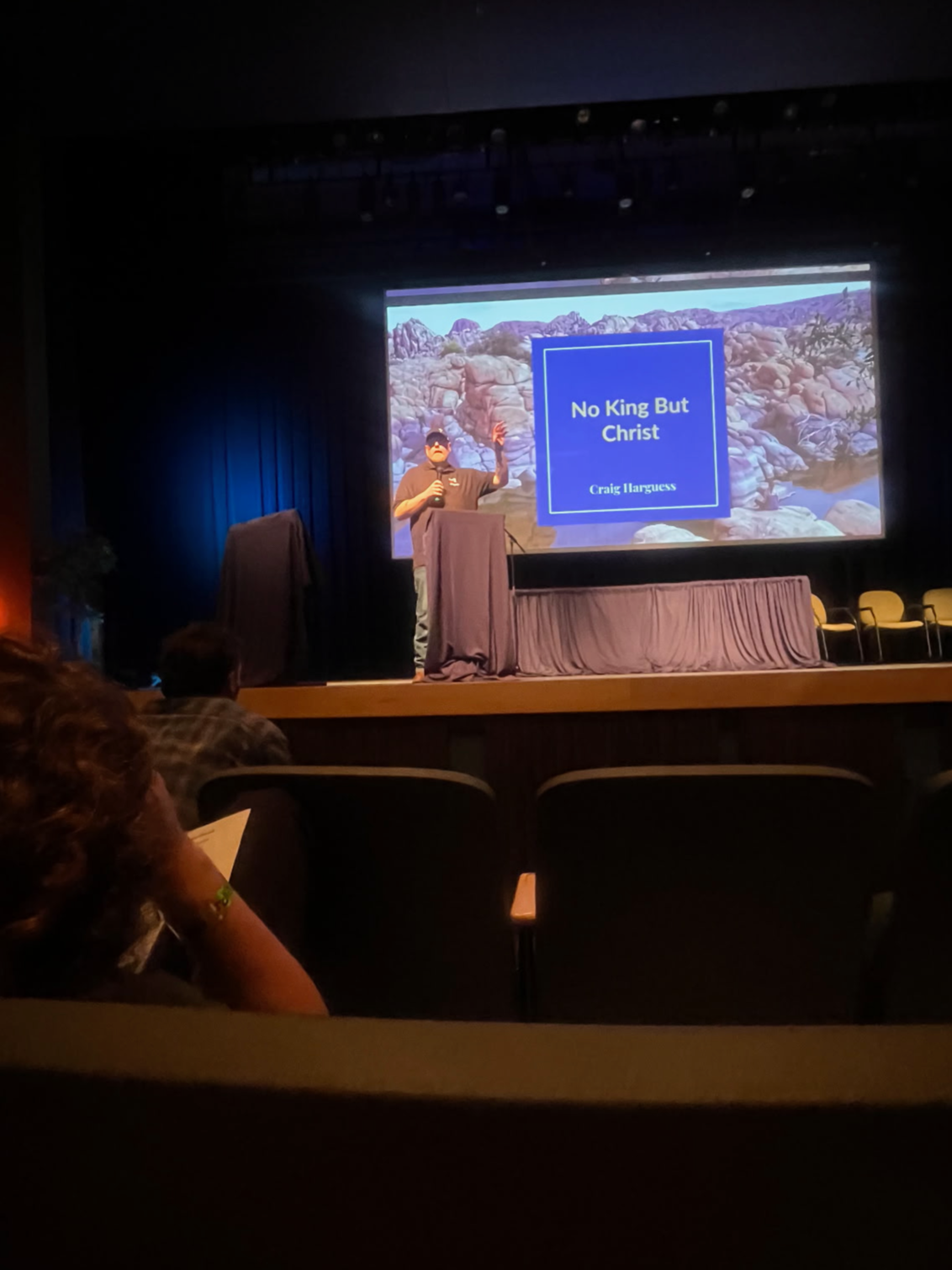

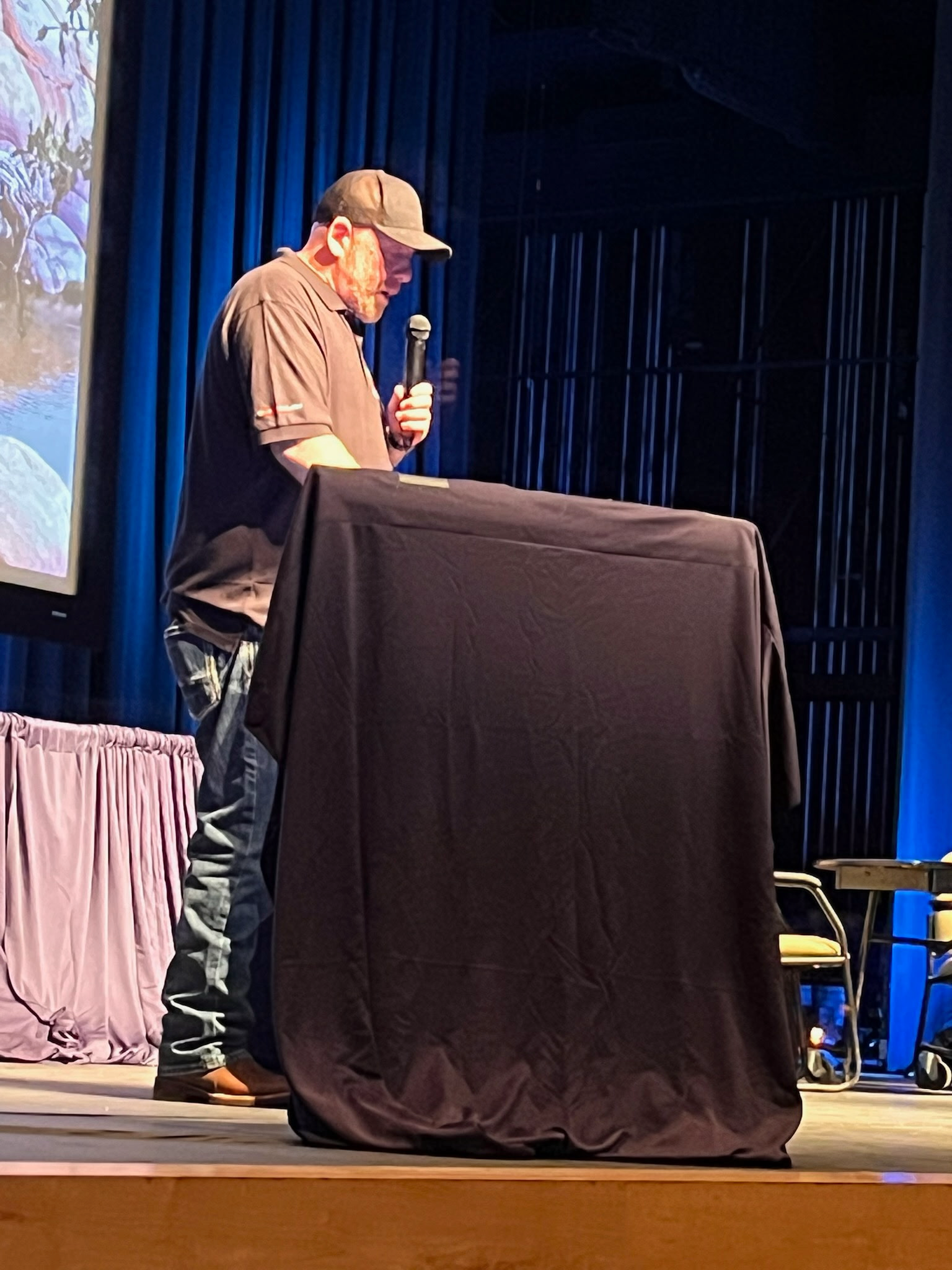
Patrick Carroll 5.png

About the Author

Patrick Carroll has a degree in Chemical Engineering from the University of Waterloo and is an Editorial Fellow at the Foundation for Economic Education.

You can follow him on Twitter @PatrickC1995 or on his Facebook page The Prudent Navigator.

The Dream of the City to Come: Do you not trust God?

Image from Great Bible Stories for Children  (Regency Publishing House 1974)

Image from Great Bible Stories for Children (Regency Publishing House 1974)

When I was a toddler, my parents read me bedtime stories from a vividly illustrated Bible storybook called Great Bible Stories for Children (Regency Publishing House 1974). For some reason, my favorite, most requested Bible story was the one I referred to as "Bad Dream"— a nightmare of King Nebuchadnezzar of Babylon recorded in the book of Daniel, chapter 2.

Daniel delivers the interpretation of the dream to the king: 

In the time of those kings, the God of heaven will set up a kingdom that will never be destroyed, nor will it be left to another people. It will crush all those kingdoms and bring them to an end, but it will itself endure forever. This is the meaning of the vision of the rock-cut out of a mountain, but not by human hands—a rock that broke the iron, the bronze, the clay, the silver, and the gold to pieces.

The great God has shown the king what will take place in the future. The dream is true and its interpretation is trustworthy.

Even though Daniel is a captive slave and his life is in jeopardy every time he talks to the ruler of the known world, he speaks from the perspective of a man who is in constant contact with Yahweh, the God of his youth and home culture. Daniel was able to spread the message of his God to the most powerful man on earth, and the message was this: human empires will come and go built on force and violence, coercion and oppression, but the Kingdom of Peace that God creates will destroy all the empires that came before it, and once it is established, it will last forever.

There are a few passages that are repeatedly used in defense of tyranny and oppression, and blaming God for it, but if one looks at the overarching narrative of scripture we see a distinct anti-empire message throughout.

The prophets of Israel spoke of a future liberator that God would send to free humanity from all forms of oppression, both spiritual and material. The Messiah, or Christ, was a promise the Hebrews took literally and awaited with fervent expectation the initiator of a new world order of peace. Isaiah writes of Christ:

"There shall come forth a shoot from the stump of Jesse,

and a branch from his roots shall bear fruit.

And the Spirit of the Lord shall rest upon him,

the Spirit of wisdom and understanding,

the Spirit of counsel and might,

the Spirit of knowledge and the fear of the Lord.

And his delight shall be in the fear of the Lord.

He shall not judge by what his eyes see,

or decide disputes by what his ears hear,

but with righteousness he shall judge the poor,

and decide with equity for the meek of the earth;

and he shall strike the earth with the rod of his mouth,

and with the breath of his lips he shall kill the wicked.

Righteousness shall be the belt of his waist,

and faithfulness the belt of his loins.

The wolf shall dwell with the lamb,

and the leopard shall lie down with the young goat,

and the calf and the lion and the fattened calf together;

and a little child shall lead them.

The cow and the bear shall graze;

their young shall lie down together;

and the lion shall eat straw like the ox.

The nursing child shall play over the hole of the cobra,

and the weaned child shall put his hand on the adder's den.

They shall not hurt or destroy

in all my holy mountain;

for the earth shall be full of the knowledge of the Lord

as the waters cover the sea."

Isaiah 11:1-9

When Mary is told that she has been chosen to give birth to the Messiah, she is so excited she praises God for the liberation that she is being allowed to participate in. She prays:

My soul magnifies the Lord

And my spirit rejoices in God my Savior;

Because He has regarded the lowliness of His handmaid;

For behold, henceforth all generations shall call me blessed;

Because He who is mighty has done great things for me,

and holy is His name;

And His mercy is from generation to generation

on those who fear Him.

He has shown might with His arm,

He has scattered the proud in the conceit of their heart.

He has put down the mighty from their thrones,

and has exalted the lowly.

He has filled the hungry with good things,

and the rich He has sent away empty.

He has given help to Israel, his servant, mindful of His mercy

Even as he spoke to our fathers, to Abraham and to his posterity forever.

Luke 1:46-55

The hope that she placed in the God of her forefathers called for the end of oppression and tyranny on planet earth—a freedom that includes liberation from sin, death, hell, satan, and the empires of humankind. She read the prophets as a little girl and made their visions one with her mind and heart. Maybe this love for the promise of liberation and the Messiah is the reason God chose her to be Christ's mother?

Morgan Weistling - Kissing the Face of God

Morgan Weistling - Kissing the Face of God

When Jesus was 30 years old, he spent 40 days in the wilderness fasting on water. At the end of it, the Devil appears to him in an attempt to recruit Jesus to Satan's side in rebellion against Jehovah. Satan takes Jesus to a high place where he can see all the kingdoms of the world and makes this offer: "All this I will give you,” he said, “if you will bow down and worship me.” Jesus said to him, “Away from me, Satan! For it is written: ‘Worship the Lord your God, and serve him only." (Mark 4:9-10)

Satan's ability to offer all the riches and power in the world could only mean one thing: that they belonged to him. In other places in scripture, Satan is referred to as "the God of this world" (2 Corinthians 4:4), and that "the whole world lies in the power of the evil one" (1 John 5:19). The knowledge of who Satan is makes the promise of a savior all the more appealing; if we are all born as serfs to an evil lord who wants to see us suffer and lies to us constantly, filling his domain with pain and violence, destruction, and rot, chaos, and confusion, who wouldn't want to be liberated? Jesus knew that he had come to bring the Good News of the Eternal Kingdom to the suffering, slavery, and misery of earthly kingdoms. He knew the Kingdom of God would one day have dominion over the whole Earth and all her people not by the idolatry of political power or devil-worship, but through the spirit of the Gospel.

3.jpeg

When he was on trial to be crucified, Jesus told the Roman Governor of Jerusalem: "You say rightly that I am a King. For this reason I came into the world.... My Kingdom is not of this World. If it were, my servants would fight". To a Roman soldier/politician, getting crucified was the furthest thing from victory. Jesus saw the bigger picture- a spiritual reality that could not be defeated by death, nor could it be brought to reality through violent political and military force.

The Apostles state throughout their writings that God has exalted Jesus Christ above everyone and everything, giving him the title of "King of Kings and Lord of Lords" so that every living thing will recognize it and declare it. In Ephesians 1, Hebrews 2, and 1 Corinthians 15, Paul says that God has subjected everything under Christ's feet. in the Corinthians passage he points to the time prophesied by Daniel and Isaiah and others;

"Then comes the end, when he delivers the kingdom to God the Father after destroying every rule and every authority and power. For he must reign until he has put all his enemies under his feet. The last enemy to be destroyed is death. For “God has put all things in subjection under his feet.”

For those of you who still think of God as "Sovereign," by which you mean everything is his fault, and for those of you who are angry at God for the pain and injustice in the world, I'm not sure you're paying attention to the power of the Gospel. All of our wars and illnesses, slavery and addiction, and even death itself are due to the rebellion of Satan against God's plan. His deception campaign to bring humanity down with him will continue until destruction of all life on earth is a real possibility, then God will intervene and put a stop to it. In 2 Thessalonians 2, Paul describes that point of intervention: 

"And then the lawless one will be revealed, whom the Lord Jesus will kill with the breath of his mouth and bring to nothing by the appearance of his coming". 

Human beings and their political leaders will choose deception, destruction, and death instead of peace and life, but God works patiently to save them, redeem them, free them, so that he might reconcile them to Himself and restore humanity, and all creation, to what He intended us to be.

People of every tribe and nation, speaking every language, will worship the One True God together. The current situation where other races and nations and languages are to be hated, feared, fought, and subjugated will not exist. This is a result of man's rebellion against God's plan-- a rejection of Christ's Kingdom.

From "A Bad Case of Stripes" by David Shannon. Sholastic Inc.

From "A Bad Case of Stripes" by David Shannon. Sholastic Inc.

If we identify ourselves by nation-state or race or political party, pledging our allegiance to a nation and its flag, holding its military in worshipful regard, etc., we are telling Jesus that His Kingdom of Peace is not what we want. We do not want to be his family, the sheep of his pasture, his loyal servants. Instead, the message He receives is that we want war and oppression and for our little tribe to be top of the heap.

Nowhere does Jesus say: "I will establish a nation that will exceed all the other nations, they will be my people and I will make them powerful. They will crush all their enemies and get all the riches and I will bless them because they are the superior form of government". What He does say is he will destroy ALL human government and establish his own. If that is not exciting to you, do you know my Lord? If your god is the god of political empires, who is your god? Which side are you on?

"Here we have no lasting city, but we seek the city that is to come" Hebrews 13:14


The United States of East Germany

How is the United States like East Germany?

We have to go back to about 1984 to the time I first learned there was an East Germany and a West Germany. This was also the year Epix released the video game “1984” for the Commodore 64, which my best friend had a copy of. The game was epic to my eleven-year-old self.  You could compete across a number of Summer Olympic events as different countries, and this is when I noticed there were two Germanys (and probably two Koreas, but I do not recall noticing them).

I later learned East Germany was “Communist”! Back in the 1980s, there was nothing worse than being a Communist...or so I thought at the time. What were some of the things that made Communists so bad? East Germany kept its people in and kept others out with a concrete wall lined with concertinaed wire, much like that found on our Southern border with Mexico. I also learned they had “secret police” and a nation of informants who would “swat” their neighbor’s in a heartbeat, especially in exchange for freedom from a charge levied against themselves. I learned they tapped all the forms of communication people used and they watched their citizens 24 hours a day/365 days a year, lest anyone exhibit anti-German rhetoric or beliefs, like our NSA and Facebook Machine overlords are doing. Does this sound familiar to what our FBI, ATF, and local police forces do? 

While I cannot say for certain, I believe this is when I began to loathe communism and its concepts. I can say for certain that the more I learned about what is necessary to maintain a government in any form, the less I wanted to experience any form of government control. Unfortunately, my disdain, and probably yours as well, for the government's increasing control over our lives has not stopped every single facet of East German rule from being implemented in the United States during our lifetime. Every single one of them! Go ahead, look at the prior paragraph again, because each of those East German programs is in full effect in the United States and to an even greater degree because of our accessibility to more effective and advanced technology. 

To make us good little East Germans, and prevent us from being Bad Romans, the United States implemented a vast empire of schools to indoctrinate its residents and misinform our understanding of history. Freedom, to any real extent, is not allowed in the United States, instead only compliance with the State is authorized. Take for example the fact that most of our possessions must be licensed, taxed, registered, and paid for through fees. If you have to ask for permission to have it and pay a fee - it is not free.

To achieve these results, vast sums of money are spent to seize and control the minds of almost all residents. The combined expenditures for this empire fall around $720 billion/year, which works out to around $15,000 per student. With the exception of those who can afford private education or to do homeschooling, the majority of Americans spent 12 years inside the halls of those indoctrination camps, complete with a daily pledge of allegiance. This is how the United States makes sure Americans learn exactly what the State needs them to be in order to keep the empire going. Certainly, there must be a bulwark in the Church against this kind of thinking, right?

I wish the goals of the church were different than those of the State (as they should be). Unfortunately, I know most of my fellow “saints” like to pretend the United States is a Christian nation; one founded on Christian values, and with a Christian manifest destiny. I know my fellow saints have drunk the sugary drinks and swallowed the lies necessary to believe this. Look at the church on any holiday and you can see right through the reverence on display. Look at the dais, look at the flags on display, and you will understand who many churches have chosen to place first.

jesus-saves-sign-in-an-old-church-in-indiana-TS43QZS.jpg

Fallen Heroes

Let us be serious about this for a moment. It makes Americans feel good to think about apple pie, pacifying the land, and spreading from “sea to shining sea” on-premises of Christian values. I mean, who does not like hotdogs, baseball, fireworks, and “freedom”? We mistakenly allow ourselves to believe this has all been done in the name of God, crafted under the guise of Jesus, to obfuscate the actions that have enabled the United States to exist through violence and terror. 

Unfortunately, my fellow saints are just as guilty of thinking the United States eradicated slavery, saved the world from Nazi Germany, the Emperor’s Japan, and communist Russia all without realizing every sin of our “enemies” is on full display and practice here. I know my fellow saints like to think they defeated slavery, the ”Savage Indian”, and the USSR through peace, trade, the Church (not to mention our large nuclear arsenal), but it just is not true. It has been violence, coercion, and endless threats of more violence disguised as diplomacy that got us here. We must ask, would this be sanctioned by God? Not in the least bit - if He were ever consulted.

Saints should not be so foolish. The United States committed genocide on the original inhabitants of North America. European settlers did not discover anything; they invaded a foreign territory and used every means possible to take it from its rightful inhabitants, which was then justified through biblical interpretive malfeasance. An outright war against the “Indian” was always on the table when they could not be suckered. The shooting and killing of Indian tribes pushed them further and further West until there was nowhere left to push them. The United States wanted those lands for white settlers who could use the land “properly” and be taxed for it—end of the story. The few survivors of this state-sanctioned genocide on Native Americans were housed on reservations in desolate areas the government did not see itself needing, as far away from “civilized” folks as possible.

The atrocities against the original residents of North America began in full force in the early 1600s and did not end until the early 1900s. Yes, only 100 years ago! And, it only gets worse from there. Borrowing from Wikipedia we read this:

During the early 19th century, the federal government was under pressure by settlers in many regions to expel Indians from their areas. The Indian Removal Act of 1830 offered Indians the choices of assimilating and giving up tribal membership, relocation to an Indian reservation with an exchange or payment for lands, or moving west.

This was a policy of genocide for an entire people group. We wanted to end their way of life and eradicate them from history. This, arguably, is worse than East Germany (but, shhh, don’t dare mention that in schools)!

Do you know who was president during most of the Indian genocide? The same men that are now revered as heroes of the State even have their faces carved into mountains on sacred lands(looking at you Mt. Rushmore). So, let us just look at a handful of these heroes who have schools and streets named after them in every town and county across North America:

  1. Thomas Jefferson

    • Tommy boy led a multi-pronged policy against the “savages” of North America. He wanted to move them West because he wanted their land for settlers, but he wanted them to remain peaceful and not allied with the British. For the Native people who survived relocation, Jefferson wanted them to be civilized and incorporated into the European model of a citizen through assimilation. Jefferson was so successful in turning the Native Americans into the dead, the absent, or the near-white, that a number of tribes built “regular” towns and even began owning slaves like their white schooler’s taught them. Those who would not bend the knee to Jefferson would die in the War of 1812. American politicians and their supporters have always been comprised of violent men carrying a giant boom stick. 

  2. Abraham Lincoln 

    • “Honest” Abe was a great murderer loved and known by almost all. Lincoln cashed in on the killing of Indians and taking of their lands, in fact this how he accumulated political connections. As a member of the Illinois House, Lincoln took up arms against Indians in the Blackhawk Wars,  though history says he never killed anyone during the brief conflict, it was his new resume bullet, Captain in the militia, fighting to protect the lands of Illinois from the Indian owners, that propelled him forward to the presidency. Once president, Lincoln would prosecute a genocide against the South and the Indians out west. Yet he is held up as a hero today.

I will not continue describing the rampant abuses perpetrated against the native inhabitants of North America, but every single president during that period is guilty of their deaths. In their time, each of these men claimed Jesus as their Lord and Savior. Jesus would never sanction their actions, but this has not stopped the Department of Education from claiming otherwise. The schoolers’ couch expansionist imperialism in the most colorful manner. It is always the other guy and his nation that are compromised by hateful warmongers. The US is always on the right side of history and there to help the oppressed; it says so in the schoolers’ history books!

After this brief history lesson, how does this make the United States a modern East Germany? Our universities are beginning to make Covid-19 vaccines mandatory for attendance, and, while only a few have done this so far, it is likely to spread, much like a virus, to all of them. This is a totalitarian requirement pushed by the schoolers’ of the State to not allow their professors, or students, back on to campus without proof of vaccination. We have already seen members of the State promoting injections to attend concerts and sporting events—the natural expressions of East German totalitarianism, right here in the good ol’ USofA.

However, it is not just public institutions or policies that amplify our descent into totalitarianism. How many of our churches spent Sunday, July 4th this year honoring the flag for the Fourth of July and singing nationalistic hymns at the same time? This is a common practice across churches in the United States, on any state-sanctioned holiday, many of our churches practice State worship over the King of all kings. 

Our American Saints have embraced a polluted form of Ameranity. They combine their love of the State with their love of Jesus, failing to see that this is foreign to the Jesus of the Bible they aim to worship. This entanglement with the way of the State and the way of Christ only supports and ushers in an East German-style totalitarianism. Americanity fully supported slavery and the Wars against Native Americans. Americanity supported the genocide in the Philippines and against the Vietnamese. Americanity inserted itself into European wars when it did not have to. Americanity supports everything the State wants, no matter what the Bible says or Jesus would do. The United States is anything but a Christian nation. The United States is everything Jesus rejected on the cross and everything East Germany stood for.

Being a faithful Christian (a Bad Roman) is only going to become more difficult as the United States moves forward, but it has always been harder to live as a citizen of heaven. The mistake is when we believe we are able to remain faithful citizens to a finite man-made State while also living out the Gospel. So I ask you this, are you ready to be a bad East Germans? Will you join me and follow no king, but Christ?


About the Author

Ian Minielly is a full-time vocational pastor. He considers himself an “oddball” in ministry for his peaceful understanding of the Kingdom of God and how limited of a role Christians should have with the State.

Regarding how he came to this stance, he says:

God spared me and showed great mercy in opening my eyes to love, and against war and the State. To see the great work God did in me, previously I spent more than seven years as an intelligence analyst for the Defense Intelligence Agency, focused on Counter-Proliferation of WMD material and systems.

Prior to that, I spent more than nine years in the infantry and Special Forces (I was a Green Beret). Once I became a believer, I found the biblical expectations of God were in opposition to my profession in the military and my nationalism. God slowly peeled this understanding back and I left the army and nationalism.

Ian has published three books, Emily's Tears, Revoked Consent, and The Genetic God, which are available on Amazon.

He also has a YouTube channel if you would like to see him in action!

MORE FROM IAN:

Not of This World Part 6: Upside Down (Series Conclusion)

Upside Down

Throughout the Book of Acts (a chronicle of the early ministries) we see civil unrest in the wake of early evangelism and how the disciples demonstrate what they learned from Jesus’ example. Here’s one instance of many demonstrating the power of the message:

“And when they found them not, they drew Jason and certain brethren unto the rulers of the city, crying, ‘These that have turned the world upside down are come hither also; Whom Jason hath received: and these all do contrary to the decrees of Caesar, saying that there is another king, one Jesus.’ And they troubled the people and the rulers of the city, when they heard these things. And when they had taken security of Jason, and of the other, they let them go.”

Acts 17:1

Word spread quickly how “threatening” the Apostle’s message of Jesus was. They were those who “turned the world upside down.” The church in that area—ekklesia—had gained a reputation for challenging societal norms of the day. Ideas like “servant leadership” and having “all things common” stood in direct contrast to the affluent, Imperialist culture of their day. The message of Jesus’ resurrection was especially controversial but also intriguing to the philosophers and ever-antagonistic Jewish leaders. The legitimacy of Caesar in general, the pagan religion, and Pharisee’s order was being called to question all at once. One fantastic instance is recorded just two chapters later:

“And the same time there arose no small stir about that way. For a certain man named Demetrius, a silversmith, which made silver shrines for Diana, brought no small gain unto the craftsmen; Whom he called together with the workmen of like occupation, and said, ‘Sirs, ye know that by this craft we have our wealth. Moreover ye see and hear, that not alone at Ephesus, but almost throughout all Asia, this Paul hath persuaded and turned away much people, saying that they be no gods, which are made with hands: So that not only this our craft is in danger to be set at nought; but also that the temple of the great goddess Diana should be despised, and her magnificence should be destroyed, whom all Asia and the world worshippeth.’ And when they heard these sayings, they were full of wrath, and cried out, saying, ‘Great is Diana of the Ephesians’.” 

Acts 19:23

What’s remarkable about this scene is everything at stake for the Ephesians. Not only is the legitimacy of their religion called into question but also their economy. Demetrius, a craftsman, earned a living making silver shrines and idols. The rhetoric of the early evangelists had “set at nought” the profitably of the craft itself and also maligned the reputation and legitimacy of the deity and temple of worship. Such a challenge was met with an angry mob. As we’ll see, this legacy continued from the time of the earliest churches through the Dark Ages. 

Anabaptist Iconoclasm/ Host Desecration

As peaceful as they were, Anabaptists certainly didn’t shy away from issuing stern rebukes to heads of state and church, nor were they restrained when it came to destroying what they deemed idols and superstitions in the land. Like John the Baptist, Jesus, and the Apostles before them, they understood their “civic duty” very well: obey God rather than men.

Examples of this are given throughout Gary K. Waite’s book Eradicating the Devil’s Minions: Anabaptists and Witches in Reformation Europe. Waite’s book examines the witch hunts and Anabaptist persecutions of the time in different regions of Europe and seeks to understand the religious and political reasons for such. Waite is careful to remind the reader that while the Anabaptists themselves were skeptical of the “superstitions” of the Roman Catholic and Protestant churches, they were being identified as the agents of a Satanic conspiracy and were blamed for other-worldly phenomena sometimes attributed to witches and sorcerers. In his book, we learn Anabaptist skepticism was aimed directly at two primary Catholic (and sometimes Protestant) dogmas: the Eucharist and infant baptism.

Student’s of Church history, namely Anabaptism, know these pious folk were notorious for refusing to have their infants baptized (which was considered infanticide by the state-churches), and they also were known to disrupt Mass and stomp on supposedly consecrated “Hosts.” All of these protests are Anarchist tactics aimed at cutting directly to the heart of the established institutions—for the Anabaptists of the Dark Ages, it was the most effective way to disrupt the status quo, both state and church. It was very performative.

Waite tells of one Jacob Gasser. This brave Anarchist “ran up to the altar, grabbed the plate of wafers out of the priest’s hands, threw it onto the floor, and trampled upon the bread. He then tossed the chalice with the consecrated wine against the church door.” Of course, we know Gasser wasn’t alone in his sentiments or actions, as Waite relates: “This disturbing act…had followed close on the heels of the iconoclastic actions of Tirol’s rebellious peasants. It was also performed in consideration of magical beliefs and a long history of eucharistic miracle legends.” Gasser’s, and others’, willingness—obligation rather—to cause such upheaval in one of the most important and powerful societal institutions of that day only testifies to the fact that Anabaptism is fundamentally Anarchism. Anabaptists were actively striking at an insidious root: the institutional Church’s reliance on the State to substantiate tenuous, superstitious dogmas. It can’t be denied that they learned these tactics, and gained boldness, from Jesus’ and the Apostles’ examples.

Series Conclusion

A logical and plain reading of the Gospels and basic understanding of non-conformist movements throughout Church history leads an honest student to the conclusion that Gospel and Christ-centered discipleship is Anarchism in its purest form. While I believe this shouldn’t be a topic of debate among Christians, I understand the traditions of the State-Church systems have prevented serious consideration of this topic even to this day. For those with eyes to see and ears to hear, the Kingdom of God and Heaven is a powerful alternative to the Devil’s kingdoms of darkness where Mammon and The State are gods. 


About the Author

Nathan Moon is a house-painter because he “has a useless English degree”. More importantly, he’s a student of Jesus, which is the theme of his blog.

He hopes to one day have a small photography/movie-production company. He lives in Wisconsin with his wife and four daughters.

You can learn more about him and see his work at his website is www.anabaptistapologist.com.

Not of This World Part 5: Authority & Property Destruction

Authority and the ekklesia

If you search in the New Oxford American Dictionary for the term “Anarchism,” you’ll find the origin of the term is the Greek word anarkhos meaning “without a chief.” Jesus’ model of authority, or leadership in general, is Anarchical, meaning he never gave any one man complete power over another like the tyrannical systems of this world do. Jesus’ model for leadership in churches is often termed “servant leadership” and was intended to be horizontal rather than vertical.

I’ve heard some AnarchoChristians oppose the idea of a “horizontal” relationship, admittedly only assuming they’re understanding that this means men are ruling over others. But what I mean by “horizontal relationship” is simply that we’re men among men, and we have relationships with other people; these relationships, especially in ekklesia, should be voluntary and loving. Once we begin to dominate others and “lord over the flock,” we assume a vertical relationship over fellow men and seek to usurp God’s position. I’ll take the time to make this distinction and hopefully add clarity because these definitions of these relationships need to be clear in order to understand the rest of this section. 

Throughout Jesus’ ministry, we see he divests himself of power over others whenever he can. In one word, he’s unobtrusive. One passage gives a clear profile of his ministry:

But when Jesus knew it, he withdrew himself from thence: and great multitudes followed him, and he healed them all; And charged them that they should not make him known: That it might be fulfilled which was spoken by Esaias the prophet, saying, Behold my servant, whom I have chosen; my beloved, in whom my soul is well pleased: I will put my spirit upon him, and he shall shew judgment to the Gentiles. He shall not strive, nor cry; neither shall any man hear his voice in the streets. A bruised reed shall he not break, and smoking flax shall he not quench, till he send forth judgment unto victory. And in his name shall the Gentiles trust.

According to prophecy, the Messiah would be a servant, meaning he’d be beneath someone in authority (the Father). This servant, the Messiah, would “not strive” nor “cry.” Nobody would hear his voice “in the streets.” But didn’t Jesus teach and heal publicly? When the prophecy says he wouldn’t strive, cry, or that his voice wouldn’t be heard in the street, it means he wouldn’t go around in a pompous, political way and campaign for himself. Neither would he bruise a reed or quench “smoking flax.” This is taken by some to mean that he wouldn’t militaristically topple the oppressive governments of that time but that he’d wait to “send forth judgment unto victory” at his Second Coming. This meek man intended to lead by example: do good, heal the sick, help the poor and hungry, preach the Gospel of the Kingdom, and speak to the many other social injustices around him.

Aside from what Jesus related about prophecies concerning himself, we see him directly teaching his disciples who, what, and how with regards to his Father’s kingdom. Take for instance this scene in Matthew: 

Then came to him the mother of Zebedee’s children with her sons, worshipping him, and desiring a certain thing of him. And he said unto her, What wilt thou? She saith unto him, Grant that these my two sons may sit, the one on thy right hand, and the other on the left, in thy kingdom. But Jesus answered and said, Ye know not what ye ask. Are ye able to drink of the cup that I shall drink of, and to be baptized with the baptism that I am baptized with? They say unto him, We are able. And he saith unto them, Ye shall drink indeed of my cup, and be baptized with the baptism that I am baptized with: but to sit on my right hand, and on my left, is not mine to give, but it shall be given to them for whom it is prepared of my Father. And when the ten heard it, they were moved with indignation against the two brethren. But Jesus called them unto him, and said, Ye know that the princes of the Gentiles exercise dominion over them, and they that are great exercise authority upon them. But it shall not be so among you: but whosoever will be great among you, let him be your minister; And whosoever will be chief among you, let him be your servant: Even as the Son of man came not to be ministered unto, but to minister, and to give his life a ransom for many.

In Jesus’ model, the “great” and “chief” one among the brethren is an unselfish, self-sacrificing “minister” or “servant.” He says this model is markedly different than the “princes of the Gentiles” who “exercise dominion over them.” Van Steenwyk puts it quite eloquently in his observation of “servant-leadership” in the New Testament:

[And] it is assumed that there are some who are wiser about discerning the Spirit–who have deeper practices in the way of Jesus. These folks are often considered elders and they can mentor folks just starting out in the way of Jesus. This is what discipleship is all about. Is it hierarchical? Perhaps, but if it is, it is a dynamic hierarchy rather than a static one. The goal of discipleship should never be to have permanent leaders. Rather, it should be to recognize wisdom where it is found, and to learn from that wisdom. Most anarchists do that.

Van Steenwyk’s understanding of New Testament church authority as a dynamic mentorship as opposed to a rigid, “static” one is refreshing, to say the least. It sheds much needed light on forgotten guidelines given by the Apostles themselves. Take for example 1 Peter 5:1-5 where Peter says the leaders are to willingly serve, and not for profit. The elders aren’t to domineer the flock, but lead by example. He even says, “all of you be subject one to another, and be clothed with humility: for God resisteth the proud, and giveth grace to the humble.” We see, then, Anarchism—really, true New Testament kingdom living—offers a more equitable way to distribute authority and order, not abolish it. This is Jesus’  and the Apostle’s vision for the ekklesia. This is the process of Anarchy. This is pure “horizontal” relationship. But there’s one more place in the Gospels that stands out and is worth including in our analysis.

In Luke 12:13-15 we have a short but interesting dialogue: 

“And one of the company said unto him, Master, speak to my brother, that he divide the inheritance with me. And he said unto him, Man, who made me a judge or a divider over you? And he said unto them, Take heed, and beware of covetousness: for a man's life consisteth not in the abundance of the things which he possesseth.

It’s easy to read too far into this exchange and conclude that Jesus was completely against owning any property—we saw why this is a hurtful conclusion in our previous chapter. Here, Jesus is making a remarkable point: he isn’t a ruler over other men.

This man’s covetousness prompted Jesus to give a parable about a rich man who increases his wealth, builds a larger barn to store it in, and takes such comfort in his storehouse of riches, saying, “take thine ease, eat, drink and be merry.” In other words, the rich man grew proud and forgetful that nothing on earth lasts forever. Jesus’ conclusion was, “So is he that layeth up treasure for himself, and is not rich toward God.” The larger lesson to be learned from this dialogue and parable is that our focus shouldn’t be to amass great wealth, especially by dominating our neighbors. Rather, our treasures should be stored in Heaven.

If we “Christo-Anarchists” are going to advance our unique message to our Fundamentalist and secular-Anarchist friends, we’re going to have to be honest with the reality of hierarchy in the New Testament and general trend toward patriarchy. We need to be ready to rebuke the Fundamentalists who place a premium on rigid male-centric leadership, acceptance of class distinction as a “necessary evil,” and the driveling calls to be ever-more patriotic; we also need to be ready to rebuke the secular-Anarchist whose end-goal is a seemingly complete annulling of distinctions altogether and rejection of any power. We owe it to our neighbors to strike that balance.

I suggest that, for the Christo-Anarchist, the solution is a return to that authority structure outlined in the Gospels and Epistles. We need to teach and show that in the community, otherwise known as “assembly” or ekklesia, there exists the potential for a group of people to function without hurtful distinctions and hierarchies.

Property Destruction/ Iconoclasm

Anarchism strikes at the root of human evil because it seeks to expose the human tendency to place equal, sometimes greater, value on goods—sentiments that tend toward use of force in order to protect. The dialogue in Luke 12 is a great insight to this. When it comes to striking at these roots, we must lament human casualties that result from otherwise legitimate demonstrations of frustration—often expressions of hatred toward the “system” rather than the people. If we understand Anarchism through a purely New Testament lens, we see it’s possible, and even godly, to disregard the “value” of property and still preserve human life. Yes, this is to suggest Jesus isn’t always against destroying “private property.”

Perhaps no other striking example can be given to prove Jesus and his disciples were “destructive” Anarchists than to look at what took place at the Temple. First, we’ll look at Matthew’s account, then John’s:

  • And Jesus went into the temple of God, and cast out all them that sold and bought in the temple, and overthrew the tables of the moneychangers, and the seats of them that sold doves,

  • And the Jews' Passover was at hand, and Jesus went up to Jerusalem, And found in the temple those that sold oxen and sheep and doves, and the changers of money sitting: And when he had made a scourge of small cords, he drove them all out of the temple, and the sheep, and the oxen; and poured out the changers’ money, and overthrew the tables; And said unto them that sold doves, Take these things hence; make not my Father’s house an house of merchandise. And his disciples remembered that it was written, The zeal of thine house hath eaten me up.

In this Temple scene, Jesus is a zealous Iconoclast, an Anarchist, whose disdain is directed towards the abuse of private property being used for profit at the expense of human/ spiritual dignity. Remember: the property isn’t “the Jews’,” nor is it the religious leaders’—the property belongs to Jesus’ Father! The “changers of money” had turned something sacred into something common (worldly/ ungodly). They usurped what belonged to God and perverted it. This was a bondage to people who came to worship. Jesus’ actions with the scourge were violent, yes, but they were targeted at property not people. Jesus did, however, give stern rebuke to those present. In either sense—physical or verbal—there’s a destructive message being communicated to an apostate religious institution. This is Anarchism on full display.

To be sure, “Iconoclasm” can be defined as “the action of attacking or assertively rejecting cherished beliefs and institutions or established values and practices; the rejection or destruction of religious images as heretical; the doctrine of iconoclasts.” A skepticism of the legitimacy of these beliefs, values, insinuation, and even objects, can be expressed in verbal condemnation or physical destruction. To reiterate, “Anarchism” was defined earlier as “the abolition of all government and the organization of society on a voluntary, cooperative basis without recourse to force or compulsion.” These two are hand-in-glove because they’re both defined by the destruction or abolition of something that’s been deemed “illegitimate” or “heretical.” In the case of Iconoclasm, the target is singularly religious, whereas Anarchism can target both religious and secular institutions. Jesus gave us a holy example.


About the Author

Nathan Moon is a house-painter because he “has a useless English degree”. More importantly, he’s a student of Jesus, which is the theme of his blog.

He hopes to one day have a small photography/movie-production company. He lives in Wisconsin with his wife and four daughters.

You can learn more about him and see his work at his website is www.anabaptistapologist.com.