We use the word freedom so often that it has almost lost its shape. It can mean safety. It can mean privacy. It can mean prosperity. It can mean “leave me alone.” It can also mean “let my side win.”
In America, freedom is one of those words everybody loves and almost nobody defines.That is why this episode matters.
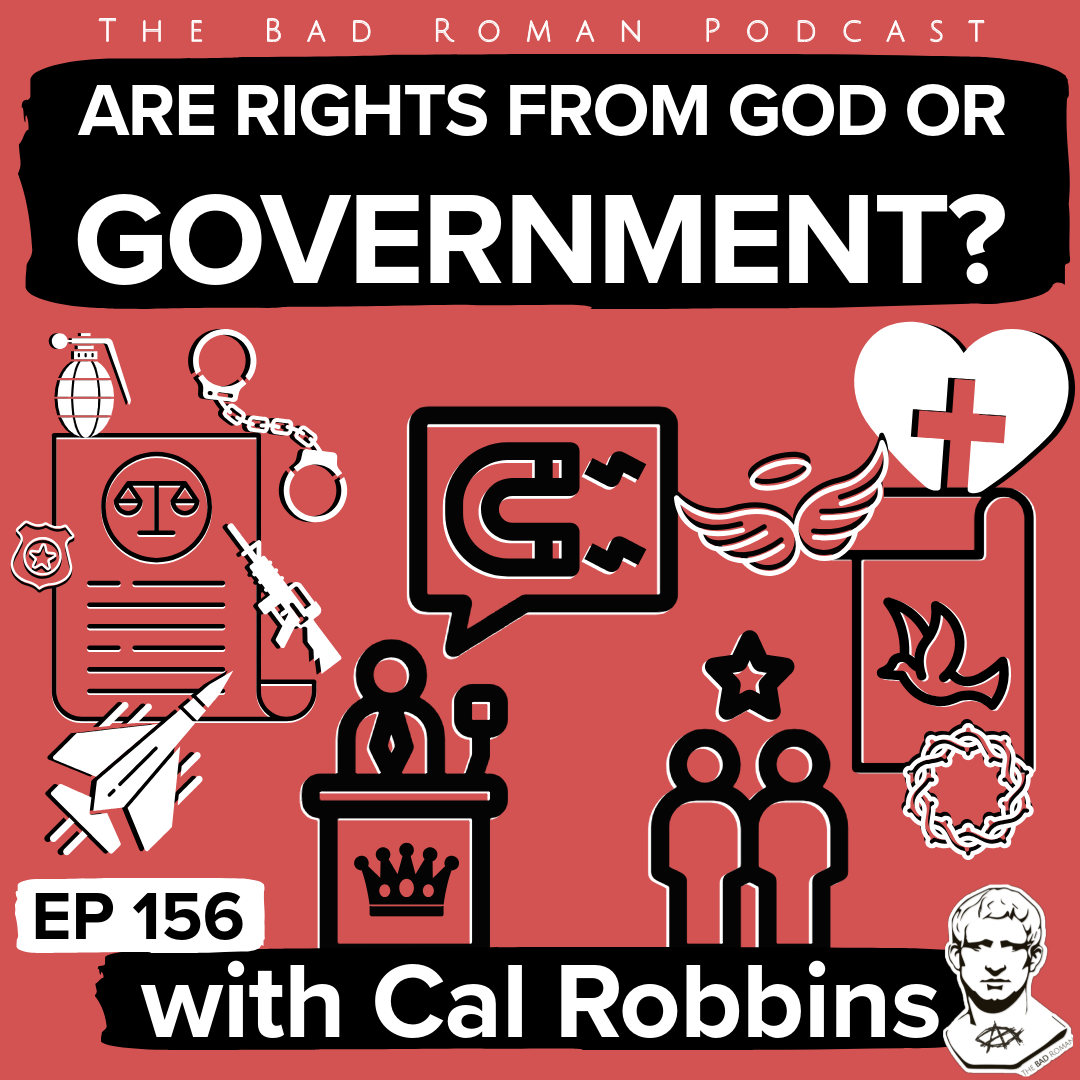
Craig opens with the real question right away: does liberty come from government, or does it come from our Creator? And if liberty is a gift from God, then we do not get to talk about it like the state hands it out, manages it, limits it, or takes credit for it. We have to ask a deeper question: what does liberty look like when Jesus, not Caesar, is Lord?
Defining Rightful Liberty
That is where Cal Robbins takes us. He goes back to Thomas Jefferson’s 1819 response to Isaac Tiffany, where Jefferson says the word liberty has been used so many different ways that it no longer gives a clear meaning to the mind. So Jefferson makes a distinction. There is liberty in the broad sense, which Cal treats as freedom, the unobstructed action of our own will. But then there is rightful liberty: the unobstructed action of our own will within the limits drawn around us by the equal rights of others.
That is the thread that holds this whole episode together. Not freedom without limits. Not control dressed up as order. Rightful liberty.
That distinction matters because it exposes the lie at the center of so much of our politics and even so much of our faith talk. We say we want liberty, but what we often want is permission for ourselves and limits for other people. We want freedom when it protects our comfort, then law when other people make us nervous. We want rights when we are talking about our tribe, then rules when we are talking about strangers. Rightful liberty ruins that game. It says the rights I claim for myself belong to my neighbor too.
Equal Rights And The Image Of God
There is a reason this conversation feels heavier than a normal political discussion. It is not just asking whether a system works. It is asking whether we have learned to see other people rightly.
Cal says that once he began to understand rightful liberty, he started to feel sympathy, empathy, even pity where he once might have felt anger or contempt. He says it changed the way he saw people. More than that, he says it brought him back to the teachings of Jesus. He began to see that rightful liberty was not just a political idea but something deeply tied to Christ, to free will, and to the straight and narrow path.
Craig picks up that thread by bringing in Galatians 5:1 and asking whether freedom in Christ might also mean freedom from slavery in a broader sense, even freedom from statism. That move keeps the whole episode from collapsing into civics. This is not a lecture on founding language. It is a wrestling match over whether the liberty we talk about in public life actually matches the freedom Christ calls us into.
If Christ sets people free, why are Christians still so eager to hand themselves over to rulers? Why are we so quick to trust systems of force, systems of control, systems that claim power over image-bearers made by God?
When Liberty Gets Tested
And that is where the episode gets sharp.
Because rightful liberty is not left floating in theory. It gets tested. Slavery comes up quickly, and Craig is blunt: he does not care whether slavery was legal, because legal does not mean moral. That line becomes a door into one of the hardest and clearest parts of the episode. If a law can bless something as evil as slavery, then Christians cannot pretend the law is the final measure of justice.
That same line of thought runs straight into immigration. Not as a side issue, but as a test of whether we really mean what we say about liberty. Craig points to the border as an imaginary line and asks why crossing it suddenly makes a human being “illegal.” Cal pushes further and says denying people free movement because the state says so is not liberty at all. He calls it a rejection of rightful liberty, a rejection of what God gave.
His logic is simple and hard to get around: if I claim a natural right to move, but deny that same right to somebody else because the government told me to, then I am putting man’s law above God’s gift. In his words, that is rendering unto Caesar what belongs to God.
Caesar, Voting, And The Tyrant’s Will
The same test shows up again when the conversation turns to voting and “render unto Caesar.” Cal says that when we vote to impose rulers on our neighbors, we are once again rendering unto Caesar what belongs to God.
Craig pushes back on the usual statist use of Matthew 22 and asks the harder question: what actually belongs to Caesar? If my life is God-given, if my rights are God-given, if my neighbor’s dignity is God-given, then what exactly are we handing over when we call the state our authority?
That is why Jefferson’s fuller line matters here too. Rightful liberty is not merely action within the law, because law is often but the tyrant’s will. That one sentence should break apart a lot of lazy Christian trust in the state. Christians cannot hide behind legality. We cannot keep saying “it’s the law” as if that settles the matter.
Jesus And The Shape Of True Liberty
What keeps this from turning into a cold political argument is that it keeps coming back to Jesus.
Cal says outright that rightful liberty became, for him, almost synonymous with Christ. He says Jesus was an excellent example of how to live in rightful liberty. That is not a throwaway line. It is the heart of the whole episode.
Jesus never forced people into discipleship. He never used power the way rulers do. He never treated people as objects to manage. He told the truth, loved His neighbor, and refused the kingdoms of the world when they were offered to Him. Rightful liberty, as this episode describes it, is free will exercised in the light of God and in the presence of neighbors who bear the same dignity we do.
That is why Cal can connect rightful liberty to Christ, free will, and even the path toward salvation. It is not just about politics. It is about what kind of people we are becoming.
The Church Must Tell The Truth Again
Craig also presses on the witness of the Church, especially the cruelty so often seen online from people who claim Christ. That part matters because the failure here is not just political confusion. It is spiritual contradiction.
If we say “No King but Christ,” but still crave rulers, still cheer domination, still use fear as our moral compass, then what are we really confessing? Rightful liberty does not just expose bad policy. It exposes a damaged discipleship that keeps trusting Caesar to do what only love, truth, and self-government under God can do.
By the end, the episode lands in a place that is both simple and demanding. Rightful liberty is the proper exercise of free will under God. It is not limitless freedom. It is freedom with moral shape. It is the refusal to violate the equal rights of others. It is liberty disciplined by love.
That is why Craig can boil the whole thing down to a plain phrase: don’t hurt people, don’t take their stuff. Crude maybe, but clear. And clarity is hard to come by in a world where we are constantly told that coercion is compassion, legality is morality, and empire is order.
“No King but Christ” means more here than a slogan against nationalism. It means no one gets to claim ownership over what God already gave. Not the president. Not the court. Not the border. Not the ballot. Not the church when it acts like an arm of the state.
Connect with Cal Robbins
Highlights & Takeaways
Rightful liberty is not doing whatever we want.
Rightful liberty means acting within the equal rights of others.
Rights come from God, not government.
Legal does not mean moral.
Borders, ballots, and rulers fail the test when they violate God-given dignity.
Cal connects rightful liberty to Christ, free will, and the straight and narrow path.
Jefferson’s warning still stands: law can become the tyrant’s will.
“No King but Christ” means we stop giving Caesar credit for gifts that came from God.
Listen & Reflect
Listen for how early the episode defines rightful liberty. Everything else builds from that one distinction.
Reflect: Where do we call something freedom when we really mean control? Where do we demand rights for ourselves that we deny to others?
Read: Galatians 5:1, Matthew 22:15–22, and 1 Samuel 8. Then hold them next to Jefferson’s definition of rightful liberty and sit with the tension.
Practice: Galatians 5:1, Matthew 22:15–22, and 1 Samuel 8. Before you defend any law, policy, border, or political habit this week, ask one question: does this honor the equal rights of others, or violate them?
Episode Timestamps:
0:00 Rightful Liberty
rights from God, not government
Golden Rule
Cal Robbins
1:04 Safety Over Freedom
people want safety, not liberty
state narratives
Minnesota shooting, Venezuela
2:20 Cal’s Liberty Journey
Ron Paul movement
pocket Constitution dayscorruption in the system
3:45 Jefferson’s Definition
many meanings of liberty
rightful liberty takes shape
6:21 Equal Rights Of Others
liberty within limits
no man above another
equal rights for all mankind
8:24 Freedom Vs. Liberty
freedom without limits
taking your car example
limits set by God, not man
property rights
9:27 Sympathy And Empathy
seeing your neighbor as equal
compassion grows when statism fadesCraig’s old neocon days
11:12 Rightful Liberty And Christ
pity instead of hatred
free will
straight and narrow path
Jesus Christ
12:50 Freedom In Christ
freedom from sin, slavery, statism
Roman oppression
14:20 Slavery And Immigration
legal doesn’t mean moral
imaginary lines and free movement
Patrick Henry
Lion of Liberty
15:12 Rejecting God’s Gift
borders as rejection of rightful liberty
natural right to travel
liberty as a gift from God
16:45 Image Of God
no human becomes less human by law
“illegal” people still bear God’s image
God’s law over state law
17:30 Slavery Never Really Left
chattel slavery, fiscal slavery
debt and bondage
posterity
future generations
18:25 Voting And Coercion
ballot box as force
imposing rulers on neighbors
voting
20:00 Render Unto Caesar
what actually belongs to Caesar?
rights from God
gifts we hand to the state
22:45 War And Repentance
blood on our hands
owning past support for violence
War on Terror
Abby Neer
24:07 Unconditional Love
love beyond comprehension
people go out of their way to hate
God is love
loving one another
25:15 Broken Christian Witness
Christians sounding cruel online
witness to the world
Church and public life
27:20 One Human Family
same tribe
equal dignity
liberty and neighbor love
30:24 The Golden Rule
rightful liberty in practice
Reciprocity
Jesus
31:30 Rendering To Caesar What Is God’s
liberty handed over to rulers
deception dressed as order
God-given rights
34:00 Jesus Rejected The Kingdoms
worldly power refused
service over dominationtemptation of Christ
35:30 Why The World Rejects Us
Christians not acting like Christ
public witness problem
how outsiders see the Church
37:15 Hate Cannot Heal
unconditional love vs hatred
good and evil
what kind of spirit we carry
41:20 No King But Christ
Christ alone is worthy to rule
brotherhood over domination
Kingship of Jesus
43:00 Asking For A King
people still want rulers
rejecting God’s rule
44:05 What Jesus Never Did
never imposed His will
coercion vs discipleship
WWJD
45:30 The Temptation Of Power
Satan offers the kingdoms
Jesus refuses state power
temptation narrative
47:00 Rights Come From God
rights not created by paper
Constitution doesn’t grant liberty
Creator
Declaration language
49:45 Proper Exercise Of Liberty
self-restraint
rights with limits
rightful liberty in daily life
53:45 Don’t Hurt People
don’t take their stuff
simple moral vision
Don’t Hurt People and Don’t Take Their Stuff, by Matt Kibbe
54:57 The Full Jefferson Quote
law is often but the tyrant’s will
individual rights
Thomas Jefferson
56:30 Patrick Henry and the Anti-Federalists
warnings about centralized power
Constitution skepticism
Patrick Henry
anti federalists
57:42 Forensic History
back to source documents
letters, speeches, original texts
Michael Gaddy
Republic Broadcasting
58:40 Learn The Real History
history you were never taught
Substack and classes
Related Episodes


Related Blog Post

