Romans 12

158. Conservative Politics vs. Bible Politics with Jordan Grant

There’s a moment a lot of us remember, even if we wish we didn’t.

A moment when politics stopped feeling like a hobby or a duty and started feeling like a religion. A time when we could repeat the talking points, defend the system, and call it wisdom. We were sure we were being faithful. Sure we were being responsible. Sure we were on the side of truth.

But what happens when the spell breaks?

In this episode, Craig sits down with Jordan Grant to talk about that slow, often painful unraveling. Jordan is a physician from Texas whose journey moved from conservative certainty and talk-radio formation to deep questions about authority, coercion, medicine, the church, and what it really means to follow Jesus. This isn’t a play-by-play of one man changing political labels. It’s the story of what happens when conviction gets more important than tribe, and when the words of Jesus become harder to ignore than the noise of government.

And maybe that’s the real question under this whole conversation: what if the issue isn’t that we got our politics slightly wrong? What if we trusted the wrong kind of power altogether?

When the Script Starts Writing You

Jordan’s story begins in a place many listeners will recognize. He grew up in Texas, in a Christian home, with politics more assumed than deeply examined. You’re a Christian, so of course you’re conservative. You vote Republican. You defend America. You support the system. That’s just what “our people” do.

Then 9/11 happened, and like it did for so many people, it hardened the script. Talk radio filled in the blanks. Fear gave authority a moral glow. What had once been background noise became formation. Jordan describes becoming a full-blown “cage-stage conservative,” devouring the arguments, the voices, the outrage, the confidence. Craig laughs about doing his own version of the same thing, falling asleep to Fox News and waking up angry at Democrats. Funny, until it isn’t.

That’s how propaganda often works. It doesn’t just tell us what to think. It teaches us what kind of person to become.

Reading the Bible Without the State’s Glasses

But Jordan’s shift didn’t begin with politics. It began with Scripture.

During the years between finance work and medical school, he started reading the Bible for himself. Not just hearing verses filtered through church culture, but sitting with the text and wrestling with it directly. That changed him. Not all at once. Not with a dramatic lightning bolt. But enough to make him harder to manage.

That matters. Because once a person starts reading the Bible without automatically assuming Caesar is the good guy, things get uncomfortable fast. The teachings of Jesus don’t fit neatly inside our favorite patriotic categories. Enemy-love does not help campaign strategy. “Not so among you” doesn’t sound much like winning elections.

And Jordan makes that tension plain later in the episode: “It doesn’t get any clearer than that” when Jesus says His followers are not to lord power over others the way Gentile rulers do (1:04:48).

Medical School and the Myth of the Expert

A big turning point came in medical school.

Jordan says it was there that he started seeing the deeper authoritarian instincts behind modern systems. Not just in government, but in medicine too. He saw dogmatism. He saw hubris. He saw how easily people in respected institutions can begin to treat ordinary people like problems to manage rather than neighbors to love.

That part of the conversation lands hard because it isn’t really just about doctors. It’s about power. It’s about what happens when people begin to believe that expertise makes coercion righteous. Jordan says he saw firsthand the kind of mindset that quietly says, we know best, so trust us and obey.

That same mindset didn’t stay in the hospital. It spilled into the church, the culture, and the COVID years. And when churches echoed the government instead of standing against tyranny, both Jordan and Craig felt the betrayal.

Craig puts it bluntly: the church should have been the first to say, “I don’t think we will” when power tried shutting everything down. Jordan agrees: Christians pushing these kinds of tyrannies and blindly trusting “the expert” had to be called out (26:43).

The Cracks in Conservative Certainty

One of the most human parts of this episode is how familiar the old world still feels.

Jordan remembers the talk-radio years. Craig remembers the Fox years. Both of them know what it’s like to think Sean Hannity sounds profound. That’s why the conversation never turns smug. There’s no chest-thumping here, no “look how enlightened we are now.” There’s just recognition. We know how easy it is to get swept up, because we were.

And still, there’s hope.

Craig says he has more faith in younger people now, because at least many of them are asking questions. Jordan agrees that he sees a trend: people are beginning to question authority more than they used to. Not everyone. Not at the same speed. But enough to notice.

That matters, because every awakening starts with one forbidden question.

Can I Do This to My Neighbor?

Late in the episode, Jordan gives what may be the clearest summary of the whole conversation.

For people still on the fence, he says to start with principles, not pragmatism. Use this as the filter: Can I do this to my neighbor or not? If it would be evil for you to do it personally, why does it become righteous when the state does it with a flag and a larger budget?

Jordan describes using this line of thought in medical school and in everyday conversations. If he came to your house with a gun and demanded 30% of your income “for good things,” you wouldn’t call that moral. So why do we accept it when a system does it? His point is not that every hard question becomes instantly simple. His point is that principles matter more than outcomes we happen to prefer.

Or as he says, “principles trump pragmatism” (1:05:48).

That’s a deeply Christian idea, even if modern Christians often forget it.

Questioning Pastors, Churches, and the Things We Were Told Never to Touch

Jordan ends with one more challenge, and it’s a brave one.

He says Christians should be thinkers. Good thinkers. Solid thinkers. And that means it’s okay to question your pastor. It’s okay to leave a church if it’s pushing evil things. That won’t sound radical to everyone, but for people raised to equate church loyalty with obedience to God, it can feel like breaking a family curse.

Jordan isn’t encouraging rebellion for rebellion’s sake. He’s calling for conviction. If a church is teaching things that are antithetical to Christ, we do not owe it our silence.

Christian nationalism survives on borrowed trust. It counts on us being too scared to ask whether the people leading us actually sound like Jesus.

Sometimes faithfulness begins with a very simple act: refusing to pretend.

A Different Kind of Wake-Up

This conversation isn’t about becoming libertarian, anarchist, or anti-establishment as an identity. It’s about becoming honest.

Honest enough to admit that many of us once mistook certainty for wisdom.
Honest enough to admit that “Christian politics” often discipled us more than Jesus did.
Honest enough to ask whether the church has been waving the wrong banners for a very long time.

Jordan’s story reminds us that shifts like this rarely happen in a straight line. They come through reading, questioning, noticing, grieving, and slowly learning how to see our neighbor again.

Because maybe leaving the political script behind isn’t losing faith at all.

Maybe it’s the first time we’re actually starting to trust Jesus.
Highlights & Takeaways

  • Many of us did not reason our way into statism; we were formed into it by fear, habit, media, and church culture.

  • Reading Scripture for ourselves can expose how often we’ve filtered Jesus through patriotic assumptions.

  • Authoritarianism does not only show up in government. It can appear in medicine, church life, and any system that treats people as manageable objects.

  • COVID revealed how quickly many churches sided with power rather than with courage, mercy, and truth.

  • Younger people asking hard questions may be one of the more hopeful signs in this cultural moment.

  • “Can I do this to my neighbor?” is a powerful moral test for politics, voting, taxation, and coercion.

  • Principles must matter more than pragmatism if we want to follow Jesus consistently.

  • Christians should be thinkers, and that includes questioning pastors, churches, and traditions that defend what Christ would never command.

Listen

Listen for the way Jordan describes his shift not as a trendy political reinvention, but as a long collision between principle, Scripture, and lived experience.

Reflect

Where have we accepted coercion from the state that we would condemn in our own personal lives?

Read

Read Matthew 20:25–28 and ask whether our political instincts actually fit Jesus’ words: “Not so among you.”

Practice

Pick one belief you have about politics, voting, or authority and run it through this question all week: Can I do this to my neighbor in good conscience?

Episode Timestamps:

(0:00) Jordan Grant joins the show

  • Craig introduces Jordan

  • paradigm shift in faith and politics

  • social media connection becomes podcast conversation

(4:35) Jordan’s background: Texas, finance, medicine, and faith

  • small-town Texas upbringing

  • finance degree, hated the cubicle life

  • pre-med years become spiritual turning point

(8:38) 9/11, Bush-era politics, and the conservative script

  • Christian = conservative assumption

  • post-9/11 political awakening

  • Republican identity without much examination

(10:46) Talk radio formation and becoming a “cage-stage conservative”

  • devouring radio and pundit logic

  • Sean Hannity talking points

  • outrage as discipleship

(13:25) Younger people, military disillusionment, and questioning authority

  • Craig’s hope in the younger generation

  • refusing to die for empire

  • asking questions older generations often avoid

(17:53) Medicine, the state, and forced trust

  • medicine/state crossover

  • losing trust in institutional authority

  • coercion as a warning sign

(18:28) Medical school and the authoritarian mindset

  • dogmatism in professional culture

  • private contempt for “normies”

  • expert culture and hubris

(19:30) Authoritarian systems inside modern medicine

  • Rockefeller-era legacy

  • approved knowledge vs. “quack” labels

  • power holders deciding how people must live

(26:43) COVID, church shutdowns, and Christian compliance

  • church entanglement with the state

  • outrage at Christian silence

  • ICE, experts, and pushing tyranny

(28:37) Reformed theology, Romans 13, and civil magistrate thinking

  • Bible reading gets serious

  • attraction to “intellectual” theology

  • proof-texting for power

(40:14) Ron Paul, conviction, and the church’s blind spots

  • justice, mercy, widow, orphan

  • Christians booing what should convict them

  • voting as legitimizing tyranny

(57:47) Wrestling with Scripture, certainty, and honest questions

  • questioning inherited assumptions

  • Jesus’ words as the clearest anchor

  • letting hard questions stay hard

(1:04:48) “Not so among you”

  • Jesus rejects lordship politics

  • Matthew 20 as political confrontation

  • the Kingdom not built on domination

(1:05:48) Practical advice for fence-sitters

  • principles over pragmatism

  • “Can I do this to my neighbor?”

  • moral consistency as the filter

(1:08:20) Christians should be thinkers

  • question your pastor

  • leave churches pushing evil

  • conviction over belonging


Related Episodes

Related Blog Post

156. Are Rights from God or Government? with Cal Robbins

We use the word freedom so often that it has almost lost its shape. It can mean safety. It can mean privacy. It can mean prosperity. It can mean “leave me alone.” It can also mean “let my side win.”

 In America, freedom is one of those words everybody loves and almost nobody defines.That is why this episode matters. 

Craig opens with the real question right away: does liberty come from government, or does it come from our Creator? And if liberty is a gift from God, then we do not get to talk about it like the state hands it out, manages it, limits it, or takes credit for it. We have to ask a deeper question: what does liberty look like when Jesus, not Caesar, is Lord?

Defining Rightful Liberty

That is where Cal Robbins takes us. He goes back to Thomas Jefferson’s 1819 response to Isaac Tiffany, where Jefferson says the word liberty has been used so many different ways that it no longer gives a clear meaning to the mind. So Jefferson makes a distinction. There is liberty in the broad sense, which Cal treats as freedom, the unobstructed action of our own will. But then there is rightful liberty: the unobstructed action of our own will within the limits drawn around us by the equal rights of others.

That is the thread that holds this whole episode together. Not freedom without limits. Not control dressed up as order. Rightful liberty.

That distinction matters because it exposes the lie at the center of so much of our politics and even so much of our faith talk. We say we want liberty, but what we often want is permission for ourselves and limits for other people. We want freedom when it protects our comfort, then law when other people make us nervous. We want rights when we are talking about our tribe, then rules when we are talking about strangers. Rightful liberty ruins that game. It says the rights I claim for myself belong to my neighbor too.

Equal Rights And The Image Of God

There is a reason this conversation feels heavier than a normal political discussion. It is not just asking whether a system works. It is asking whether we have learned to see other people rightly.

Cal says that once he began to understand rightful liberty, he started to feel sympathy, empathy, even pity where he once might have felt anger or contempt. He says it changed the way he saw people. More than that, he says it brought him back to the teachings of Jesus. He began to see that rightful liberty was not just a political idea but something deeply tied to Christ, to free will, and to the straight and narrow path.

Craig picks up that thread by bringing in Galatians 5:1 and asking whether freedom in Christ might also mean freedom from slavery in a broader sense, even freedom from statism. That move keeps the whole episode from collapsing into civics. This is not a lecture on founding language. It is a wrestling match over whether the liberty we talk about in public life actually matches the freedom Christ calls us into.

If Christ sets people free, why are Christians still so eager to hand themselves over to rulers? Why are we so quick to trust systems of force, systems of control, systems that claim power over image-bearers made by God?

When Liberty Gets Tested

And that is where the episode gets sharp.

Because rightful liberty is not left floating in theory. It gets tested. Slavery comes up quickly, and Craig is blunt: he does not care whether slavery was legal, because legal does not mean moral. That line becomes a door into one of the hardest and clearest parts of the episode. If a law can bless something as evil as slavery, then Christians cannot pretend the law is the final measure of justice.

That same line of thought runs straight into immigration. Not as a side issue, but as a test of whether we really mean what we say about liberty. Craig points to the border as an imaginary line and asks why crossing it suddenly makes a human being “illegal.” Cal pushes further and says denying people free movement because the state says so is not liberty at all. He calls it a rejection of rightful liberty, a rejection of what God gave.

His logic is simple and hard to get around: if I claim a natural right to move, but deny that same right to somebody else because the government told me to, then I am putting man’s law above God’s gift. In his words, that is rendering unto Caesar what belongs to God.

Caesar, Voting, And The Tyrant’s Will

The same test shows up again when the conversation turns to voting and “render unto Caesar.” Cal says that when we vote to impose rulers on our neighbors, we are once again rendering unto Caesar what belongs to God.

Craig pushes back on the usual statist use of Matthew 22 and asks the harder question: what actually belongs to Caesar? If my life is God-given, if my rights are God-given, if my neighbor’s dignity is God-given, then what exactly are we handing over when we call the state our authority?

That is why Jefferson’s fuller line matters here too. Rightful liberty is not merely action within the law, because law is often but the tyrant’s will. That one sentence should break apart a lot of lazy Christian trust in the state. Christians cannot hide behind legality. We cannot keep saying “it’s the law” as if that settles the matter.

Jesus And The Shape Of True Liberty

What keeps this from turning into a cold political argument is that it keeps coming back to Jesus.

Cal says outright that rightful liberty became, for him, almost synonymous with Christ. He says Jesus was an excellent example of how to live in rightful liberty. That is not a throwaway line. It is the heart of the whole episode.

Jesus never forced people into discipleship. He never used power the way rulers do. He never treated people as objects to manage. He told the truth, loved His neighbor, and refused the kingdoms of the world when they were offered to Him. Rightful liberty, as this episode describes it, is free will exercised in the light of God and in the presence of neighbors who bear the same dignity we do.

That is why Cal can connect rightful liberty to Christ, free will, and even the path toward salvation. It is not just about politics. It is about what kind of people we are becoming.

The Church Must Tell The Truth Again

Craig also presses on the witness of the Church, especially the cruelty so often seen online from people who claim Christ. That part matters because the failure here is not just political confusion. It is spiritual contradiction.

If we say “No King but Christ,” but still crave rulers, still cheer domination, still use fear as our moral compass, then what are we really confessing? Rightful liberty does not just expose bad policy. It exposes a damaged discipleship that keeps trusting Caesar to do what only love, truth, and self-government under God can do.

By the end, the episode lands in a place that is both simple and demanding. Rightful liberty is the proper exercise of free will under God. It is not limitless freedom. It is freedom with moral shape. It is the refusal to violate the equal rights of others. It is liberty disciplined by love.

That is why Craig can boil the whole thing down to a plain phrase: don’t hurt people, don’t take their stuff. Crude maybe, but clear. And clarity is hard to come by in a world where we are constantly told that coercion is compassion, legality is morality, and empire is order.

“No King but Christ” means more here than a slogan against nationalism. It means no one gets to claim ownership over what God already gave. Not the president. Not the court. Not the border. Not the ballot. Not the church when it acts like an arm of the state.

Connect with Cal Robbins

Highlights & Takeaways

  • Rightful liberty is not doing whatever we want.

  • Rightful liberty means acting within the equal rights of others.

  • Rights come from God, not government.

  • Legal does not mean moral.

  • Borders, ballots, and rulers fail the test when they violate God-given dignity.

  • Cal connects rightful liberty to Christ, free will, and the straight and narrow path.

  • Jefferson’s warning still stands: law can become the tyrant’s will.
    “No King but Christ” means we stop giving Caesar credit for gifts that came from God.

Listen & Reflect

Listen for how early the episode defines rightful liberty. Everything else builds from that one distinction.

Reflect: Where do we call something freedom when we really mean control? Where do we demand rights for ourselves that we deny to others?

Read: Galatians 5:1, Matthew 22:15–22, and 1 Samuel 8. Then hold them next to Jefferson’s definition of rightful liberty and sit with the tension.

Practice:  Galatians 5:1, Matthew 22:15–22, and 1 Samuel 8. Before you defend any law, policy, border, or political habit this week, ask one question: does this honor the equal rights of others, or violate them?

Episode Timestamps:

0:00 Rightful Liberty

  • rights from God, not government

  • Golden Rule

  • Cal Robbins

1:04 Safety Over Freedom

  • people want safety, not liberty

  • state narratives

  • Minnesota shooting, Venezuela

2:20 Cal’s Liberty Journey

  • Ron Paul movement
    pocket Constitution days

  • corruption in the system

3:45 Jefferson’s Definition

6:21 Equal Rights Of Others

8:24 Freedom Vs. Liberty

  • freedom without limits

  • taking your car example

  • limits set by God, not man

  • property rights

9:27 Sympathy And Empathy

  • seeing your neighbor as equal
    compassion grows when statism fades

  • Craig’s old neocon days

11:12 Rightful Liberty And Christ

  • pity instead of hatred

  • free will

  • straight and narrow path

  • Jesus Christ

12:50 Freedom In Christ

14:20 Slavery And Immigration

  • legal doesn’t mean moral

  • imaginary lines and free movement

  • Patrick Henry

  • Lion of Liberty

15:12 Rejecting God’s Gift

  • borders as rejection of rightful liberty

  • natural right to travel

  • liberty as a gift from God

16:45 Image Of God

  • no human becomes less human by law

  • “illegal” people still bear God’s image

  • God’s law over state law

17:30 Slavery Never Really Left

  • chattel slavery, fiscal slavery

  • debt and bondage

  • posterity

  • future generations

18:25 Voting And Coercion

  • ballot box as force

  • imposing rulers on neighbors

  • voting

20:00 Render Unto Caesar

  • what actually belongs to Caesar?

  • rights from God

  • gifts we hand to the state

  • Matthew 22

22:45 War And Repentance

  • blood on our hands

  • owning past support for violence

  • War on Terror

  • Abby Neer

24:07 Unconditional Love

  • love beyond comprehension

  • people go out of their way to hate

  • God is love

  • loving one another

25:15 Broken Christian Witness

  • Christians sounding cruel online

  • witness to the world

  • Church and public life

27:20 One Human Family

  • same tribe

  • equal dignity

  • liberty and neighbor love

30:24 The Golden Rule

  • rightful liberty in practice

  • Reciprocity

  • Jesus

  • Confucius

31:30 Rendering To Caesar What Is God’s

  • liberty handed over to rulers

  • deception dressed as order

  • God-given rights

34:00 Jesus Rejected The Kingdoms

  • worldly power refused
    service over domination

  • temptation of Christ

35:30 Why The World Rejects Us

  • Christians not acting like Christ

  • public witness problem

  • how outsiders see the Church

37:15 Hate Cannot Heal

  • unconditional love vs hatred

  • good and evil

  • what kind of spirit we carry

41:20 No King But Christ

  • Christ alone is worthy to rule

  • brotherhood over domination

  • Kingship of Jesus

43:00 Asking For A King

  • people still want rulers

  • rejecting God’s rule

  • 1 Samuel 8

44:05 What Jesus Never Did

  • never imposed His will

  • coercion vs discipleship

  • WWJD

45:30 The Temptation Of Power

  • Satan offers the kingdoms

  • Jesus refuses state power

  • temptation narrative

47:00 Rights Come From God

  • rights not created by paper

  • Constitution doesn’t grant liberty

  • Creator

  • Declaration language

49:45 Proper Exercise Of Liberty

  • self-restraint

  • rights with limits
    rightful liberty in daily life

53:45 Don’t Hurt People

54:57 The Full Jefferson Quote

  • law is often but the tyrant’s will

  • individual rights

  • Thomas Jefferson

56:30 Patrick Henry and the Anti-Federalists

  • warnings about centralized power

  • Constitution skepticism

  • Patrick Henry

  • anti federalists

57:42 Forensic History

  • back to source documents

  • letters, speeches, original texts

  • Michael Gaddy

  • Republic Broadcasting

58:40 Learn The Real History

  • history you were never taught

  • Substack and classes


Related Episodes

Related Blog Post

146. Christianity without Compromise: Jesus Centered Life, Not Left or Right with Jake Doberenz

When Christians step into the political arena, do we realize how much compromise it takes to stay there?

It’s easy to think that casting a vote, joining a campaign, or posting about “God and country” is just doing our civic duty. But what happens when the cross gets buried under a flag and we call that faithfulness?

In this episode of The Bad Roman Podcast, Craig Hargis sits down with Jake Doberenz, host of Christianity Without Compromise and writer of the Smashing Idols Substack, to unpack what happens when believers give their loyalty to Caesar and call it discipleship. From a rigged high-school election to the moral chaos of modern war, this conversation asks a dangerous question:

👉 Can you follow Jesus without compromise and still play the political game?

The Illusion of Influence: Why Our Votes Don’t Redeem the System

Jake shares a funny but revealing story from high school: helping count ballots in a student election that didn’t add up. The “safe” candidate won, even though the “popular” one clearly had more votes.

It’s small potatoes compared to Washington, D.C., but the lesson hit deep – politics is messy because power always corrupts. Even good intentions get swallowed up by systems built on ambition, control, and fear.

The same thing happens every election season in America. Christians line up behind the lesser of two evils and call it righteousness, forgetting that evil (lesser or not) is still evil. As Craig puts it:

“We’re outsourcing our sin to politicians and calling it stewardship.”

We tell ourselves that our guy will make a difference, that our vote “matters.” But as history and Scripture both show, when human power is the goal, the Kingdom always gets compromised.

Israel’s King Problem: A Warning from 1 Samuel 8

When Israel demanded a king, God warned them exactly what would happen:

“He will take your sons for his army, your daughters for his servants, your fields for his gain. You will cry out because of your king, but the Lord will not answer you.” (1 Samuel 8)

They wanted to be “like the nations.” They wanted the comfort of a visible ruler, something tangible they could trust. But a king, any king, always costs something. And as Jake points out, the story of David proves it.

David began as a humble man after God’s heart, refusing to kill Saul, honoring God above self. But the moment he put on the crown, the corruption began. Politics twisted even the best of men.

Sound familiar? We see it every election cycle. The promises start holy, the slogans sound moral, but once power hits the bloodstream, compromise follows.

The lesson is timeless: You can’t have a king and still claim “No King but Christ.”

Psalm 146: A Better Political Manifesto

If the modern church needs a political platform, Psalm 146 should be it:

“Do not put your trust in princes, in human beings, who cannot save… Blessed are those whose help is the God of Jacob.”

Politicians die. Policies change. Empires fall. But the Kingdom of God is consistent: feeding the hungry, freeing prisoners, lifting up the oppressed, and frustrating the wicked.

The psalmist describes God’s Kingdom as everything the state isn’t: compassionate instead of coercive, restorative instead of retaliatory, faithful instead of fickle.

When Christians defend injustice in the name of national interest, when we justify violence because it’s “our side” doing it, we aren’t advancing the Kingdom…we’re betraying it.

Romans 12 Before Romans 13

Jake makes a crucial point: never read Romans 13 before Romans 12.

Romans 12 tells us to bless our enemies, to overcome evil with good, and to refuse revenge. Then comes Romans 13, the chapter everyone loves to quote to justify obedience to government.

But if your reading of Romans 13 gives Caesar permission to do what Jesus forbids you to do, you’ve missed the point. The passage isn’t a loophole for Christians to fund or bless violence, it’s a reminder that God can use even corrupt governments for His purposes. It’s descriptive, not prescriptive.

The call remains the same: love your enemies, feed your enemies, pray for those who persecute you.

That’s the real revolution.

Consistency: The Most Radical Witness

Craig and Jake both circle back to one word: consistency.

It’s what made Jesus so magnetic. He didn’t just preach love of enemy, He practiced it, even as they nailed Him to a cross.

Consistency is what gives the gospel credibility. When Christians say “love your neighbor” but vote for leaders who bomb them, the world notices. When we preach peace but cheer for war, seekers walk away.

Jake shared a story of a friend who left the faith after watching Christians justify the slaughter in Gaza. “If this is Christianity,” he said, “I want nothing to do with it.”

That’s the cost of inconsistency. Not just hypocrisy, but lost souls.

Repentance and Reorientation

Repentance isn’t a guilt trip. It’s a direction change. As the Bible Project puts it, repentance means to turn around.

If your politics have hardened your heart, turn around.
If you’ve placed hope in princes and policies, turn around.
If you’ve excused violence because your side did it, turn around.

Refocus on the Sermon on the Mount. Build your life, and your worldview, on that mountain, not Capitol Hill.

A Different Kind of Politics

Neither Craig nor Jake are anti-political, they’re anti-idolatry. They believe in a Kingdom politics rooted in the Beatitudes, not ballots.

As Jake said:

“Jesus has a politics. But it looks nothing like America, or Uganda, or anywhere else on earth.”

The Kingdom of God is a government without coercion, a rule where the King dies for His enemies instead of killing them. That’s the politics of the Lamb.

It’s time for the church to recover it.

No King but Christ

When we call Jesus “King,” it’s not a metaphor. It’s an allegiance statement. It means nobody else gets to be king, not presidents, not pastors, not parties.

Craig sums it up perfectly:

“My allegiance is to Jesus. Not a president, not a senator, not a mayor. Jesus Christ alone.”

If that sounds radical, good. The early church was called radical too. Polycarp, Origen, and Tertullian all refused to worship the emperor. They were accused of being bad Romans.

Maybe that’s what faithfulness still looks like today.

Listen & Reflect

🎧 Listen to the full episode: Christianity without Compromise: Jesus Centered Life, Not Left or Right with Jake Doberenz, available on all major podcast platforms.

💬 Question for reflection:
If Jesus is King, what does that mean for how you engage with politics, power, and national identity?

📖 Scriptures to Revisit:
1 Samuel 8 | Psalm 146 | Matthew 5–7 | Romans 12–13

🤝Connect with Jake Doberenz:

Episode Timestamps:

(0:22) Introducing guest Jake Doberins

  • Host of Christianity Without Compromise and author of Smashing Idols SubStack

  • Exploring Christian involvement in politics and its real-world impact

(1:00) From “Smashing Idols” to “Christianity Without Compromise”

  • Jake explains the podcast’s name change for clarity and focus

  • Connection between his Substack and podcast projects

(2:26) Standing firm on the words of Jesus

  • Discussing the need for consistency in following Christ’s teachings

  • Rejecting political debates and distractions

(4:07) Jake’s background and calling

  • Biblical Studies and Theological Studies degrees

  • From church ministry to media ministry and podcast production

(8:00) Early political experience

  • Jake’s role as Republican Club president in high school

  • First-hand exposure to campaigns and local politics

(15:22) Wrestling with faith and politics

  • Questioning whether political life aligns with Christian convictions

  • Recognizing the temptation to compromise for success

(19:52) The cost of Christian political involvement

  • Exploring how “outsourcing sin to Caesar” harms others

  • Challenging Christians to see the damage caused by state loyalty

(24:12) Consistency as Christian witness

  • Why inconsistency weakens the gospel message

  • The power of living out “No King but Christ”

(28:51) 1 Samuel 8 and Israel’s demand for a king

  • God’s warning about taxation, conscription, and oppression

  • Parallels between ancient Israel and modern Christian nationalism

(32:00) Reading Romans 13 through Romans 12

  • Understanding submission to government through enemy-love

  • The Sermon on the Mount as the Christian’s true political manifesto

(35:35) The corrupting nature of power

  • How King David’s downfall reveals the danger of authority

  • Politics as a distraction from devotion to Jesus

(40:17) Psalm 146 — trusting God, not princes

  • Contrast between human rulers and God’s faithfulness

  • Reminder that only God’s Kingdom endures

(45:39) The mission behind Christianity Without Compromise

  • Refocusing believers on Jesus over modern idols

  • Addressing politics, Christian nationalism, and misplaced loyalties

(50:28) Encouragement for Christian creators

  • Craig calls for more podcasts, blogs, and projects centered on Jesus

Importance of sharing the message: No King but Christ


Related Episodes

Related Blog Post
137. Render Unto God: Challenging Church-State Entanglement

Render Unto Caesar: Unmasking the True Meaning Behind Jesus' Words

How many times have we heard the scripture "render unto Caesar" used to defend entanglement with the state? It's a common argument, but one that completely misses the point of Jesus' teaching. In this eye-opening episode of the Bad Roman Podcast, Craig sat down with Zachary Gomez to explore the real meaning behind this often misused scripture and its profound implications for how Christians should view their relationship to earthly governments.

The Trap of Misinterpretation

Zachary kicked off the discussion by highlighting a crucial detail many overlook - the context of Jesus' words:

“They were trying to trap him. And in context, you know, they were people under an oppressive Roman government. While they may have initially thought they were going to receive some benefit from the system, they now came to realize that it wasn't all it was meant to be.”

This context completely changes how we should understand Jesus' response. He wasn't giving a blanket endorsement of paying taxes or submitting to state authority. He was deftly avoiding a trap while making a much deeper point about where our ultimate allegiance should lie.

The Idolatry of Statism

As they dug deeper, Zachary made a powerful observation about the root issue behind misusing this scripture:

“The idolatry of statism is the real reason people say that render unto Caesar meant that we should pay taxes. That false church system has led people astray into this idolatry.”

This cuts to the heart of the matter. When Christians use "render unto Caesar" to justify entanglement with the state, they reveal a fundamental misunderstanding of where their citizenship truly lies. As followers of Christ, our primary allegiance is to His kingdom, not earthly governments.

Reframing Our Understanding

So how should we interpret Jesus' words? Zachary offered this perspective:

“He was saying, is this your God? Are you made in the image of Caesar or in the image of God? So, you know, that's why they went away amazed in some sense because he totally outwitted them.”

Rather than a command to submit to state authority, Jesus was challenging his listeners to examine where their true loyalty lay. He was drawing a stark contrast between the kingdom of God and the kingdoms of this world.

The Gospel as a Political Declaration

One of the most paradigm-shifting insights Zachary shared was about the nature of the gospel itself:

“The word gospel is a political declaration of a conquering king and his kingdom. And the people in Jesus' day would have understood that in their Greek understanding.”

This reframes how we should view the entire message of Jesus. It wasn't just about personal salvation, but about the establishment of an alternative kingdom that stands in opposition to worldly power structures.

Practical Implications

So what does this mean for Christians today? Zachary emphasized the need for a radical reorientation:

“The gospel is an explicitly political message and it does not allow for dual citizenship. Jesus said, you cannot serve two masters.”

This challenges us to seriously examine our entanglement with the state and political systems. Are we truly living as citizens of God's kingdom, or have we compromised by trying to have one foot in each world?

Making the State Obsolete

Perhaps the most revolutionary idea discussed was how Christians could render the state irrelevant through radical obedience to Christ's teachings:

“If Christians would seek the kingdom in exclusivity and do business with one another, trusting in God alone for our welfare, and participating by fulfilling our roles in his kingdom and government, by loving and serving like him, then we make the state obsolete.”

Imagine the transformation that could occur if believers truly embraced this vision! By living out the values of God's kingdom - love, service, generosity - we could create communities that make the coercive power of the state unnecessary.

What We Learned About Kingdom Living

The conversation with Zachary Gomez challenged some deeply ingrained assumptions about how Christians should relate to earthly governments. Here are the key takeaways:

  1. The "render unto Caesar" passage is not a blanket endorsement of state authority, but a challenge to examine our ultimate loyalty.

  2. The gospel itself is a political declaration about the establishment of God's kingdom.

  3. We cannot serve two masters - our citizenship is either in God's kingdom or the kingdoms of this world.

  4. By fully embracing kingdom living, Christians can create communities that make the state obsolete.

  5. This requires a radical reorientation of how we view our role in society and our relationships with others.

Listen to the full episode for an even deeper dive into these transformative ideas. As you do, ask yourself: Am I truly living as a citizen of God's kingdom, or have I compromised by trying to have dual citizenship? The answer to that question could radically change how you engage with the world around you

Connect with Zachary:

Episode Timestamps:

(1:29) Zachary Gomez's Background

  • Originally from Austin, Texas, now in Nashville

  • Theology degree from Oral Roberts University

  • Runs a home maintenance business

(3:41) The Church's Entanglement with the State

  • Contrast between early church and modern church practices

  • Bad Roman Project's focus on recognizing state entanglement as contrary to Jesus' teachings

(5:24) The False Dichotomy of Right and Left Politics

  • Discussion on the similarity of behavior across political spectrums

  • Lack of self-awareness among statists

(7:50) Misinterpretation of Jesus' Teachings

  • Examples of Christians misunderstanding Jesus' stance on law and government

  • Importance of taking Jesus' words seriously

(9:19) Analyzing the "Render unto Caesar" Passage

  • Full context of Matthew 22:15-22

  • Jesus' response as a clever evasion of a trap

(15:03) The Meaning Behind Jesus' Response

  • Coin as a representation of idolatry

  • Jesus challenging the Pharisees' true allegiance

(19:01) Modern Parallels to Caesar Worship

  • Government seen as the source for meeting needs

  • Conflict between serving God and serving the state

(22:42) The True Gospel and Its Political Nature

  • Gospel as a political declaration of Jesus' kingship

  • Incompatibility of dual citizenship in God's kingdom and earthly kingdoms

(28:34) The Solution: Seeking God's Kingdom

  • Living out the true gospel in community

  • Making the state obsolete through Christian love and service

(38:03) The False Church System and Idolatry

  • Dream analogy of the abusive husband as false church

  • Christians' hesitancy to leave familiar but harmful systems

(46:55) Practical Steps for Living Out the Kingdom

  • Importance of meeting neighbors and building community

  • Examples of serving others without expectation of payment

(1:07:28) Conclusion and Resources

  • Leaving Egypt Ministries and other recommended resources

  • Encouragement to live distinctively as Christians


Related Episodes

Related Blog Post

132. allegiance to God or Government? with Jason Porterfield

In a world where political divisions run deep and national identity often overshadows faith, how can Christians navigate the complex relationship between church and state? This episode of the Bad Roman Podcast featuring author of Fight Like Jesus: How Jesus Waged Peace Throughout Holy Week, Jason Porterfield, explores the complex relationship between Christianity and the state. 

As Christians, we know we're called to follow Jesus. Yet, many of us find ourselves caught in a web of conflicting loyalties. We pledge allegiance to flags, sing patriotic anthems, and even display national symbols in our places of worship. But is this what Jesus intended for His followers?

Jason challenges us to reconsider our assumptions about Christian citizenship and allegiance. His insights offer a fresh perspective on what it means to be a follower of Christ in a world that falsely demands our loyalty to earthly powers.

The Kingdom of God: More Than Just a Spiritual Concept

When Jesus spoke of the Kingdom of God, He wasn't merely describing a spiritual realm. He was making a bold, politically charged statement that challenged the very foundations of earthly power structures. Yet, many Christians today shy away from this revolutionary concept, preferring instead to speak of the "family of God" or other less confrontational terms.

Why do we do this? Perhaps it's because we've become too comfortable with the idea of dual citizenship – claiming allegiance to both God and country. But as Jason points out, this divided loyalty often leads to a watered-down faith where Jesus becomes Lord of less and less, while Caesar (or the state) claims lordship over everything else.

Consider this: What if we took Jesus' words about the Kingdom of God as seriously as the early Christians did? How might it change our relationship with the state and our understanding of our role in society?

Allegiance vs. Faith: Reclaiming the Power of Pistis

One of the most striking insights from this episode is the discussion around the Greek word "pistis." Often translated simply as "faith," this word carries a much deeper meaning of allegiance or loyalty. When the New Testament writers speak of giving one's pistis to Jesus, they're not just talking about believing in Him – they're calling for a complete transfer of allegiance from earthly powers to Christ.

This understanding challenges the modern Christian tendency to reduce faith to a personal, spiritual matter divorced from political and social realities. It calls us to reconsider what it truly means to declare Jesus as Lord and King.

Ask yourself: Have I reduced my faith in Jesus to mere belief, or am I willing to give Him my complete allegiance, even when it conflicts with the demands of the state?

Flags in the Sanctuary: A Symbol of Divided Loyalties

The presence of national flags in church sanctuaries is a relatively recent phenomenon, yet it's become so commonplace that many Christians don't think twice about it. However, as Jason reminds us, the early church would have found this practice deeply troubling.

Tertullian, an early Christian writer, declared that "the divine banner and the human banner do not go together, nor the standard of Christ and the standard of the devil." These words may sound harsh to modern ears, but they reflect a deep understanding of the exclusive nature of our allegiance to Christ.

Consider this: What message are we sending when we display national symbols alongside Christian ones in our places of worship? Are we inadvertently suggesting that our loyalty is divided between God and country?

Practical Implications: Living as Citizens of Heaven

So how do we live out this radical allegiance to Christ in practical terms? Jason offers several thought-provoking suggestions:

  1. Rethink your language: Instead of speaking of Jesus as your personal Savior, try referring to Him as your Lord and King.

  2. Reconsider your participation in national rituals: Jason shares how he stands silently during the Pledge of Allegiance, reciting the Lord's Prayer instead.

  3. Engage in your community, but with a different perspective: Work for the welfare of your city or country, but do so as an ambassador of Christ's kingdom, not as a citizen of an earthly nation.

  4. Be prepared for pushback: Standing firm in your allegiance to Christ may cost you relationships or opportunities, but remember that your citizenship is in heaven.

What We Learned About True Allegiance

This episode challenges us to examine our assumptions about faith, citizenship, and allegiance. It reminds us that following Jesus is not just about personal salvation – it's about pledging our loyalty to a different kingdom altogether.

As we navigate the complex landscape of modern politics and national identity, let's remember that our primary citizenship is in heaven. Our allegiance is to Christ alone, and from that foundation, we can engage with our earthly communities in ways that reflect His love, justice, and peace.

Are you ready to reclaim the revolutionary nature of your faith? Listen to the full episode for more insights on living as citizens of God's kingdom in a world that demands our allegiance. And don't forget to check out Jason Porterfield's book "Fight Like Jesus" for a deeper exploration of how Jesus modeled peacemaking and confronted injustice during Holy Week.

Let's commit to being "bad Romans" – Christians who are willing to challenge the status quo and live out our allegiance to Christ, no matter the cost.

Connect with Jason:

Episode Timestamps:

(0:22) Episode Overview

  • Discussion on phrases used to define the kingdom of God

  • Examination of national flags in churches

  • Guest Jason Porterfield returns to the show

(0:56) Jason Porterfield Returns to the Show

  • Jason Porterfield on Past Bad Roman Episodes

    • Waging Peace: Seeing God Before the Resurrection with Jason Porterfield, Episode 54

    • Keith Giles & Jason Porterfield - Fight Like a Christian, Episode 14

  • Updates on Jason's family and work

  • Impact of recent political policies on Jason's life and ministry

(2:47) Current Political Climate

  • Craig and Jason discuss the challenges of Christian engagement with politics

  • Concerns about Christians celebrating divisive political actions

(4:26) Motivations Behind Jason's Recent Post

  • Jason shares the context of a church service that inspired his post

  • Reflection on J.D. Vance's comments about Christian priorities

(9:24) Church Diversity and Political Tensions

  • Discussion on political diversity within Jason's church (Quaker Friends Church)

  • Challenges of maintaining Christian unity amid political differences

(12:27) Analyzing Jason's Four-Point Post

  • Point 1: Jesus spoke of the kingdom of God, but that's too political

  • Exploration of reducing the meaning of Jesus' teachings

(18:03) The Power of Language in Christian Identity

  • Importance of recognizing Jesus as King

  • Implications of using "Christ" vs. "King" in reference to Jesus

(24:24) Early Church Perspectives on Allegiance

  • Historical examples of early Christians prioritizing allegiance to Christ

  • Tertullian's statements on allegiance to God vs. Caesar

(28:22) Jesus' Teachings on Taxes and Allegiance

  • Justin Martyr

  • Analysis of Jesus' response to paying taxes to Caesar

  • Early church interpretations of Jesus' teachings on allegiance

(35:33) The Bruderhof Community's Resistance to Nazism

  • Example of Christians maintaining allegiance to Christ during political pressure

  • Bonhoeffer's influence on the Bruderhof's stance

(46:21) Flags in Churches and Pledges of Allegiance

  • Jason's personal approach to pledges of Allegiance

  • Discussion on the presence of national flags in church sanctuaries

(54:56) Jason's Resource: 100 Early Christian Quotes on Not Killing

  • Origin and purpose of Jason's compilation of early Christian quotes

  • Importance of understanding early church perspectives on violence

(57:51) Jason's Book: Fight Like Jesus

  • Overview of the book's focus on Jesus' actions during Holy Week

  • Encouragement to read the book during the Lenten season

(59:48) Conclusion and Additional Resources

  • Invitation to explore Jason's website for more resources

  • Importance of Christians considering their relationship to the state


Related Episodes

Related Blog Post
109. Divine Renegade: Creed, Power, Living in Christian Anarchy

About this Episode

Join host Craig on a revolutionary exploration of Christian Anarchy with the provocative thinker known as the Royal Priest in this daring episode of the podcast. With over two decades of ministry experience, the Royal Priest, an author and host of eight podcasts, provides a rare perspective that pierces through the fabric of traditional Christian dogma. This episode is a must-listen for anyone poised on the precipice of spiritual awakening, yearning to explore the harmony of divine law and human governance.

This episode isn't just a conversation; it's a journey into the heart of what it means to be a follower of Christ in a world governed by man-made structures. Craig shares his transformation from an anarchist skeptic to a believer in a Christ-centered way of life, challenging the church's status quo and redefining what it means to truly serve a higher authority.

The Royal Priest's journey from established church leader to a nomadic truth-seeker provides a captivating backdrop to this dialogue. We examine the tension between comfortable doctrines and the radical truths of Jesus’s teachings. Are you prepared for the "great jubilation" and the reformation it heralds? 


It's an introspective look at the role Christians play in the political landscape and a contemplation of our allegiance: is it to God, state, or both?

As we round off this provocative dialogue, the spotlight turns to law enforcement and its alignment with divine justice. From unwavering support to critical reevaluation, Craig shares how his  journey mirrors a larger questioning within our society. For officers of faith, this is a call to measure your duties against the unyielding yardstick of divine righteousness.

People of faith, are you ready to confront these questions head-on? This episode is not just a passive listening experience; it's an invitation to challenge your perspectives, to stir your spirit, and to join a community seeking to align their earthly walk with the teachings of Christ. It's an invitation to weigh the constructs of governance against the immutable scale of divine righteousness. Don't miss out on this transformative dialogue that's bound to awaken, challenge, and inspire you.

Connect with the Royal Priest:

The graphic includes an illustration of a cross, a chess pawn with a crown reflection, and a small portrait of a person in the bottom right corner.

Episode Timestamps:

00:57 Exploring Christian Anarchy

  • Journey through 21 years of ministry and engaging with diverse audiences

  • Emphasis on kingdom values over traditional Christian narratives

  • Anarchic pursuit of God's will against state governance

  • Therapeutic aspect of vocalizing inner truths and guided prayer

09:06 Anarchy vs. Christ

  • Tension between Christian teachings and governmental support

  • Transition from anarchist principles to living for a higher king

  • Biblical insights on earthly governance, referencing 1 Samuel 8

  • Conflict between church doctrines and the radical message of Jesus

13:39 Government, Righteousness, and Christian Growth

  • Discussion on the authority of Christ in governance post-resurrection

  • Responsibility of infusing righteousness into political structures

  • Dealing with uncomfortable truths for spiritual maturity

  • Recognizing the cost of advocating for divine righteousness

23:49 Spreading the Message

  • Concept of "great jubilation" and the manifestation of God's kingdom

  • Preparedness for the transition and the risks of opposing divine direction

  • The contrast between public reliance on government and advocating for God's governance

  • Resistance from the church to kingdom-focused narratives

36:10 Reevaluating Views on Law Enforcement

  • Personal shift from supporting to questioning the police

  • Conflict of funding law enforcement through taxation

  • Encounters with "road pirates" and discussions within communities

  • Encouraging deeper understanding of policing issues

39:11 Questioning the Righteousness of Law Enforcement

  • Moral dilemmas for officers enforcing laws against religious ethics

  • Potential for power abuse within law enforcement

  • Historical church views on members in violent positions

  • Importance of aligning police actions with divine righteousness

46:41 Critiquing Justice and Proclaiming Righteousness

  • Struggle between human judgment and spiritual guidance

  • Spiritual warfare and the scriptural balance of peace and conflict

  • Growth challenges of outreach projects and importance of consistent messaging

  • Valuing criticism for growth and providing resources for divine empowerment


Related Episodes

Related Blog Post

105. Translating the Bible – Is the Greek Right? with Duncan Palmer

About this Episode

Have you ever considered how the subtle nuances of ancient Greek can reshape our understanding of biblical scriptures? Well get ready, because in this episode Craig welcomes back Duncan Kerry Palmer to dissect his thought-provoking article, "Political Power and the Connotation Conspiracy." The conversation delves into the complex relationship between Christianity and state authority, with a particular emphasis on the impact of ancient Greek language on biblical scripture interpretation.

The podcast reveals how the translation of words such as 'exousia' and 'hupotaso' from Greek to English can drastically change meanings from 'authority' to 'power' and 'obey' to 'align with.' These linguistic transformations shed new light on well-known scriptures like Romans 13 and Acts 5:29, prompting a reevaluation of Christian perspectives on government, law enforcement, and societal roles.

Palmer provides anecdotes from his biweekly theological debates, adding depth to the discussion on how these subtle linguistic changes can impact Christian views on governance and societal roles. The dialogue is as rich as the cigars enjoyed during those fraternal exchanges, emphasizing the importance of humility and the acknowledgment that our understanding of absolute truth may be more fragile than we'd like to admit.

Listeners are challenged to critically examine scripture and question long-held beliefs, embracing the journey towards a deeper understanding of God's word. The episode concludes with an exploration of the controversial issue of translation conspiracies and their impact on Christian doctrines, particularly in relation to the alleged divine sanctioning of governmental authority. As they grapple with convenient passages like "render unto Caesar," the hosts encourage believers to reconsider what they've been taught. This episode is not only informative but also encourages transformative engagement with faith and politics. Tune in and be prepared to have your perspectives challenged and potentially reshaped.

Connect with Duncan Cary Palmer:

Episode Timestamps:

Timestamps:

01:02 Christian-State Relationships

  • Duncan Kerry Palmer's article "Political Power and the Connotation Conspiracy"

  • Impact of translation on scripture interpretation, conspiracy possibility in translations.

  • Updates on biweekly theological discussions.

  • Engaging in debates, acknowledging limited understanding.

02:04 Scripture Through Translation

  • Understanding scripture beyond face value translations.

  • Potential for translation errors to influence interpretations.

05:02 Modern-Day Pharisees and Wisdom

  • Concept of modern-day Pharisees, wisdom with age.

  • Humility continued learning in understanding scripture.

07:07 Connotation in Translation

  • Challenges faced by translators, subtle meaning shifts.

  • Translation leads to misconceptions about divinely sanctioned powers.

  • Importance of critical analysis of biblical language.

15:30 Greek Words in Scripture

  • Biblical Greek nuances, influence on scriptural concepts of authority and submission.

  • Significance of consistent word usage for understanding.

  • Mistranslations of "exousia" and "hupotaso", importance of context.

28:43 Biblical Terminology

  • Directive to "make disciples of all nations", misinterpretation related to converting governments.

  • Personal anecdote about a speeding ticket, reaction to authoritative language.

  • Difference between persuasion and command in leadership.

42:56 God's Government Through His Assembly

  • Concept of governance, spiritual authority from a Christian perspective.

  • Biases in translation and interpretation, the word "Ecclesia."

  • Scripture implications for Jesus' role as a ruler, governance through the church.

54:16 Translation Conspiracies in Christianity

  • Misuse of scripture to justify statism, complacency in accepting interpretations.

  • Acceptance of out-of-context verses need for deeper scripture study.

  • Potential influence of translation committees on skewing original text meanings.

10:02 Lost in Translation

  • "Connotation stack up" effect on scriptural interpretation.

  • Stacking translations misleading readers about biblical instructions.

21:24 Romans 13 and Governing Authorities

  • Interpretation issues surrounding Romans 13, historical context.

  • Critical difference between "submit" and "obey" in scripture.

24:14 Christianity and Politics

  • Relationship between Christianity and politics, scriptural translation.

  • Role of political authority in relation to faith.

36:43 Untranslated Greek Words in the Bible

  • Presence of untranslated Greek words in the Bible, implications for understanding.

  • Translating certain Greek terms for clarity in Christian doctrine.

42:56 Government, Church, and Satan's Kingdom

  • Secular nation-states as "fiefdoms of Satan."

  • Governance, spiritual authority through the church vs secular entities.

47:06 Power and Authority of Christ

  • True power, authority of Christ vs earthly rulers.

  • Recognition of Jesus as the one true King, rejection of secular authority figures.

53:03 Frustration With Christian Statism

  • Frustration with Christians accepting statist interpretations of scripture.

  • Active effort in studying scripture for discerning true message.

01:00:59 Explore Duncan’s Work

  • Reading articles on Peakd.com or his Hive Blog

  • Duncan’s email: creator@sidefire.com

  • Engagement with content, resources for deeper understanding.


Related Episodes

Related Blog Post

76. "What about Romans 13?" with Matt Mouzakis

About this Episode

Craig is joined by Matt Mouzakis, worship pastor and co-host of Expedition 44, a popular theology podcast where the ancient languages and context of the Bible are discussed. Matt is doing his doctorate in New Testament studies, specializing in the passages often cited by Christian statists when they want to defend strict obedience to the government.

Matt explains how words like submit (hypotassesthō), and concepts like paying taxes take on very different meanings when placed in their proper context. Read Romans 13 through the eyes of a first-century Jew, see it in a fresh new light, and be prepared to confound the next statist who asks you, "But what about Romans 13?".

In fact, the only one to whom people owe allegiance and should be under the authority of is Jesus Himself. When we desire to put another into power over ourselves and our neighbors, it is a sin because humans are not to have authority over one another.

Craig and Matt delve into those passages used against women in ministry. Again, we discover that read in the context of the time and in their original language, nothing suggests women are to be subject to men in God's kingdom. We find God's ideals at the beginning and end of the Bible, and that is God alone reigning over humanity.

Expedition 44:

YouTube

Website

Covenant Theological Seminary

Expedition 44 episode on Romans 13

Ryan's book: This is the Way

Episode Timestamps:

1:54 – Who is Matt Mouzakis?

  • Worship pastor at "Bapticostal" church

  • Father of 4

  • Theology geek doing Doctorate in New Testament

  • Co-host of Expedition 44 podcast with Dr Ryan (Head Chair of Biblical Studies at Covenant Theological Seminary

  • Expedition 44

    • Discuss the ancient context of the Bible

    • Salvation is a journey "expedition" 

    • The separatist ancient Essene community gave themselves the number 22

      • God doubles the portion, which is where the 44 comes from 

8:15 – The Church of Nationalism

  • American pastors don't speak against the entanglement of Christians and the state

    • Sometimes they advocate for candidates

    • The early church was outspoken against the Roman Empire

      • But it is glossed over these days

  • Churches seek power through the state now

  • There's no basis in the Bible for Christians to be seeking any power

    • We need no king but Christ

  • Politics comes into your theology

  • Some would say that representative government is different from serving another king

  • In the first two pages and last two pages of the Bible is where you find God's ideals

    • Everything in the middle is messed up

  • Humans are not to have authority over one another

    • Not even men over women

  • On the last page of the Bible, you see men and women under God's authority

    • That's God's ideal

    • That should inform our politics

  • We are ambassadors from another King

    • Our government has its own kingdom

  • The fall is the "defilement of all of creation"

    • There are multiple falls in the Old Testament

    • When people usurp God's authority, humans rule other humans

      • That is not a part of God's ideals

18:58 – Women in Ministry

  • A topic that is spoken about on Expedition 44

  • Women were the first to tell of Jesus' resurrection

    • The men were in hiding

  • Paul was very egalitarian

  • When we don't look at the Bible in context, it gets confusing

  • If Genesis 3 is reversed in Jesus, the church should reflect that

  • The local context of Paul telling women to be quiet was an all-women-led cult

  • Right before that, he tells the men off for being angry

    • None should have authority over others in the church

  • The women were trying to teach before they had learned

  • Greek tenses matter in better translation

  • Keith Giles's episode about women and the church

  • Women stayed at home and were less educated in Paul's day

    • Women were to learn but not interrupt the service

  • 1 Corinthians 14: 34-35 might be an error added to the text based on a scribble by a scribe

26:16 – Romans 13

  • The words "submit" and "obey" are two different words

  • Romans 13 is the go-to for opponents of "No King but Christ"

  • Romans 13 should be read in light of Romans 12

    • The chapter breaks weren't there originally

    • Romans chapters 12-16 should be read as a chunk

    • All the things that Jesus said about enemy love do not fit with Romans 13

  • Romans 13:1 & 5 Submit is hypotassesthō

    • Defined as voluntary yielding

  • Obey God is hupakouó

  • David Bently Heart – New Testament

    • It is necessary that we obey God rather than man

  • The Bible should be read as a whole

    • The whip that Jesus used was a common tool to heard animals

      • He didn't harm any people

      • He was angry at the extortion in the temple

  • The gospel spreads by word of mouth too

  • "Governing authorities"

    • A common expression for anyone with authority

      • Not necessarily government

    • The people of the day were in Rome

      • A place of multiple layers of governing 

      • Neighborhood watch role, rather than law enforcement

      • Rome wasn't taxed at the time when Romans was written

  • Romans 13:1 - exousia means evil powers

    • And appears in Ephesians 6:12

    • Paul understood demons controlled the empires

    • Jesus didn't rebuke Satan when he offered Him the kingdoms of the world

    • Deuteronomy 32 – Moses says God divided mankind and gave them to the sons of God

42:18 – Is voting a sin?

  • 1 Samuel 8

  • Craig has concluded that voting is a sin

    • Jesus said the gentiles lorded power over others, but we were not to be the same

    • God said it was not Samuel that was rejected, rather it was God Himself

      • Rejecting God is a sin

  • Sleeping is better than exercising power over others

  • Matt and Steve discussed whether or not Christians should vote

    • The desire to have a king is to reject God

    • Voting is the desire to put someone in power over ourselves and neighbors

      • Therefore, voting is a rejection of God


Related Episodes

Related Blog Post

65. Reclaiming Church with Dan Morrison

About this Episode

Craig is joined by the Rev. Dr. Dan Morrison, Assistant Rector of All Saint Anglican Church in Springfield, Missouri. Dan brings his plethora of experience and knowledge of scripture to the show for a conversation on the original role of the Church and how modern Christianity is living up to the model Jesus set forth over 2,000 years ago. 

Why do Christians seek solutions through political systems of power and fail to remember those are the very systems that murdered our savior? How did we get here, and how can we reclaim Churches for Jesus rather than sell out to the state and its illusions for physical and spiritual freedom? Too often we forget it is Jesus who makes us free, but that freedom is not freedom from suffering, but rather a call towards it. It should be difficult to be a citizen of heaven in a fallen world, but that is when we need to turn to God most.

In divinity school Dan became an expert on the book of Revelations, he shares his expertise and vision for the future of Churches with Craig, as well as some perspective on how we have gotten so off course as Christians. Listeners will leave this episode with a renewed desire to pursue Christ over politics, to not fall trap to the illusions of earthly power, but to instead do what Jesus would do, turn from the earthly kingdoms, and show the world what it means to know the love of God.

Episode Timestamps:

00:35 Shoutout to Amber

01:06 Dan’s Background

  • Assistant Rector All Saint Anglican Church in Springfield, MI

  • Undergrad in classical applied math

  • Ph.D. in Divinity studies

  • Roll-tide or Razorbacks?

03:30 Dan’s Sermon 

05:36 Why are Christians seeking solutions through political systems?

  • Do christians truly trust God as the ruler of all things?

  • Christians are called to suffer in following Jesus

    • We live in a fallen world, the systems of the world ar destined to fall…yet we latch onto them instead of God 

  • Fear vs. Jesus

    • the two-party system – voting against vs. for something

  • Illusions of changing the system from within

  • Joining the military

    • Asses what you are doing and why

      • Don’t lose sight of Christ’s way

  • World systems have been allowed to infiltrate the churches

    • Result: churches look more like the world than Christ

11:20 Two Responses to September 11, 2001

  • Preach the gospel or kill people out of anger

  • Profiling others (only God can judge anyone)

  • Christians on the right and left

    • Being a “Christian nation” (are we the good guys?)

      • The deadliness of the United States Empire

    • “Hold my beer”

14:06 Who do we worship at Church? 

  • Jesus, Troops, Flags, and Afghanistan

  • Romans 13

  • Killing other Christians (or anyone) for the sake of a geopolitical nation

    • Partisan agendas and scripture

      • Conquest in the old testament – Joshua

      • Can’t pick and choose, must then look at the old testament text about care for the foreigner, ect.

      • It’s all or nothing or in consistency

17:50 The Consistency of Jesus – who will you follow?

  • We don’t follow Paul or Joshua, we follow Jesus and his teachings

    • “When you’ve seen me you’ve seen the father”

    • Jesus is who set us free – take that seriously, opt. Out

19:07 The World is Watching – What are you going to do as a Christian?

  • The state is going to do what the state is going to do

  • We forget who we belong to as Christians

    • Or we just ignore it

  • “America” is not even the United States of America (i.e. remember Canada, South America, Central America, and Mexico?)

    • Jerusalem and USA 

      • False belief: God created the USA on purpose to protect Israel

  • Paul’s statement of the Israel of God reconciled with Romans 13

  • Jesus never gives us the power to call done fire from heaven upon anyone

    • If you think that’s what being Christian is about then you don’t get Jesus

  • Loving your neighbor and enemy leaves you with no one left to hate

22:33 Romans 13 out of context — the Jump to the White Horse of Revelations 

  • Revelation 1

    • God as Jesus Christ ruler of Kings on Earth

  • Revelation 4

  • Revelation 17

    • Will God rain fire?

    • “John’s 3rd Vision”

      • People with Jesus do nothing but ride in behind him, no one is slayed

    • Destruction of Babylon – Romans 17 Verse 16

      • World Sytems implode on themselves, their failure is baked into their creation before Jesus ever shows up

  • We are going to kill people in the name of Jesus does not add up

    • God never tells us to do that

  • Nations get stricken down because they have waged war against Christ himself

  • Churches – fix yourselves!

  • The systems are powered by satan

    • Will we appeal to the empire to feel safe or dare to follow Jesus

  • Jezebel – welcome in the imperialism in the church

    • The false hope of political power

  • Churches are in bed with the empire

31:38 Difficulty of Finding a Church that has Jesus as the Focus

  • Home church?

  • Pushback from Dan’s sermon on revelation

35:47 January 6, 2021

  • Christians trying to save their earthly king

  • Civil Religion

    • People have become enchanted as if by a spell

  • Did God stop being ruler? 

  • Ruling by proxy, shifting blame to please God

    • Outsourcing sin

  • Paul could not have voted Cesar into power

    • Pray for those in authority over us

 43:09 Romans 13 – Paul uses Submit vs. Obey

  • David Bentley Hart New Testament Tranaslation original greek

    • Peter: “It is necessary we obey God rather than man”

  • Rosa Parks

  • Abortion debate and submit or obey

    • Following the constitution

    • Live in a world where abortion is not seen as a choice, not one the government has a say so in

    • Don’t celebrate anything the government does

  • With the reversal of Roe v. Wade — what is there left to run on?

  • Should Christians be voting?

    • Why are you going to the world systems that caused the death of your savior?

    • Being in bed with the beast vs. suffering under the foot of the beast

51:26 Choose this day (and every day) who you will serve

  • Frustration with Christians and a relentless need to follow Jesus 

  • The term we translate as Church is also a political term

    • Eclessica – a local gathering of the citizens of God that have come together for a purpose

54:29 Daniel I. Morrison’s Plugs


Related Episodes

Related Blog Post

61. Hope of the Kingdom: How God Wins with Jonathan Cannone

About this episode

Jonathan Cannone is a Jesus-follower, writer, homesteader, teacher, and Kingdom worker. He wrote an article for The Bad Roman blog, The Dream of the City to Come: Do You Not Trust God?, about the Kingdom coming, both now and in the unknown future. 

As Christians, we have hope. We are called to live and act peacefully, and doing this in all of our pursuits may help bring about the Kingdom to our own little corner of the world. Those in power now will not win in the end. God wins eternity. We have to remember this and take a long view of time, a God-view of time.

We know Who wins and we are on His side, all that is required of us is to continuously choose to remain on that side and not fall into the ways of this world and the false promises of man-made power and state-sanctioned violence.  We know the rules of our side, Jesus showed us and told us, and it is our job, as Christians to continuously submit to our faith in his message, even when we must sometimes must obey unjust powers in pursuit of Christ.

Take this episode as a message of encouragement: politicians may seem powerful, but Jesus is the true King. As a Christain you are an ambassador for Heaven, don’t forget to act like it!

Episode Timestamps:

4:10 The Dream of the City to Come: Do You Not Trust God?

  • Based on a lifelong obsession with the idea that Jesus’ Kingdom is eternal, and everything else is temporary

    • When Jonathan was little, he loved Bible stories about the unchanging Kingdom

    • And he just taught 4 months of adult Sunday school on it

5:41 Handling [professing] Christians who just aren’t getting it

  • To see change, we’ve gotta follow Christ

    • He is our King

  • Others are still where we were a decade ago

    • Still clinging to hope in the government

  • Do we get outwardly frustrated with them or handle them with velvet gloves?

    • Craig explodes and starts talking about Yemen

      • Gets blank stares

        • It may be coming on a little strong

      • But, “People are dying because of our belief in the state as Christians.” - Craig

    • The vast majority of people in the world claim Christianity

      • If they’d stop believing in the state and follow Jesus, the difference would be huge

  • “About 10 years ago… I just completely surrendered my life to God and said, ‘You run things; I'm not good at it.’” - Jonathan

    • Before and after that point, people were dropping bread crumbs to get him where he is now

    • Humor and Scripture led him to understand

      • Also, a wise elder who was very excited about the Kingdom and not at all about the state

    • You don’t realize you’re being red-pilled at the time

    • It takes humility and gentleness to break through to doubters

9:05 It’s so obvious

  • It’s so much in our faces that it feels like the media is mocking us

  • But somehow, the guy next to us still doesn’t get it

  • Craig’s coworker commented that they’re trying to get us into another war with Russia/Ukraine

    • So he had to tell him about the war we’re already in Yemen

      • The guy had to understand Trump’s role in it

        • And the lack of corporate media reporting

      • The guy’s eyes kind of glazed over, but his brain wheels were turning

        • Even if it’s unconscious, the seed gets planted

  • There’s just so much information to give the normies, it’s hard to know where to start

    • So many different operations and people

      • Henry Kissinger

  • People have already made up their minds how to live and will not deviate

    • Even if gas goes up to $8/gal, they’ll still buy it from the same place like they always have

    • We make choices based on what’s cheapest

      • The cost has already been paid somewhere else

    • “We’ve already made up our mind how we’re gonna live, and the narrative fills in the gaps for us so that it makes sense.” - Jonathan

    • The way we live is insane

      • What we do to the earth

      • What we do to third-world countries

      • What we do to ourselves

      • But we tell ourselves stories to help us sleep at night

  • So, the goal is to share the Kingdom story

    • Have everyone marinate in it until it is our story

    • It will change people until they look at the way we live and say, “This is insane. Jesus would never do this.”

13:28 What if Jesus was walking around?

  • Imagine 2000 years ago, He might have been walking around with His head in His hands lamenting how people were living

    • Perhaps even more so today

    • He’s shaking His head at us collectively and saying, “You’re not getting it.”

    • Does He get frustrated?

      • He saw the multitudes as sheep without a shepherd

        • And felt compassion

        • He didn’t ask why they were stupid or tell them to stop following Him around

      • We ought to follow His example and not be brash

        • Steven from AnarchoChristian is good at this

          • His show feels like Sunday school taught by an expert

16:33 Satan’s kingdom

  • If Satan offered the earthly kingdoms to Jesus, that means he owns them

  • People always argue, “If we get enough Christians in office, all will be fixed.”

    • No. Who’s behind this kingdom? 

      • Whose kingdom are you claiming to be part of?

        • You cannot serve both

      •  Is the person lying, stealing, destroying, murdering, and enslaving?

        • That’s not anything like what my King does

20:14 Jesus is King

  • Even over those who don’t believe in Him

  • Why don’t we take it seriously?

    • Americans don’t know what monarchy is like

      • Closest we have is CEOS, oligarchs, and generals

      • But we want a king

        • People talk about presidents like they should be kings

          • “They're not wanting a representative. They're wanting a king to tell their enemy how to live… [but] they end up telling you how to live too.” - Craig

        • “[Trump] would love to sit in your living room and tell you exactly how to live… I've got a King in my house. And guess what? You're a Christian. You've already got a King too.” - Craig

23:52 Prophets in the Church

  • Very few Christians can see through the facade of how the world works 

    • They have the gift of prophecy

  • Prophets are not well received; they are so tired of trying and not getting anywhere 

  • Most have either

    • Shut their mouths or

    • Left the church

  • Most Christians are genuine and trying

    • They can only do what they know to do

  • So, to start a conversation, we must first find out where they’re at

25:26 Arguing about authority, aka power

  • People always want to say that anyone with power got it from God

    • Which means they’re on His side

    • Might = right?

    • The winner of a political race has God’s blessing

  • According to the Bible, power is not about winning

    • Jesus says to lose your life in order to find Life

    • Submission 

      • Paul says slaves need to submit to their masters

        • But of course, they do; they’re slaves! 

        • That’s their job

        • It’s like Paul is saying, “You are the one with the authority to live the way that your King shows you to live.” - Jonathan

        • When you voluntarily submit to someone, they don't win.

          • That relationship is broken and should not be that way

          • You're the one with the power

        • "Everybody knows that you’re not supposed to have slaves, but everybody thinks that is great to have kings." - Jonathan

        • It doesn't matter how many bombs they have

          • They don't win

28:31 Handcuffs

  • Jesus promised they'll arrest us and bring us before kings

    • And He will fill our mouths with His words

  • If you're in handcuffs, let God use you

    • Allow them to treat you poorly

  • "[Submission] doesn't mean you're obeying; there's a reason you're in handcuffs." - Craig

    • Rosa Parks didn’t obey their laws

    • The early church likewise acted without violence

      • It changes people's hearts

        • People come to Christ when they see us respond peacefully

  • People claim slavery is over

    • But right now is like an Oprah Winfrey moment

      • “YOU get to be a slave and YOU get to be a slave…”

    • We are all enslaved through taxes

  • “Why are you going to put 'em back in power? You're complaining about 'em, they're stealing your money. They're taking that money and going and using it to kill people in other countries and kill people in this country. Stop voting. Stop encouraging the beast. Follow Jesus Christ. You say you're a Christian. Let's do it. Let's follow Jesus Christ.” - Craig

32:28 Principalities

  •  We don’t need that kind of power

    • Jesus turned down Satan’s offer to worship him in exchange for power over earthly kingdoms

    • He already had the power He needed

      • Worshiping God gives us power

  • When we respond with humility, we remind the principalities of who won

33:26 What Jesus saved us from

  • American churches focus only on sin and Hell

  • He also defeated the principalities who has been holding humans captive

  • DEATH

    • We're going to be raised again like Him

    • We’ll have new, glorified bodies

34:41 We don’t have to envy those in power because they’re the losers

  • They’re rebellious 

    • Haven’t confessed Jesus as Lord

      • Whoever does so now will be the firstfruits of the new world

  • Their power is only transitory

35:30 Freedom

  • Comes from Jesus; not the state!

  • Don’t fear those who can only kill the body and not the soul

    • If the worst they can do is kill us, and we don’t fear death, we’re free

  • It’s a major choice

    • Can you risk facing what the early church did?

      • Crucified and rocks thrown at them and pulled apart and their heads chopped off and drowned and everything set on fire…

  • Consequences for those who compromise with the world

    • If you try to ally with the powers here to avoid persecution, you will face judgment from them

    • “You can't skip the consequences; you just have to choose which ones sound worse.” - Jonathan

38:07 Identity in a nation

  • If we identify with or pledge our allegiance to a nation or political party or worship their military, we are telling Jesus we don’t want His Kingdom of peace

    • Just like the Israelites asking for a king

      • God told them they were rejecting Him

    • Pushing for earthly political power is rejecting the Kingdom

      • Rejecting the perfect King we already have

        • No stealing or killing

        • Actually does have our best interests at heart

        • Wants us to have fruitful lives without fear

        • “The state wants you to be afraid. That's how they keep their authority.” - Craig

39:53 Allegiance

  • Giving your heart promises everything you have

  • Pledging your allegiance doesn’t just mean 

    • “I’m glad to be in the club” or

    • “So happy you’re not worse”

    • It means

      • “If you go to war, I'll do whatever you tell me”

      • “My resources and my thoughts are for you”

  • If any part of someone’s life is dedicated to the state, they have not surrendered to Jesus

42:05 Negative energy

  • The rulers feed off of negative energy

    • Whatever violence or hate you use, it will be amplified and returned to you

    • Beat them by choosing peace

      • Increase their violence by reacting violently

      • Romans 12

        • Love your enemies

        • Feed them if they’re hungry

        • Comes before Romans 13 about respecting authority

        • How much happier and more reasonable are people who are well fed?

44:00 Our home is yet to come

  • Hebrews 13:14

  • It’s a mystery, and it’s supposed to be

  • Let’s live with anticipation rather than trepidation about the unknown future

  • Once we get there, we won’t remember the troubles we had leading up to it

  • It should be exciting!!

  • Let’s look forward to it with childlike wonder

  • Just the idea that this troubled world is going away should make us glad

  • We’ll see Him as He is

  • We’ll be made like Him

  • All the nations will come together in this new reality

    • They’ll collectively ask Jesus how to live

      • And go home and beat their swords into plowshares

47:03 For now

  • We are the representation of Jesus on Earth

    • Imperfect

      • All we can say is that our lives are being changed by being part of this project to change the world

    • We believe His plan will come to pass

      • It’s inevitable

        • You don’t have to wonder who’s gonna win

  • “There’s something coming, and it’s way better than what’s going on right now… and it’s certainly not through the state.” - Craig

  • Our family is in every nation, tribe, and tongue on Earth

    • Then our family is being bombed

      • They are also doing the bombing

      • It’s not about good guys and bad guys

        • It’s that any person could be or become our family

  • People are watching us for an example of Christ

    • Let’s hope we are not a stumbling block

    • Consistency is a strong statement

      • Not wavering back and forth between Jesus and politicians


Related Episodes

Related Blog Post

26. How to be a Bad Roman with Scott Goldman

What does it mean to be a Bad Roman, why is it a good thing for Christians? Craig talks to Scott Goldman about his article “Come Be a Bad Roman”. They discuss the Christian’s entanglement with the state and address the issue of whether or not it is possible to simultaneously engage with the state and follow Christ. Nations, such as the United States, make claims of freedom for all and give mouth to ideals held by Christianity, but does a State really behave in such a manner?

When we misconstrue a nation to be based on Christian values - when that State's involvement at home and abroad proves to be in stark contradiction to its claimed values we must turn away. As Christians we must decide: do we believe in the goal of peace at all cost, peace by might makes right, that the government justifies being their objective, or do we truly adhere to the teachings and challenge of Christ to love our neighbors and enemies?

Join us as Craig and Scott take on these questions head-on and address reasons why Christians seem too ready to follow a man-made government whose functioning is in direct opposition to Christ’s Kingdom.

EP26 Copy.png

Timestamps and starting points:

2:37 Intro to Scott’s article: Come Be a Bad Roman

  • We(Christians) are not called to be involved with the state.

  • Is it possible to engage with the state and follow Christ?

  • Pax Romana or the way of Christ?

  • Jesus did not come as a war hero

7:20 How can we expect the rest of the world to perceive the United States as a “Christian” nation when we are actively killing them?

9:30 A new kingdom emerging

13:07 The desire of control by both the left and the right side of the political spectrum. 

21:52 Why are Christians so ready to follow a man made government? 

  • Fear

  • Laziness and scapegoating 

26:10 American Christianity’s shirking of their responsibility

  • Christians support for Trump 

  • Is there a difference between the Democrats and Republicans?

  • How would we behave if the bombs were being dropped in the USA? 

30:24 Christ’s story through a different lens 

  • Pacifism explained

  • Christ was a pacifist, but also a man of action 

36:36 Our kingdom is not of this world 

  • fall of the Roman Empire 

  • Christ’s command to not worry 

  • The Mind of Christ 

  • Uprooting From the Poverty Mindset

46:00 No King But Christ

14. Keith Giles & Jason Porterfield - Fight Like a Christian

14. Keith Giles & Jason Porterfield - Fight Like a Christian

This episode invites us to ask questions of allegiance, based on the premise that following Christ was, and should remain, a radical act, a difficult call to answer. If we are truly citizens in the Kingdom of God, what place does any modern government have in our lives? With Jesus as our compass, we can build the beloved community; our fight is nonviolent and the weapons are spiritual which is why we invite you to be radical, to be a Bad Roman, to show the world what it means to love your enemies, to help the world experience the love of Christ.

11. Stephen founder of AnarchoChristian - Planting the Seeds for a Voluntary Society & Consistency in Pursuing Christ

This week Craig speaks with Stephen, the founder of AnarchoChristain, about his journey to Christian Anarchism. They discuss Stephen talks about the roots of entanglement with the state Stephen's life, if the youth may be more capable of #NoKingButChrist thinking, and the false Messiah syndrome that, as we move closer to the 2020 US election, seems to be plaguing American minds in the midst of a pandemic.

This episode reminds us that the work of building the Kingdom is generational—it’s on God’s time. The efforts of the State are often finite—small or large grabs at power— they can only last, at most, a human life. A voluntary society is not a nation, but, as Craig and Stephen explore in the episode, it is not without rules or order either. Often people turn a blind eye to what we are seeking to bring into the world, not because they disagree with the principle, but rather they can not begin to imagine what a voluntary society would actually function, feel like, or look like on a day to day basis. That’s why we’re here. 

adobe-spark-post (4).png
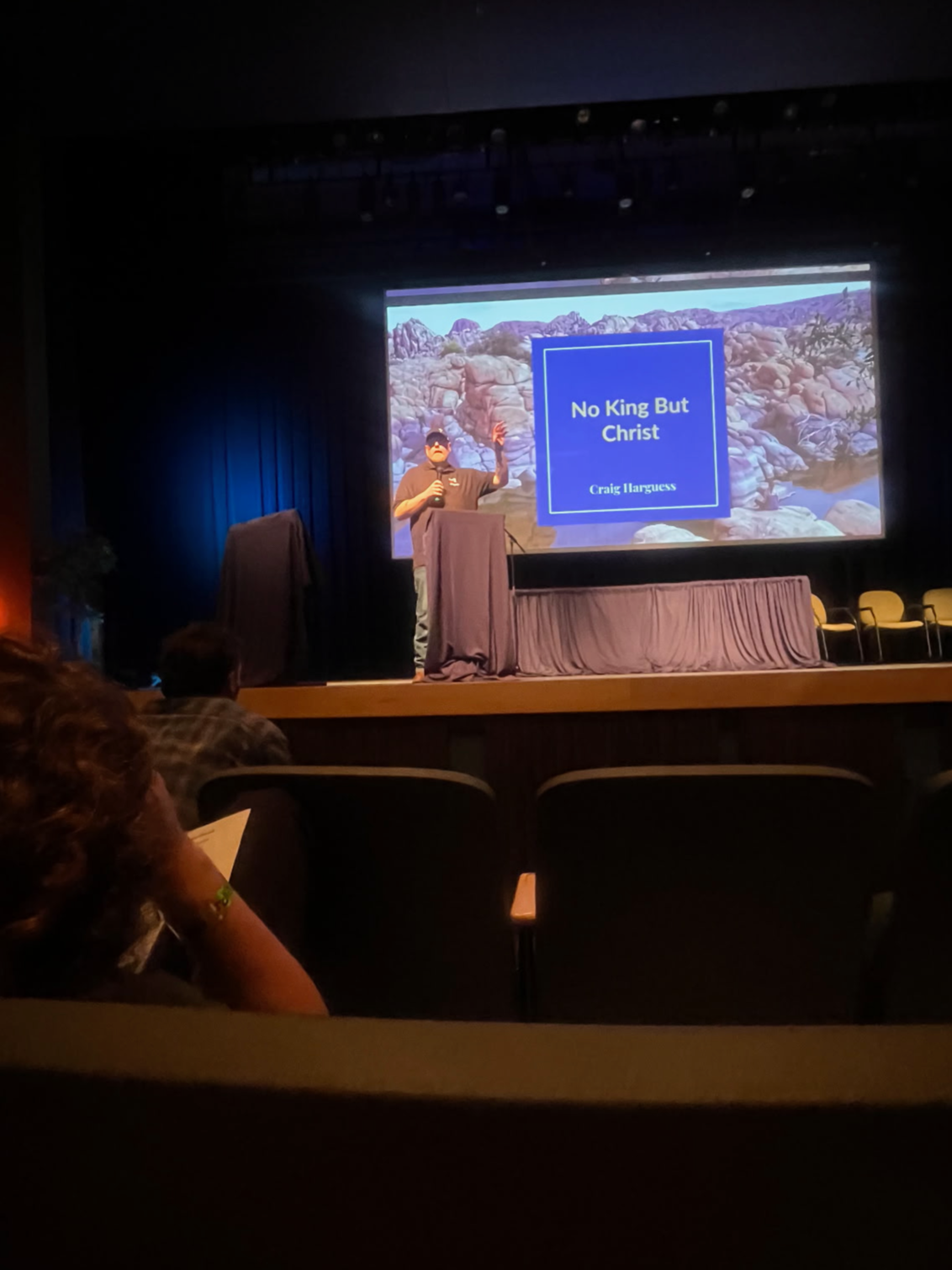
Time Stamps & Starting Points for Further Exploration:

07:36 “To say we don’t need a government rejects the Biblical truth of a fallen world. I don’t want to imagine a world with pacifist Christians and godless tyrants”

10:19 1 Samuel 8

11:30 Nero, Romans 12 NIV, Romans 13 NIV

19:35 Stephen is Stoned to Death

29:10 How to Win Friends and Influence People - Dale Carnegie
33:33 “Would you be okay with a draft in the military? If not, how would you defend a voluntary society without enough people enlisted in the military?”

36:35 Battle of the Alamo, Libyan Civil War

43:39 2016–2020 Yemen cholera outbreak

51:13 Military-Industrial Complex

Have a question about this episode or any previous episodes? Leave us a voice message or send us an email of your question or comment and your question could be on the next Bad Roman Round Table.