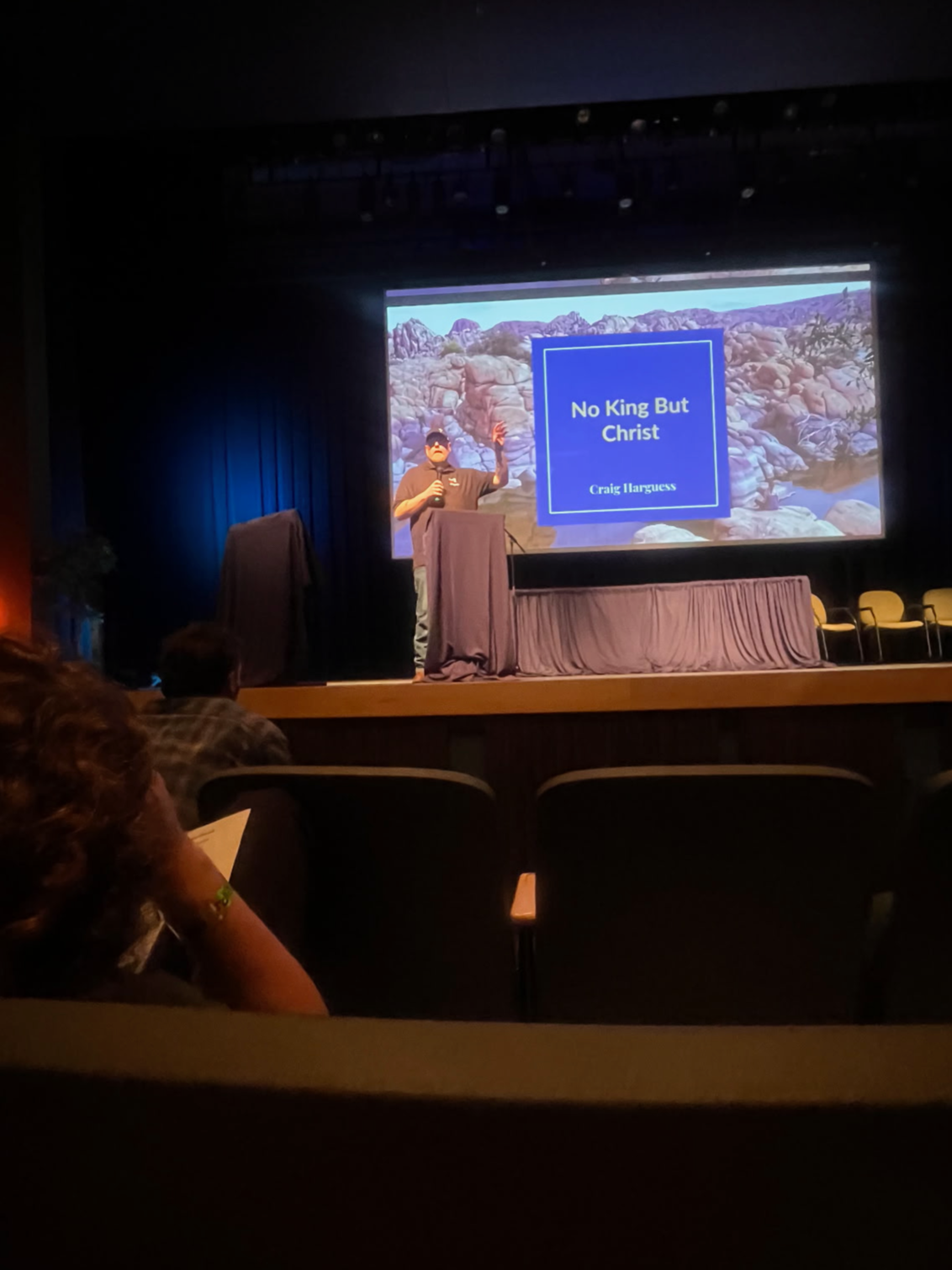
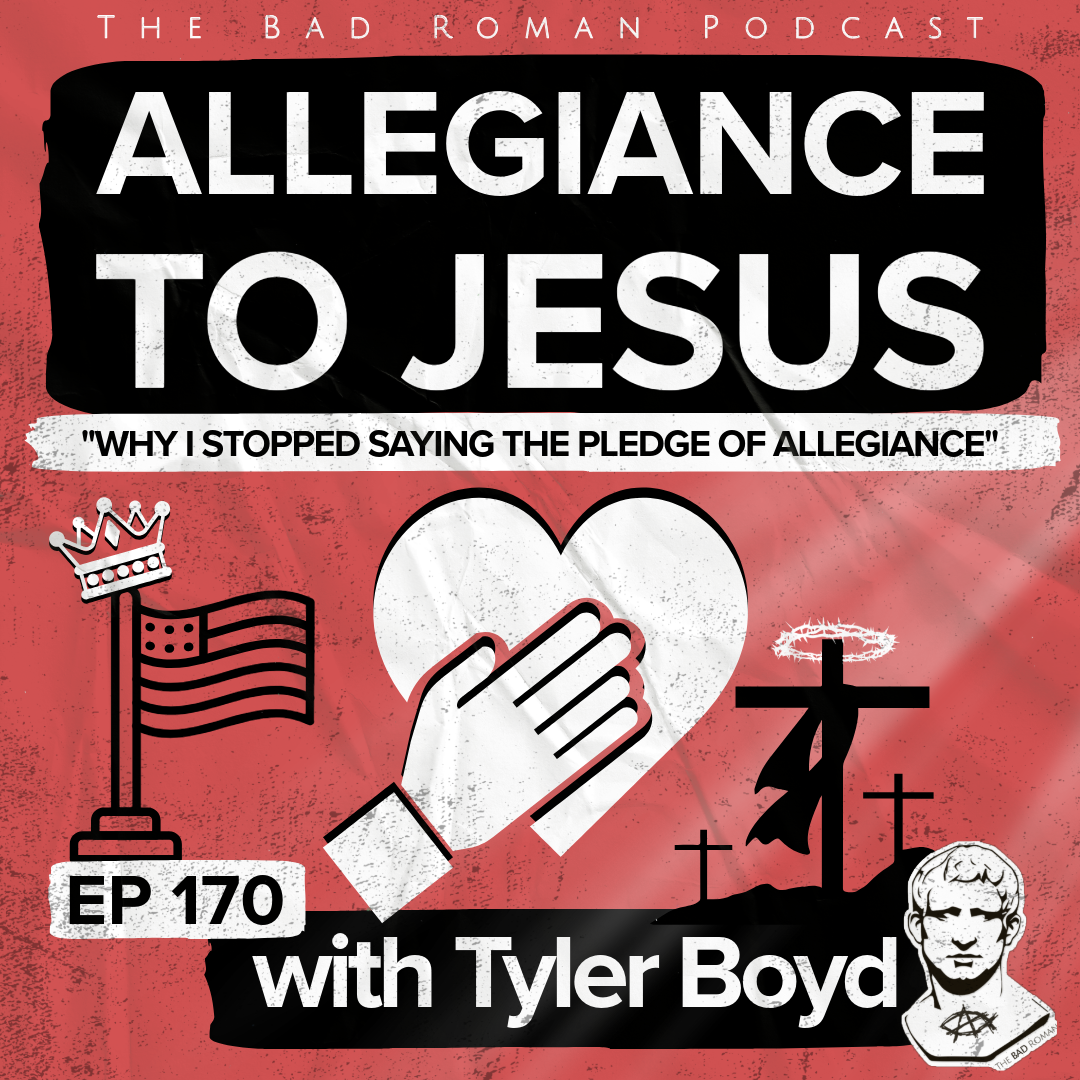
For years, Tyler Boyd said the Pledge of Allegiance like most people around him. Then one word started bothering him: Indivisible.
So he did something small. He kept saying the pledge, but when everyone reached that word, Tyler stayed quiet. That tiny silence eventually opened a much bigger question.
If Christians already confess Jesus as King, what exactly are we promising when we pledge allegiance to a nation?
Tyler, a writer at The Christian Exile, joins Craig to talk through the argument behind his article The Case Against Christians Saying the Pledge of Allegiance. It is not a conversation about hating America, disrespecting veterans, or creating a new purity test for Christians.
It is about taking a familiar sentence seriously.
The Word He Stopped Saying
Tyler did not grow up suspicious of patriotism.
He describes his younger self as a “principled Republican.” Christianity came first, but conservative politics still made sense to him. Ron Paul helped him question some of the positions he had inherited, and two books sitting on his father’s shelf pushed the questions further.
One was David Lipscomb’s On Civil Government. The other argued from a much more nationalist direction. Tyler read them side by side.
Then he started looking differently at the pledge.
At first, “indivisible” was the problem.
“I would just be quiet when it got to that word indivisible.” — Tyler Boyd, around 09:02
What if a country stops protecting the very liberty and justice named in the pledge? Is a Christian really prepared to promise that the nation must remain indivisible no matter what it becomes?
Eventually Tyler’s discomfort moved beyond a single word. Maybe the problem was not which parts of the pledge he could say. Maybe the question was why a Christian was pledging national allegiance at all.
“I Pledge” Is a Bigger Sentence Than It Sounds
The pledge begins with two words most of us can say without thinking: I pledge.
Tyler wants Christians to slow down there.
A pledge is a promise. An oath. A declaration of loyalty.
Jesus’ words about oaths in Matthew 5 have been interpreted in different ways by Christians, and Tyler does not pretend that debate is settled. His narrower point is easier: if Christians are going to make a pledge, it should not be automatic. We should mean what we say.
Craig knows how uncomfortable that can become in public. He remembers deciding not to participate during the patriotic ceremony at a Memphis Grizzlies game. Sitting while nearly everyone else stood brought the pressure of the crowd into focus quickly. Tyler has felt a similar tension at Chamber of Commerce events.
Tyler still stands and removes his hat as an act of respect. He simply stops before putting his hand over his heart or reciting the pledge. That distinction matters to him. Refusing allegiance does not require contempt.
Can You Respect a Government Without Giving It Your Allegiance?
Romans 13 enters the conversation, as it tends to do whenever Christians start talking about government.
Tyler points to Paul’s language about taxes, respect, and honor. Craig wonders how that passage should be read alongside everything else Christians are told about earthly power. Tyler argues that Christians should be able to disagree with rulers, political parties, and governments without becoming cruel toward the people involved. That leaves an uncomfortable middle ground.
How do you show respect without endorsing everything a government does? How do you obey where obedience is appropriate without turning obedience into loyalty? How do you refuse a pledge without turning the refusal itself into another badge of superiority?
Those questions may be harder than simply choosing whether to stand or sit.
What If “Faith” Includes Allegiance?
That distinction between respect, obedience, and loyalty leads the conversation into a deeper question: What does Christian faith itself ask of us?
Craig and Tyler turn to the Greek word pistis, often translated as “faith.” Tyler argues that modern Christians sometimes hear “faith” mainly as believing that something is true. But biblical faith, he says, carries a stronger sense of faithfulness, loyalty, and lived commitment.
His simple example is marriage.
Being faithful to your spouse does not mean believing your spouse exists. It means loyalty. Tyler points listeners toward Matthew Bates’ Salvation by Allegiance Alone, which explores this understanding of pistis in much greater depth.
When “allegiance” is simply a form of loyalty aimed at a ruler, nation, government, or cause, the pledge question gets harder. If faith in Jesus includes loyalty to Jesus, what does it mean to stand and formally pledge loyalty somewhere else?
“There Is Another King, Jesus”
There is some language Christians use so often they have lost the political edge of their history.
Jesus is Lord.
Jesus Christ.
King Jesus.
Tyler points to Acts 17, where Christians are accused of announcing “another king, Jesus.”
His argument is that the accusation was not entirely a misunderstanding. Christians were not trying to build another Roman-style government or organize an armed revolt, but they really were proclaiming another ruler: Jesus.
That is the heart of Bad Roman’s familiar line, No King but Christ. It does not mean Christians stop living among governments. But rather it raises the question of who gets the final claim on our loyalty.
“There is another king, and his name is Jesus.” — Tyler Boyd, around 30:26
Not Every Loyalty Is the Same
As Tyler makes clear, Christians clearly have loyalties besides their loyalty to God. A husband can be faithful to his wife. A worker can be loyal to an employer. Tyler can remain very faithful to Tennessee football and Craig to Dallas football (win or lose). None of those loyalties automatically compete with Christ. In fact, faithfulness to other people can sometimes become an expression of faithfulness to God.
But Tyler argues that some loyalties are different. If he introduced his wife to a girlfriend and explained that everything was fine because his wife still ranked first, nobody would call that a properly ordered marriage. Some commitments are exclusive. Some commitments require sacrificing their alternatives. That leads Tyler to the real question beneath the pledge:
“Allegiance to one’s country, which category does that fit in?” — Tyler Boyd, around 35:54
Is national allegiance like loving your spouse, neighbor, or employer, a secondary loyalty that can sit beneath Christ? Or does an earthly kingdom make a competing claim to rule?
Tyler later expanded this distinction in Why Christians Keep Talking Past Each Other About Patriotism, because people on both sides often agree that Jesus comes first while disagreeing completely about what that means for patriotism.
The Lamb, the Beast, and Competing Kingdoms
Tyler’s answer to the allegiance problem comes from the way he reads earthly kingdoms across Scripture. He moves from Israel’s relationship with surrounding nations to Jesus’ temptation in the wilderness, Paul’s language about rulers and authorities, and the beasts of Revelation.
Craig and Tyler do not pretend every passage is simple. They also do not think Romans 13 should be allowed to stand alone as though the rest of Scripture has nothing to say about power. For Tyler, Revelation is especially important because Christians are not told to reform Babylon by becoming more loyal to it. They are told to come out.
Whether you agree with Tyler’s reading or not, his larger challenge is worth hearing clearly:
When Christians say Jesus is Lord, is that merely a statement about personal spirituality, or is it a claim about who actually rules?
Polycarp Had an Easy Way Out
The conversation becomes less theoretical when Craig and Tyler turn to the early Christian martyrs.
Tyler is careful here. He does not treat early Christian writers as Scripture. They could be wrong. But they lived much closer to the world of the apostles, and their choices show how some of the earliest Christians understood loyalty to Christ.
Polycarp is the clearest example. According to The Martyrdom of Polycarp, Roman officials offered him a way out: swear by Caesar.
He refused.
The account also says that when the men came to arrest him, Polycarp had food brought out for them before they carried him away. That detail may be just as challenging as the refusal itself. Polycarp would not give Caesar what he believed belonged to Christ. He also fed the people taking him to his death. No violent revolution. No hatred of his captors. No oath.
Craig and Tyler also discuss Speratus and the Acts of the Scillitan Martyrs, another early account involving Christians refusing loyalty to Caesar. Tyler acknowledges that ancient Roman loyalty rituals are not a perfect one-to-one comparison with an American pledge before a basketball game.
The circumstances are different, but the question they raise remains difficult: What did these Christians believe they could give Caesar, and what did they believe belonged only to Christ?
Staying in the Church When You Disagree
Tyler brings the conversation back into ordinary church life. Finding a congregation without nationalism, patriotic worship, or political disagreement can be hard (as Craig knows). But, Tyler’s response is not: leave everybody who disagrees with you. Quite the opposite.
He talks about worshiping that very morning with people who may not share all of his conclusions. He even thanked the song leader for keeping the service centered on Christ rather than turning the Sunday after the Fourth of July into a patriotic service. Then they kept talking. Tyler believes churches need Christians willing to stay in relationship, study Scripture, disagree honestly, and encourage one another.
That might be one of the most useful ways to carry this episode forward. Not by turning the pledge into another test of who counts as a real Christian. Not by beating somebody over the head with a new conclusion. Ask the question. Study together. Listen together. Read the sources together. Be together in Christ on a team for a political party. Then decide whether the words you say match the King you claim to follow.
🤝Connect with Tyler Boyd🤝
Highlights & Takeaways
Saying a pledge by habit is different from examining what the words actually promise
Tyler’s first break with the pledge began with one word: “indivisible”
Respect for governing authorities and allegiance to them are not necessarily the same thing
The biblical idea of pistis raises questions about faith as loyalty, faithfulness, and allegiance (not mere belief)
“Jesus is Lord” was more than a private religious phrase in the Roman world
Not every secondary loyalty competes with Christ; the central debate is whether national allegiance does
Early Christian martyrs provide historical examples of believers honoring rulers while refusing oaths to Caesar
Disagreement over patriotism does not have to become another reason for Christians to abandon community or each other
Listen
Notice the moments when Tyler’s argument moves from abstract theology into ordinary life: staying silent on one word of the pledge, standing respectfully without reciting it, comparing national loyalty to marriage, and worshiping beside Christians who disagree with him.
Reflect
When you say you are loyal to Jesus, what do you mean by “loyal”?
Are there promises, rituals, political habits, or cultural traditions you participate in mostly because you have never stopped to examine the words?
Read
Read Matthew 5:33–37, Romans 1:1–5, Acts 17:6–7, Romans 13:1–8, Revelation 18:1–4, and 1 Peter 3:21.
Then read Tyler’s original article and compare his argument with the passages yourself.
Practice
The next time you encounter the Pledge of Allegiance, do not begin by deciding what everybody else should do. Read the words slowly. Write down what you understand “pledge” and “allegiance” to mean. Then ask whether you can say each line truthfully and faithfully before Christ.
Resources Mentioned
Episode Timestamps:
(00:00) Allegiance to Jesus and the Pledge
Tyler Boyd’s article
early Christian questions
loyalty to Christ and the state
(06:24) “I Pledge” and the Word “Indivisible”
pledges as promises and oaths
Matthew 5
Tyler’s first hesitation
(11:44) Public Pressure, Respect & Romans 13
Grizzlies game and social pressure
standing without pledging
honor, respect, and love
(18:52) What Does Biblical Faith Mean?
pistis
faith versus simple belief
Salvation by Allegiance Alone
(25:30) Jesus Is Lord — and Caesar Is Not
Romans 1
Lord as a ruler’s title
“another king, Jesus”
(31:04) Can Christians Have Dual Allegiance?
ordered loyalties
marriage and faithfulness
Tennessee football
(36:30) Which Kind of Allegiance Is Patriotism?
earthly kingdoms as rival authorities
temptation of Jesus
Revelation and Babylon
(43:44) What the Early Christians Did
church before Constantine
political power and military service
enemy-love
(49:02) Polycarp, Caesar & the Cost of Refusal
“swear by Caesar”
King and Savior
Scillitan martyrs
(53:24) A Different Kingdom
loyalty already declared
baptism as pledge
invitation rather than coercion
(56:32) Church, Patriotism & Staying in Community
finding a congregation
Fourth of July worship
disagreement without abandonment
farmer’s market conversations
Everything beyond production costs supports local charities in Memphis, Tennessee.
No King but Jesus.
Related Episodes

Related Blog Post