Iran

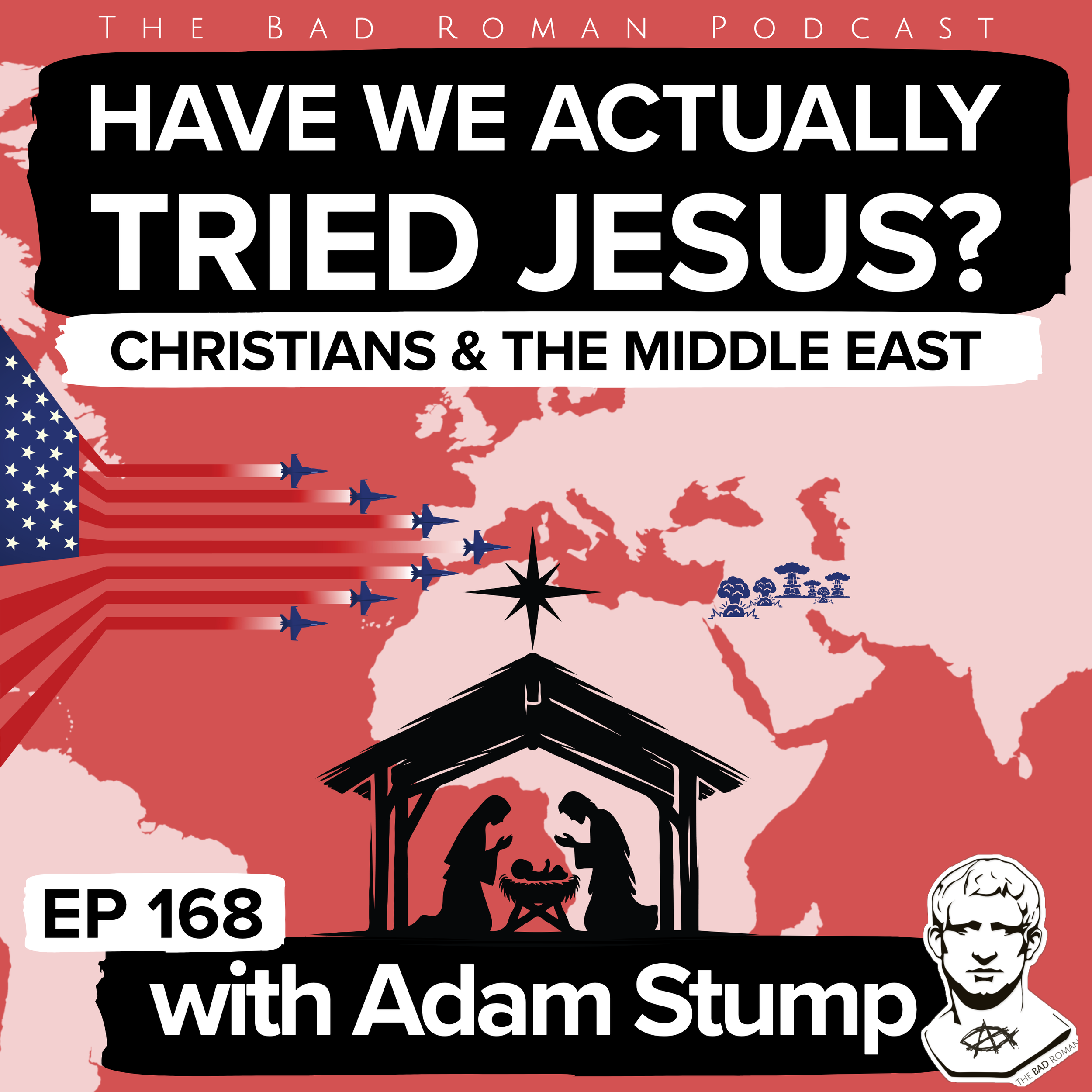
168. Christians in the Middle East: Have We Actually Tried Jesus? with Adam Stump

Adam Stump asked two congregations a pretty simple question.

Did they know there are Christians in Iran?

Not one hand went up.

Then he pushed a little further. Did they know some Christian communities in Iran have existed there for centuries? Did they know Christians live across the Middle East, including places Americans mostly hear about through war reports?

Again, almost nobody knew.

That little church pop quiz gets to the heart of this episode. What happens when Christians in America know more about the governments we are told to fear than the people who actually live under them?

And what happens when some of those people are our brothers and sisters in Christ?

Adam is a pastor with a background in sociology, anthropology, history, archaeology, and a long list of ordinary jobs before full-time ministry.

He also calls himself a “professional gadfly,” he likes asking questions that make comfortable answers harder to hold.

The People Missing From Our Map

For Adam, this did not begin as an academic interest in Middle Eastern history.

His wife started drawing his attention to Iranian Christians in the United States who were facing detention and possible deportation. Adam began reading. Then he began meeting people. He traveled to Washington, D.C., connected with an Iranian pastor and people from World Relief, and started paying closer attention to Christians whose stories rarely made it into his own church world.

What began as information became personal.

“That’s really where it all began with me… this chunk of human suffering that I had not previously been aware of.” — Adam Stump (14:43)

That sentence is uncomfortable because most of us have our own version of it.

There are people suffering right now whom we barely know exist.

It is easy to turn Iran into a word on a map. It becomes a government, a military target, a headline, or an “enemy.” Real people disappear inside the label.

World Relief has documented the struggle of Iranian Christians who fled religious persecution only to face immigration detention in the United States. World Relief — Iranian Christians, asylum, and detention

Once people have names and faces, foreign policy gets harder to discuss like a football game.

Christianity in Iran Is More Complicated Than We Think

Craig admits early in the conversation that he knew very little about Christianity in Iran.

That is probably true for a lot of us.

Adam explains that Iran contains old Armenian and Assyrian Christian communities as well as converts from Islam who often worship in much more dangerous conditions. Some historic Christian communities have a recognized place in Iranian society. Converts meeting in Farsi-speaking house churches can face a very different reality.

That means even the phrase “Christians in Iran” covers several different stories.

It also means the Middle East cannot be reduced to “Muslims over there.”

Christians, Jews, Muslims, and many other communities have shared those lands for centuries. Their history includes terrible persecution, but also ordinary seasons of living beside one another.

Adam makes a point that should be obvious but often is not: an entire country cannot be treated like one person.

Iran is not ninety million copies of its government.

Neither is America.

Can You Liberate Someone With a Bomb?

This is where the conversation turns from ignorance to power.

What happens when the United States says it wants to “liberate” people in another country through military force?

If Christians are already trying to survive quietly in a hostile environment, does bombing their country make them safer? Or can military action by a nation widely identified with Christianity make local Christians look like agents of the enemy?

The question is not whether the Iranian government deserves criticism. Both Craig and Adam are clear that defending human beings in Iran is not the same thing as defending the Iranian state.

The deeper issue is the strange phrase we have heard for decades: bombing for peace.

Adam offers a much simpler alternative.

“We have tried bombs and bullets and it doesn’t work. Why don’t we try love?” — Adam Stump (28:55–29:05)

It almost sounds too simple.

Then again, so does “love your enemies.”

Have We Actually Tried Jesus?

Craig hears Adam say “try love” and asks the question that eventually became the title of the episode:

“Have we actually tried Jesus when it comes to this stuff?” — Craig Harguess (32:12–32:25)

That deserves more than a quick answer.

Christians have tried political parties. We have tried presidents. We have tried military strength. We have tried Christian nations. We have tried laws, campaigns, coalitions, and the promise that the next ruler will finally put things back in order.

Have we tried Jesus?

Not Jesus as a mascot for the state.

Jesus as the man who told Peter to put away his sword.

Jesus as the King who told us to love our enemies and pray for people who persecute us.

Jesus as the Lord of a Kingdom that crosses borders without asking Caesar for permission.

Adam puts it this way:

“Christians ought to be kingdom people before they are… citizens of any country.” — Adam Stump (28:05–28:10)

That does not mean Christians stop caring about the world.

It means we stop letting the state decide whom we are allowed to love.

Because once we know there are Christians, human beings, beneath the bombs, we have to wrestle with Faith.

Once we know the person called an enemy is a mother, pastor, child, Muslim neighbor, or fellow believer, clean political categories start getting messy.

But, life is messy and Jesus calls us to follow him through it with love not fear.

When Politics Uses the Church

Adam calls himself a “recovering Republican.”

He is careful about what he means. He is not saying every conservative idea suddenly became evil. He is talking about the party structure itself and the way political movements can turn religion into a weapon.

“Our political parties in America have really used religion as a weapon… to increase political division rather than increasing unity.” — Adam Stump (45:10–45:30)

Christian nationalism tells us the nation needs Christianity in order to become strong. Jesus seems much more interested in whether Christians are faithful.

Those are not the same goal. A powerful nation can have weak disciples. A politically weak church can still love enemies, feed hungry people, forgive persecutors, welcome strangers, and refuse to kill.

No King but Christ means the church does not need Caesar to make Jesus Lord. He already is.

Constantine's Trade

Eventually Adam reaches back nearly seventeen centuries.

His judgment is strong: one of the worst things to happen to Christianity was Constantine and the rise of Christendom.

Before Christianity gained imperial favor, Christians lived for centuries without controlling Rome. They were sometimes tolerated and sometimes persecuted. They did not have the machinery of empire available to enforce the faith.

Then Christianity gained political power.

Adam argues that something was lost in the trade.

“Even though it grew in political and earthly power, the spiritual power waned.” — Adam Stump (55:48–55:55)

That is worth sitting with. What if political strength and spiritual strength are not the same thing?

What if they can even move in opposite directions?

The church may gain access to rulers and still lose sight of Jesus. It may win a culture war and forget how to love the people on the other side. Empire always offers the church something shiny. Jesus keeps handing us a cross.

People Are Made to Love and Be Loved

One of Adam’s clearest statements comes as the conversation turns back to the people we call enemies.

He does not pretend governments are harmless. He does not pretend violence and injustice are imaginary.

He simply refuses to let those things erase the humanity of ordinary people.

“Those people are all people created in the image of God, and they are actually created to love and be loved.” — Adam Stump (51:40–51:55)

That changes the starting point. We do not begin with, “What does America need from these people?” We begin with, “How does God see them?”

That is harder than nationalism because nationalism gives us categories. Friend. Enemy. Ally. Threat. Citizen. Foreigner. Jesus keeps turning categories back into people.

Get Out of the Bubble

Adam's final advice is refreshingly ordinary: meet somebody.

Talk to Muslims instead of only talking about Muslims. Visit an international grocery store. Meet someone from another country. Ask questions. Listen to how America looks from outside America.

Adam says that when he sees someone attacking Muslims online, he often asks one question:

How many Muslims do you actually know? The answer usually is silence.

His own shift began decades ago when he met Muslim classmates and became their friend. Real relationships made it harder to accept opinions that had simply been handed to him.

And learning cannot stop at “now I know more facts.” It has to change how we live. Adam urges listeners to use whatever influence they have to speak for people who are easier for society to ignore. But he also warns against becoming so angry that nobody can hear us.

“I think that we’re gonna change this thing through relationships.” — Adam Stump (1:10:50–1:11:00)

Maybe changing the world looks less like taking control and more like opening a table. Listening. Learning a name. Refusing to call millions of strangers our enemies. And then trying the strange, difficult thing Jesus told us to do all along: Love them.

Connect with Adam Stump

Highlights & Takeaways

  • The Middle East is not one religious block; ancient Christian communities are still part of the region

  • Meeting real people can break political categories that survive easily from a distance

  • Christian nationalism confuses the worldwide Kingdom of God with the interests of one nation

  • “Bombing for peace” deserves special scrutiny from people commanded to love their enemies

  • Political power and spiritual power are not the same thing

  • The church does not need state power to make Jesus King

  • People called “enemies” remain image-bearers created to love and be loved

  • Lasting change usually grows through relationships, listening, and honest questions rather than coercion

Listen

Pay attention to Adam’s church pop quiz and the silence that follows. Notice what happens when a political category like “Iran” turns back into real Christians, Muslims, families, pastors, and children.

Reflect

Who have you learned to think of mainly as an enemy? If you knew that person face to face, what might become harder to say about them?

Read

Read Matthew 5:38–48, John 17:20–23, and John 18:10–11. Sit with Jesus’ commands about enemies, unity, and Peter’s sword.

For a current look at Iranian Christians facing asylum and detention questions in the United States, read World Relief’s reporting on the issue. World Relief — From the Pulpit to the Capitol

Practice

This week, talk with someone whose culture, religion, or national background is different from yours. Do not begin with a debate. Ask about their life. Listen long enough to learn something you did not already know.

Episode Timestamps

(00:00) Meet Adam Stump

  • West Virginia roots and Nazarene upbringing

  • archaeology, anthropology, history, and ministry

  • relational approach to pastoring

(04:27) A Long Road Into Ministry

  • resisting the pastor path

  • secular work and cross-cultural experience

  • ministry beyond professional clergy

(09:10) Christians in the Middle East

  • American blind spots

  • Iran as the immediate focus

  • U.S. power and regional war

(14:43) Iranian Converts and Underground Churches

  • asylum and deportation fears

  • house churches and Farsi worship

  • historic Armenian and Assyrian communities

(20:11) A More Complicated Middle East

  • Christians, Jews, and Muslims across centuries

  • “people of the book”

  • ancient communities behind modern headlines

(25:17) Bombs, Liberation, and Christian Nationalism

  • danger of foreign intervention

  • “bombing for peace”

  • kingdom people before national citizens

(32:12) Have We Actually Tried Jesus?

  • politics tangled with faith

  • Peter's sword and Christian nonviolence

  • U.S.–Israel policy and Christian witness

(41:35) The Church Pop Quiz

  • zero hands in two congregations

  • Christians in Iran and Lebanon

  • ignorance, discomfort, and small-group learning

(48:11) Love Your Enemies Gets Uncomfortable

  • trying love instead of another political savior

  • comfort-driven Christianity

  • image-bearers beyond enemy labels

(55:10) Constantine, Christendom, and Empire

  • Christianity gaining political power

  • spiritual power versus state power

  • empire, party movements, and global perception

(1:00:19) Seeing America From Outside America

  • Adam's 2002 experience in France

  • political personality and national reputation

  • shrinking American perspective

(1:05:23) How We Actually Change Things

  • “How many Muslims do you know?”

  • meeting people outside the American bubble

  • listening, using influence, and changing through relationships

Keep the Conversation Going

If this episode challenged the way you see Christians in the Middle East, share it with someone who may have the same blind spot.

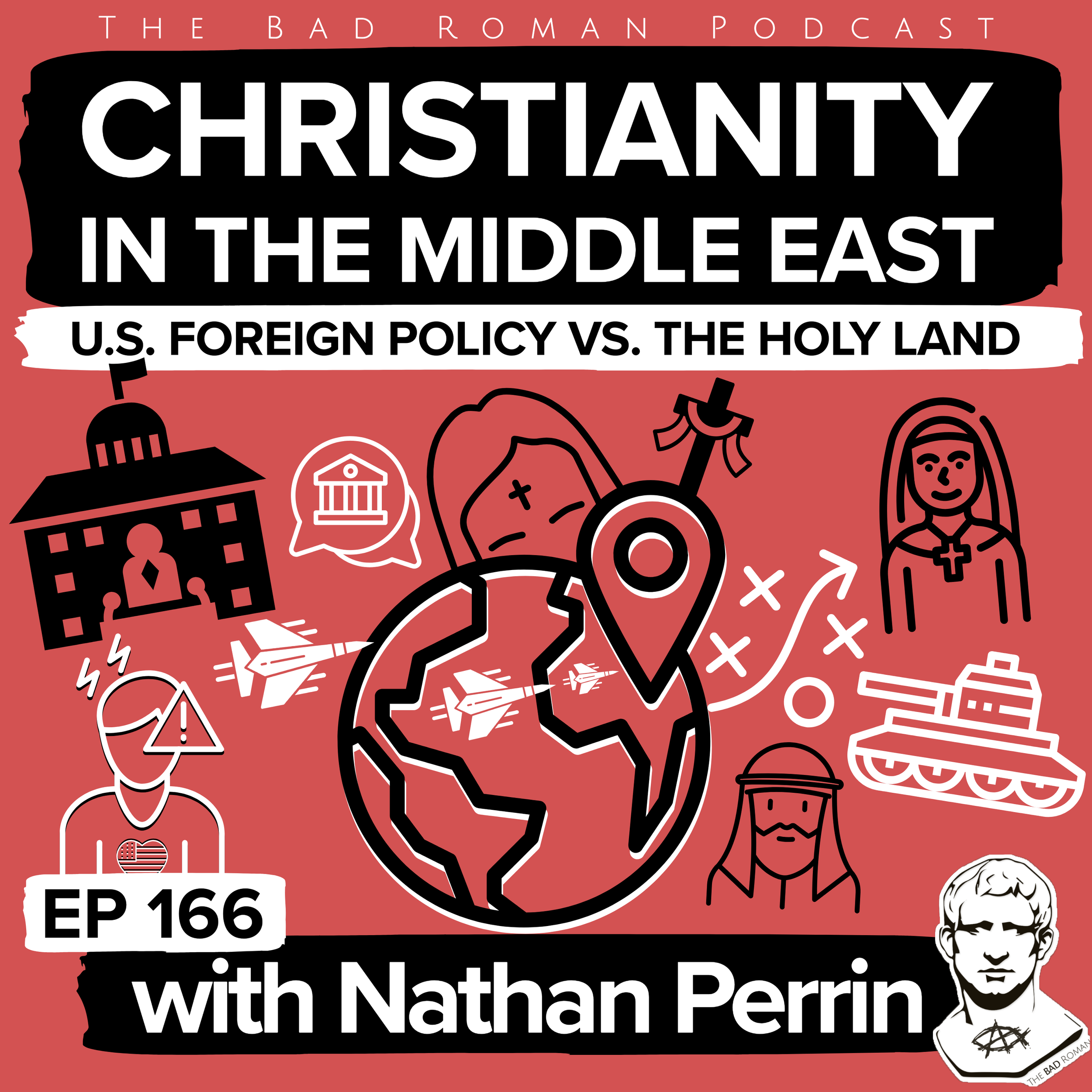
For another angle on the same region, listen to Episode 166, Christianity in the Middle East: U.S. Foreign Policy vs. The Holy Land with Nathan Perrin. Episode 166 with Nathan Perrin

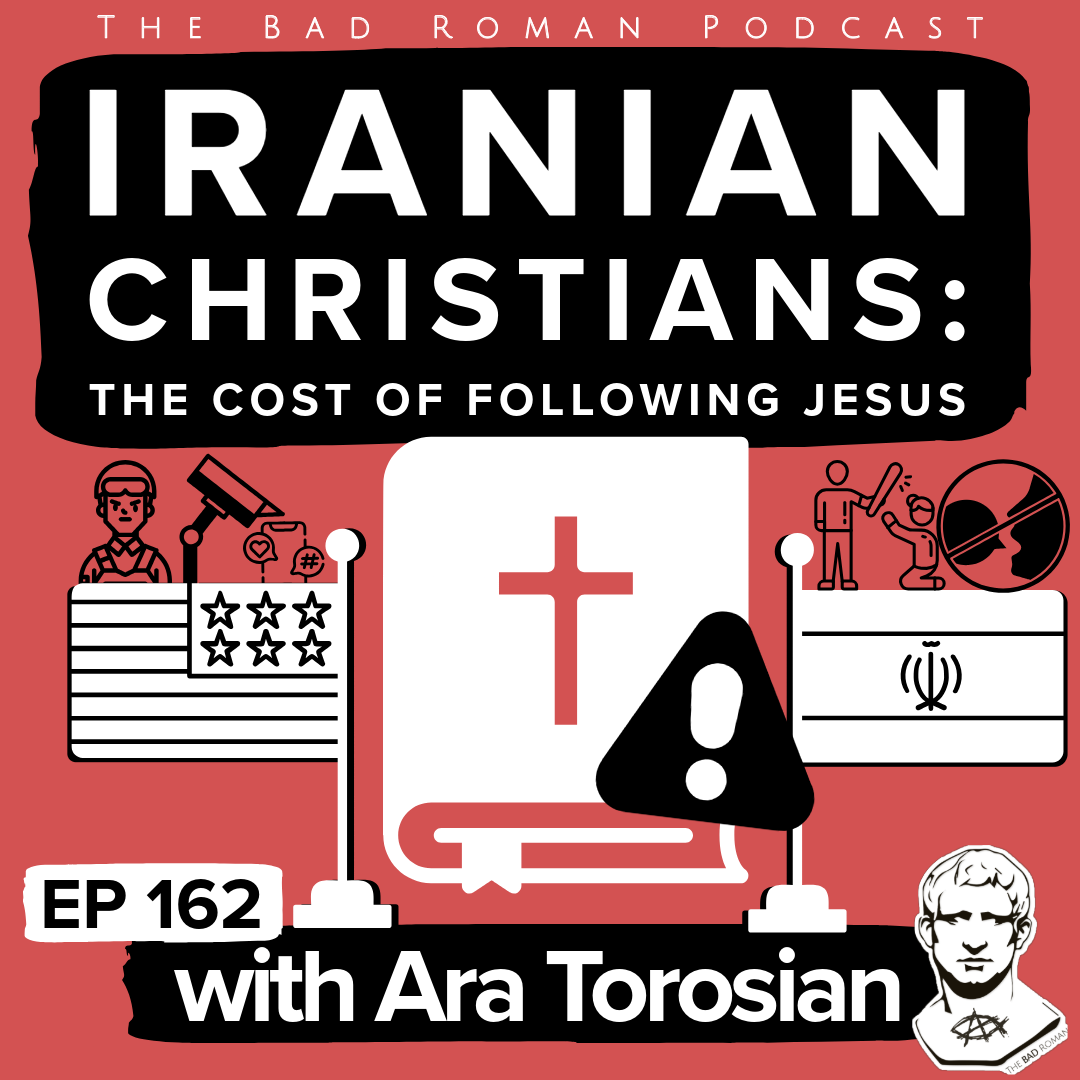
You can also hear Iranian pastor Ara Torosian’s story in Episode 162, Iranian Christians, ICE Raids, and the Cost of Following Jesus. Episode 162 with Ara Torosian

Read the Gospels. Meet people face to face. Love the person behind the label.

No King but Christ.


Related Episodes

Related Blog Post

Christianity in the Middle East: U.S. Foreign Policy vs. The Holy Land with Nathan Perrin

What happens when American Christians pray for persecuted believers on Sunday, then support foreign policies that place those same believers in danger on Monday?

Many of us hear words like Iran, Iraq, Lebanon, or Palestine and picture one large Muslim world. We forget that these lands are also home to some of the oldest Christian communities on earth. Christians were worshiping there long before the United States existed. Some still pray in Syriac, a form of the language Jesus spoke.

Yet their churches are bombed, their families are displaced, and their stories rarely enter our Sunday morning conversations.

In this episode, Craig talks with Mennonite pastor, writer, screenwriter, and activist Nathan Perrin. Nathan has spent nearly a decade working alongside Assyrians, Kurds, Palestinians, and other communities in the Middle East and Chicago.

This is not a simple conversation about choosing a political side. It is about seeing people whom our maps, headlines, and churches often hide. It is also about asking whether Western Christianity has become so tied to American power that people in other lands fear the empire when they hear the name of Christ.

A Cross Full of Bullet Holes

Nathan’s path began with discomfort.

As a teenager, he spent time in Messianic Jewish circles. He heard Christians speak about Arabs and Muslims as if they were less than human. One pastor even spoke about turning the Middle East “into glass” if people there refused to support Israel.

That language did not sound like Jesus.

Nathan was also dating a Palestinian Christian. The people he knew did not match the enemy pictures he was being given. The story began to crack. Later, while studying at Bible college, his growing belief in Christian peace moved from an idea into a calling.

After graduation, he traveled to northern Iraq with Community Peacemaker Teams. He visited an Assyrian church that Saddam Hussein’s regime had reportedly tried to destroy several times. Each time, the people rebuilt it.

In the courtyard stood a cross full of bullet holes. It was not a monument to revenge. It was a sign that the community was still there, that they would rebuild.

Even more striking was what happened when Turkish bombardments threatened the village. Christian and Muslim neighbors exchanged keys to their homes. Each family knew the other might need shelter.

No speeches. No campaign slogans. Just neighbor helping neighbor.

During the church service, Nathan could understand almost nothing. The liturgy was loud and spoken in Syriac. But one translated line reached him:

“Jesus wants us to be the church to the world.” — 05:30

That sentence changed the direction of his ministry.

Maybe we do not need to bring Jesus to these ancient communities. Maybe they have something to teach us about Jesus.

When “Evangelical” Sounds Like Empire

In many American churches, evangelical sounds like a normal Christian label. In parts of the Middle East, it carries a much heavier history.

Nathan explains that Assyrian Christians were cautious when he first approached them. Their first concern was whether he planned to “evangelize” them.

Think about how strange that is. These are Christians whose traditions reach back toward the earliest centuries of the church. Yet Western missionaries have sometimes treated them as if they knew nothing about Christ.

Nathan describes missionaries offering more aid to people who converted (even when those people were already Christians). Help became a sales tool. Food, money, or safety came with a religious condition attached.

That is not the way of Jesus.

Jesus healed people who never joined His movement. He fed crowds without making them sign a statement of faith. He loved before anyone could repay Him.

Nathan says many Muslims he has met do not reject Christian belief itself. They are often willing to work beside Catholics, Orthodox Christians, and others who honor their full humanity. What they distrust is a Christianity mixed with coercion, colonial power, and nationalism.

The question for us is uncomfortable: when people meet Western Christians, do they sense the love of Christ, or do they wonder what we are trying to take from them?

Praying for Persecuted Christians While Funding the Danger

The Middle East cannot be treated as one nation with one story. Iran is not Iraq. Iraq is not Lebanon. Palestine is not Kurdistan.

Nathan describes Iran as a harsh theocracy. Traditional Orthodox and Catholic communities have sometimes been allowed to worship, while public evangelism and conversion from Islam may bring serious danger. He tells Craig about a Farsi-speaking church near Chicago with only a few people in the room but many more joining online from Iran.

The Iranian government deserves honest criticism. But condemning a government does not make bombing its people righteous.

War rarely harms only rulers. It tears through apartment buildings, water systems, schools, churches, mosques, and family homes. It also creates what intelligence agencies call blowback: harmful results that return after military intervention.

Nathan argues that when the United States attacks Muslim-majority countries while presenting itself as a Christian nation, local Christians can become targets. Extremist groups begin to treat them as agents of the West, even when they have lived peacefully beside Muslim neighbors for generations.

He offers a hard challenge to American churches:

“Whenever I’m in an evangelical service and I hear prayers for persecuted Christians, I wonder if that pastor will also preach sermons about not supporting policies that put Christians at risk.” — 17:05

Praying is good. But what does the prayer mean if we keep blessing the machine creating the danger?

And the concern cannot stop with Christians. Muslims, Yazidis, Mandaeans, Jews, Kurds, Palestinians, and every other person caught beneath the bombs bear God’s image too.

Jesus did not tell us to protect only the neighbors who share our theology.

The End-Times Story Behind the War Story

Why do so many American churches support the State of Israel without question?

Nathan traces much of that loyalty to dispensationalism, an end-times system that became popular in the Western church during the last two centuries. In this system, the modern State of Israel becomes part of a prophetic checklist. Its existence is treated as a step toward the return of Jesus.

But this can turn real Jewish people into pieces on someone else’s religious game board.

That is not friendship.

Nathan explains that it is possible to love Jewish neighbors, oppose antisemitism, and still criticize the actions of the Israeli government. A government is not an ethnic group. A state is not a religion. Criticizing bombs, blockades, forced displacement, or collective punishment is not the same as hating Jewish people.

In fact, Jewish people themselves hold many different views about Zionism and the modern State of Israel.

Christian Zionism can also feed anti-Muslim racism. Muslims become the permanent villain. When something goes wrong, churches blame Islam instead of examining Western weapons, coups, sanctions, occupations, and proxy wars.

After September 11, 2001 fear made this easier. Muslims were presented as a single violent mass. The church often repeated that story instead of questioning it.

When our end-times chart requires us to ignore suffering, perhaps the chart, not compassion, is the thing that needs to go.

The Plate of Food That Broke the Spell

Craig shares a small story that carries much of the episode’s message.

After September 11, he had accepted the idea that Americans had to kill Muslims before Muslims killed them. He did not think of himself as hateful. He was afraid.

Then he met a Muslim neighbor during Ramadan.

The man was cooking outside and offered to bring Craig some food. Craig had to leave for work, so the neighbor saved him a plate and brought it to his apartment the next day.

That simple act broke through years of fear.

The man was not a distant symbol on television. He was a neighbor with a name, a meal, and enough care to ensure that Craig didn’t miss dinner.

Empire needs strangers. Jesus keeps turning strangers into neighbors.

This is why face-to-face life matters. A television host can tell us to fear millions of people at once. It is harder to hold that fear when one of those people is standing at our door with a plate of food.

“Christians Are Our Neighbors”

When Craig asks how Muslims in the region view Christians, Nathan gives a simple answer:

“Christians are our neighbors.” — 33:10

The tension Nathan witnessed was often not between ordinary Muslims and Christians. It was between communities and state power.

Many people were warm toward Christianity but cautious around white Western Christians. That caution came from history: missionaries tied to colonial power, governments speaking the name of God while dropping bombs, and churches treating ancient believers as mission projects.

Nathan also introduces listeners to communities that rarely appear in Western Christian discussions.

Assyrians are an ancient people whose ethnic identity is closely tied to Christianity. Yazidis suffered mass killing and enslavement under ISIS. Mandaeans, a small religious group connected to ancient Gnostic traditions and John the Baptist, have also faced violence and displacement.

Their stories differ, but a pattern appears again and again: when religion joins the government’s hunger for control, neighbors begin to fear one another.

Faith becomes a flag. Identity becomes a target. Human beings become categories.

The Kingdom of God moves in the opposite direction. Jesus gives people back their names.

Human Rights Without the Bombs

Nathan is not arguing that governments should never be criticized. He supports standing for human rights. But he asks whether a country can honestly lecture another nation about justice while funding bombs, suppressing local self-rule, or placing its own interests above the people living there.

He remembers being in northern Iraq during a Kurdish independence referendum. The vote passed by a wide margin, but the United States and Iraqi governments opposed the outcome. Nathan uses the story to point toward the many smaller proxy conflicts that never become major American headlines.

We usually hear about a region only after a missile is fired. We miss the years of outside pressure, secret agreements, sanctions, weapons shipments, and political interference that came first.

This does not excuse terrorism or cruelty. It helps us understand how violence grows.

Understanding is not the same as approval. It is simply refusing to pretend history began on the day our preferred news channel started covering it.

Thinking Theologically, Not Tribally

Nathan has been called a heretic and a dangerous socialist because he opposes war and questions American foreign policy.

His answer is almost funny in its simplicity: he believes in the resurrection, reads the Bible, and tries to follow Jesus.

“I don’t really think politically. I think theologically.” — 29:50

That does not mean theology has nothing to say about politics. It means party loyalty and nationalism do not get the final word.

If Jesus tells us to love enemies, a pastor cannot erase that command with a sermon about national security. If Jesus blesses peacemakers, a politician cannot turn warmaking into a Christian virtue. If Jesus identifies Himself with hungry and wounded people, we cannot ignore their suffering because they live beyond our border.

Craig puts it another way: when someone becomes angry because we quote Jesus, their argument may not truly be with us.

It may be with Jesus.

Christian Nationalism After the Politician Is Gone

Craig and Nathan also discuss the rise of Christian nationalism during the Trump era.

Churches did not invent flag ceremonies, political loyalty, or fear-based preaching in 2016. But those habits became louder. Political leaders were treated as protectors of the faith. Some believers reached a point where no action by their chosen leader could make them withdraw support.

Craig remembers asking one man where his line was. What could Trump do that would finally be too much?

The answer was, “There is no line.”

That is no longer ordinary political support. It is surrendered judgment.

Nathan believes Christian nationalists may someday distance themselves from a particular politician. But the deeper ideology will remain. It survives in closed information silos where every outside voice is treated as an enemy.

People can see suffering with their own eyes and still reject it because their trusted group tells them it is not real.

How do we respond? Not with our own cult of anger.

Nathan calls Christians to patient, honest engagement. We tell the truth, keep listening, and leave room for the Holy Spirit to do work that no argument can force.

Patience does not mean silence. It means we refuse to become cruel while confronting cruelty.

We Cannot Whitewash War

Near the end, Craig asks where listeners can begin learning.

Nathan recommends Palestinian Christian teachers, books, sermons, documentaries, and films that show war from inside the lives of those who endure it. Some focus on Palestinians. Others come from Israeli Jewish filmmakers wrestling with their nation’s use of violence.

The goal is not to replace one propaganda feed with another. It is to recover the people hidden behind slogans.

Nathan sums up the lesson clearly:

“You can’t whitewash war. You can’t whitewash genocide.” — 53:35

Following Jesus requires us to look.

We look at the wounded child, the frightened family, the ancient congregation, the Muslim neighbor, the traumatized soldier, and the person our political tribe has taught us not to see.

Then we ask the question empire avoids:

What does love require of us now?

🤝Connect with Nathan Perrin🤝

Highlights & Takeaways

  • Christianity was born in the Middle East, not the United States, and ancient Christian communities still live throughout the region.

  • Western military intervention can create blowback that places both Muslims and local Christians in greater danger.

  • Aid tied to conversion is coercion, not Christlike service.

  • Loving Jewish people does not require unquestioning support for the Israeli government.

  • End-times theology becomes dangerous when real people are treated as pieces in a prophecy puzzle.

  • Personal contact can break political fear; a shared meal often teaches more than a thousand angry broadcasts.

  • Ordinary Muslims and Christians frequently view one another as neighbors until governments, militias, and foreign powers turn identity into a weapon.

  • Christian nationalism will not disappear with one politician; churches must confront the theology and fear that allow it to grow.

Listen

Listen for the moments when Nathan describes Christians and Muslims protecting one another. Notice how different those stories sound from the fear-based picture often presented in Western media and churches.

Reflect

When you hear about Iran, Iraq, Lebanon, or Palestine, whom do you picture? Are there people, churches, or whole histories missing from that picture?

Read

Read Matthew 5:43–48, Luke 10:25–37, and Romans 12:14–21. Ask whether our ideas about war, national loyalty, and enemies could survive a plain reading of Jesus.

Practice

Share a meal or conversation with someone from a religious or cultural background you were taught to fear. Listen to their story without treating them as a debate or mission project.

Episode Timestamps:

(00:00) The Christians missing from our maps

  • Western blind spots about Iran, Iraq, Lebanon, and Palestine

  • Nathan’s Mennonite ministry, writing, and solidarity work

  • Local activism in Chicago and experience in northern Iraq

(04:20) A bullet-marked cross and shared house keys

  • Tishkawa church rebuilt after repeated destruction

  • Assyrian and Muslim families protecting one another

  • Syriac worship and “the church to the world”

(08:15) Why “evangelical” carries painful baggage

  • Colonial missions and conditional aid

  • Ancient Christians treated as conversion targets

  • Trust built through service without coercion

(12:40) Middle Eastern Christians and the cost of intervention

  • Different conditions in Iran, Iraq, Lebanon, and Gaza

  • Traditional churches, converts, and Farsi online worship

  • Blowback against Christians and Muslims

(19:45) Dispensationalism, Zionism, and prophecy politics

  • Modern Israel as an end-times checklist

  • Jewish people separated from state policy

  • Christian nationalism and anti-Muslim racism

(24:45) A Ramadan meal breaks through fear

  • Craig’s post-9/11 assumptions

  • A Muslim neighbor’s plate of food

  • Foreign policy, proxy power, and hidden conflicts

(32:06) “Christians are our neighbors”

  • Warmth toward Christianity, fear of Western power

  • Assyrian distrust shaped by missionary history

  • Empire mistaken for the Gospel

(36:36) Assyrians, Yazidis, and Mandaeans

  • Ancient ethno-religious communities

  • Genocide, displacement, and state corruption

  • Peaceful neighbors divided by political religion

(41:30) A political issue and a theological issue

  • Church teaching behind fear and foreign policy

  • Christian nationalism’s rapid growth

  • Dispensationalism and government power

(46:23) What remains after Trump

  • Political personality cults and missing moral lines

  • Closed information silos

  • Patient truth-telling and the work of the Holy Spirit

(50:55) Learning to see the people behind the war

  • Palestinian Christian authors and sermons

  • Documentaries and Israeli anti-war films

  • Refusing to whitewash war or genocide

(54:18) Nathan’s writing and peace work


Related Episodes

Related Blog Post

162. Iranian Christians, ICE Raids, and the Cost of Following Jesus with Ara Torosian

What does it mean to follow Jesus when governments demand your allegiance, your silence, or your fear?

That question is not abstract in this episode. It has a name, a face, a church family, and tears on a Los Angeles sidewalk and Iranian streets. Craig sits down with Ara Torosian, an Iranian-born Armenian pastor now living in Los Angeles, to talk about Iranian Christians, war, asylum, ICE arrests, and what it means to follow Jesus when governments on every side demand our fear.

Ara’s story does not fit into our neat American boxes. He loves Iran. He loves America. He has suffered under the Iranian regime. He has been and watched Christians be persecuted in Iran. He has seen fellow asylum seekers be detained here in the United States government. That kind of story makes slogans fall apart fast.

And maybe that is the point.

Because if Jesus is Lord, then no flag gets to blind us. No empire gets a blank check. No ruler gets to replace mercy. No King but Christ.

When the government Becomes a Teacher of Fear

Ara was born in Iran in 1979, the year of the Iranian Revolution. He grew up as part of an Armenian Christian minority in a country shaped by pressure, control, and fear. As a child, he remembers being pushed to step on painted U.S. flags and Israeli flags at school while chants were taught like lessons.

That is what governments do. They train children to hate the “enemy” before the children even know what the word means.

But here is the catch: the U.S. does this too. Maybe the songs are different. Maybe the flags are treated with more reverence. Maybe the slogans sound more polished. But when any government teaches us who to fear, who to bomb, who to cage, and who to ignore, Christians should pause.

Jesus never said, “Blessed are the well-propagandized.” He said, “Blessed are the peacemakers.”

The Underground Church and the Cost of Saying Yes

Ara came to faith as a teenager after reading the Bible in Farsi. He knew from the start that following Jesus could cost him. This was not church as a hobby. This was not Sunday morning culture. This was a dangerous yes.

“When I say, ‘Yes, Lord, I wanna follow you,’ I knew this is going to be dangerous. This might cost my life.” — Ara, around 10:17

That kind of faith exposes how soft our U.S. church games can be. We argue about music styles, coffee brands, and which politician God supposedly likes this year. Meanwhile, brothers and sisters in Iran have been arrested, beaten, imprisoned, and killed for gathering around Scripture.

Ara says the church in Iran went underground after pressure increased. And yet, the gospel kept moving. Not through government power. Not through a Christian nation. Not through forced religion.

Through witness. Through courage. Through people hungry for truth.

War, Peace, and the Sermon on the Mount

One of the hardest parts of this conversation is the tension around war. Ara has seen evil up close. He has watched people suffer under the Iranian regime. He understands why many Iranians are desperate for outside pressure and even military help.

Craig does not brush that pain aside. But he also asks the question Bad Romans have to ask:

“As I read the Sermon on the Mount, where am I gonna see this in the words of Jesus?” — Craig, 33:25

That question should haunt us in the best way.

Because the government always has a reason to bomb. Always. It is always freedom, safety, justice, defense, liberation, or national interest. But Jesus calls us to enemy-love, mercy, prayer, and cross-shaped faithfulness.

Ara says plainly, “As a Christian, I want peace. I want peace for all world.” He also admits the world is broken and the answers are not simple.

That honesty matters. We do not need cheap answers. We need Jesus-shaped ones.

The Church Is Not a Political Platform

Ara shares something every U.S. church should hear. In his own church, people have wanted to bring political loyalty into the pulpit. Some support Iranian opposition leaders. Some want the church to bless a movement or party.

Ara refuses.

“In my church, my platform is for Bible and preaching the gospel.” — Ara, around 37:34–38:23

Amen and amen.

The church is not a campaign office. It is not a nationalist clubhouse. It is not a place to crown Caesar, Trump, Biden, Pahlavi, or anyone else. The church belongs to Christ.

That does not mean Christians stop caring about real suffering. It means we care without handing our worship to rulers.

When ICE Looks Like the Regime You Fled

Then the episode turns from Iran to Los Angeles.

Ara describes Iranian Christian asylum seekers from his congregation being detained by ICE, including people with pending asylum cases and legal paperwork. He says one couple had lawyers, documents, and a live asylum case when they were arrested.

Ara watched masked agents detain people from his church. It brought him back to Iran.

“Seven minutes I was crying… Because that triggered me back in Iran.” — Ara, 52:49–53:00

That sentence should stop us cold.

What does it say when a pastor who fled persecution sees masked agents in U.S. uniforms and feels like he is back under the terror he escaped?

This is where “law and order” talk gets tested by Jesus. These are not talking points. These are image-bearers. These are families. These are people seeking refuge. Ara says it clearly: “They are just people. They are just Christians, persecuted Christian. They want freedom.”

Acting Christian, Not Using Christianity

Ara does not ask U.S. Christians to pick a party. He asks them to act like Christians.

“The Christian show the act, mercy, and also compassion for human life.” — Ara, 58:00–58:09

That is the line.

Not “Who did you vote for?”
Not “Which side owns the news cycle?”
Not “Can we make this fit our immigration policy?”

Mercy. Compassion. Human life.

Craig adds that silence in the face of oppression makes us complicit. That is not a call to worship politics. It is a call to stop hiding behind politics when our neighbors are suffering. 

May we be people who speak for the voiceless, refuse the worship of empire, and follow the crucified King.

Jesus over empire. Neighbor-love over coercion. No King but Christ.


🤝Connect with Ara Torosian🤝

  • Instagram: Ara Torosian, @aratorosian (Instagram)

  • Facebook: Ara Torosian (Facebook)

  • Church connection: Cornerstone West Los Angeles / Farsi-speaking community; Ara has written publicly for the church about war, immigration struggle, and his congregation’s pain. (cornerstonewla.org)

  • Related reporting: Christianity Today covered one Iranian Christian connected to Ara’s church being freed after nine months in immigration detention. (Christianity Today)

  • Related reporting: Religion News Service covered Ara’s hunger strike and advocacy for detained Iranian Christians. (RNS)

  • Related reporting: Reuters covered immigration arrests of Iranian asylum seekers in Los Angeles and Ara’s response as pastor. (Reuters)

Highlights & Takeaways

  • Governments train fear. Jesus trains enemy-love.

  • Iranian people are not the Iranian regime. We must stop confusing rulers with the people under them.

  • War always promises freedom, but often multiplies death. Christians must test every claim by the words of Jesus.

  • The church pulpit belongs to Christ. It should not become a stage for parties, rulers, or national movements.

  • Persecuted Christians need protection, not political theater. Asylum seekers are neighbors, not props.

  • Mercy is not weakness. It is what faithfulness looks like when the government gets cruel.

  • Speaking up matters. Silence can become cooperation with oppression.

  • No King but Christ means no empire or government gets our full trust. Not Iran. Not America. Not any government.

Listen

Listen for the tension in Ara’s story. He loves America, grieves Iran, opposes oppression, and still wrestles with what peace looks like in a broken world.

Reflect

Where have you let a government tell you who your enemy is? What would change if you looked at that person first through the eyes of Jesus?

Read

Read Matthew 5–7 slowly this week. Pay special attention to enemy-love, mercy, prayer, and the way Jesus rejects revenge.

Practice

Find one immigrant, refugee, prisoner, or detained family story in your own community. Do not turn it into a debate. Pray, listen, and look for one concrete act of mercy.

Episode Timestamps:

(00:00) government oppression and Iranian Christians

  • Standing by or speaking up

  • Iranian Christians in Iran and United States

  • Ara Torosian introduced

(00:37) Meeting Ara

(02:01) Ara’s background

(03:32) Discovering the Bible in Farsi

  • First encounter with the gospel

  • Six months of searching

  • A dangerous yes to Jesus

(04:06) Childhood under government propaganda

(07:00) Pressure on Christians in Iran

(10:17) Following Jesus when it costs

  • Faith with real danger

  • Prison and persecution

  • American comfort challenged

(11:28) Smuggling Bibles into Iran and house arrest

  • Arrest at the airport

  • Two years under pressure

  • Intelligence office interrogations

(12:43) The underground church grows

  • House churches after closures

  • Hunger for truth

  • Iran as mission field

(15:03) People versus regimes

  • Iranian people not the regime

  • American government comparison

  • government power and coercion

(17:10) War, freedom, and mixed Iranian views

  • Some wanting intervention

  • Some fearing bombs

  • Media narratives questioned

(30:57) Craig presses the Jesus question

  • War on terror comparison

  • More war making more death

  • Sermon on the Mount tension

(33:32) Ara’s struggle with war and peace

  • Wanting peace as a Christian

  • Broken world realities

  • Rights versus righteousness

(34:46) Presenting, not protesting

  • White House fasting

  • Voice for the voiceless

  • Persecuted Christians detained

(35:37) Government worship in churches

  • Leaders lifted over Scripture

  • Jesus as Savior, not rulers

  • Peace prayed for daily

(37:03) Politics inside the church

  • Iranian opposition movements

  • Pulpit not for parties

  • Church as gospel space

(48:01) Bad Roman donation break

  • Spotfund support

  • No King But Christ message

  • Donations beyond costs to Memphis charities

(48:38) ICE arrests and asylum seekers

  • Church members detained

  • Pending asylum cases

  • Legal path concerns

(52:03) Masked agents and trauma

  • Couples detained

  • Panic attack and emergency room

  • Iran memories triggered

(54:00) Broken immigration system

  • Asylum eventually granted

  • Months in detention

  • Families harmed

(55:44) Children praying for their dad

  • Nine- and seven-year-old kids

  • Detained father

  • Sunday prayers

(56:08) Speaking because he can

  • Freedom to criticize government in U.S. vs. Iran

  • White House advocacy

  • Church silence challenged

(58:00) What Christians should show

  • Mercy and compassion

  • Human dignity

  • Persecuted Christians seeking freedom

(59:36) Silence and complicity

  • Speaking out against oppression

  • Possible costs

  • Refusal to stay quiet

(01:01:03) Life belongs to Jesus

  • Threats from Christians

  • Fear admitted

  • Kingdom purpose

(01:03:11) Bad Roman Salsa break

  • Salsa support

  • Homemade freedom joke

  • No King but Christ jingle

(01:03:54) How many Christians in Iran?

  • Numbers hard to know

  • Underground church reality

  • Fundraising claims questioned

(01:05:30) Where to find Ara

  • Instagram and Facebook

  • Open to honest questions

  • Avoiding hateful arguments

(01:07:14) Lakers, Luka, and closing

  • Basketball side quest

  • Keeping in touch

  • Final thanks


Related Episodes

Related Blog Post