There’s a moment a lot of us remember, even if we wish we didn’t.
A moment when politics stopped feeling like a hobby or a duty and started feeling like a religion. A time when we could repeat the talking points, defend the system, and call it wisdom. We were sure we were being faithful. Sure we were being responsible. Sure we were on the side of truth.
But what happens when the spell breaks?
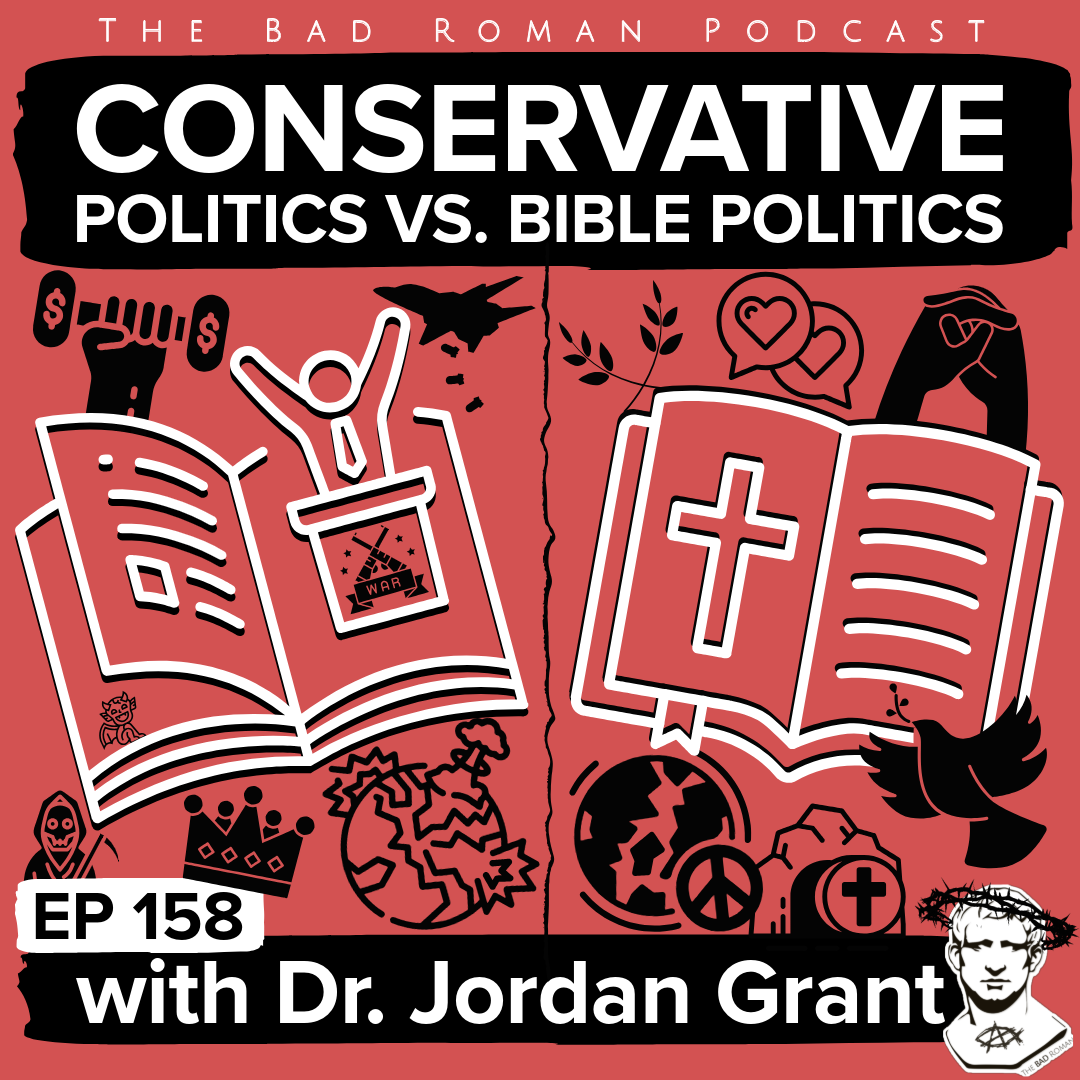
In this episode, Craig sits down with Jordan Grant to talk about that slow, often painful unraveling. Jordan is a physician from Texas whose journey moved from conservative certainty and talk-radio formation to deep questions about authority, coercion, medicine, the church, and what it really means to follow Jesus. This isn’t a play-by-play of one man changing political labels. It’s the story of what happens when conviction gets more important than tribe, and when the words of Jesus become harder to ignore than the noise of government.
And maybe that’s the real question under this whole conversation: what if the issue isn’t that we got our politics slightly wrong? What if we trusted the wrong kind of power altogether?
When the Script Starts Writing You
Jordan’s story begins in a place many listeners will recognize. He grew up in Texas, in a Christian home, with politics more assumed than deeply examined. You’re a Christian, so of course you’re conservative. You vote Republican. You defend America. You support the system. That’s just what “our people” do.
Then 9/11 happened, and like it did for so many people, it hardened the script. Talk radio filled in the blanks. Fear gave authority a moral glow. What had once been background noise became formation. Jordan describes becoming a full-blown “cage-stage conservative,” devouring the arguments, the voices, the outrage, the confidence. Craig laughs about doing his own version of the same thing, falling asleep to Fox News and waking up angry at Democrats. Funny, until it isn’t.
That’s how propaganda often works. It doesn’t just tell us what to think. It teaches us what kind of person to become.
Reading the Bible Without the State’s Glasses
But Jordan’s shift didn’t begin with politics. It began with Scripture.
During the years between finance work and medical school, he started reading the Bible for himself. Not just hearing verses filtered through church culture, but sitting with the text and wrestling with it directly. That changed him. Not all at once. Not with a dramatic lightning bolt. But enough to make him harder to manage.
That matters. Because once a person starts reading the Bible without automatically assuming Caesar is the good guy, things get uncomfortable fast. The teachings of Jesus don’t fit neatly inside our favorite patriotic categories. Enemy-love does not help campaign strategy. “Not so among you” doesn’t sound much like winning elections.
And Jordan makes that tension plain later in the episode: “It doesn’t get any clearer than that” when Jesus says His followers are not to lord power over others the way Gentile rulers do (1:04:48).
Medical School and the Myth of the Expert
A big turning point came in medical school.
Jordan says it was there that he started seeing the deeper authoritarian instincts behind modern systems. Not just in government, but in medicine too. He saw dogmatism. He saw hubris. He saw how easily people in respected institutions can begin to treat ordinary people like problems to manage rather than neighbors to love.
That part of the conversation lands hard because it isn’t really just about doctors. It’s about power. It’s about what happens when people begin to believe that expertise makes coercion righteous. Jordan says he saw firsthand the kind of mindset that quietly says, we know best, so trust us and obey.
That same mindset didn’t stay in the hospital. It spilled into the church, the culture, and the COVID years. And when churches echoed the government instead of standing against tyranny, both Jordan and Craig felt the betrayal.
Craig puts it bluntly: the church should have been the first to say, “I don’t think we will” when power tried shutting everything down. Jordan agrees: Christians pushing these kinds of tyrannies and blindly trusting “the expert” had to be called out (26:43).
The Cracks in Conservative Certainty
One of the most human parts of this episode is how familiar the old world still feels.
Jordan remembers the talk-radio years. Craig remembers the Fox years. Both of them know what it’s like to think Sean Hannity sounds profound. That’s why the conversation never turns smug. There’s no chest-thumping here, no “look how enlightened we are now.” There’s just recognition. We know how easy it is to get swept up, because we were.
And still, there’s hope.
Craig says he has more faith in younger people now, because at least many of them are asking questions. Jordan agrees that he sees a trend: people are beginning to question authority more than they used to. Not everyone. Not at the same speed. But enough to notice.
That matters, because every awakening starts with one forbidden question.
Can I Do This to My Neighbor?
Late in the episode, Jordan gives what may be the clearest summary of the whole conversation.
For people still on the fence, he says to start with principles, not pragmatism. Use this as the filter: Can I do this to my neighbor or not? If it would be evil for you to do it personally, why does it become righteous when the state does it with a flag and a larger budget?
Jordan describes using this line of thought in medical school and in everyday conversations. If he came to your house with a gun and demanded 30% of your income “for good things,” you wouldn’t call that moral. So why do we accept it when a system does it? His point is not that every hard question becomes instantly simple. His point is that principles matter more than outcomes we happen to prefer.
Or as he says, “principles trump pragmatism” (1:05:48).
That’s a deeply Christian idea, even if modern Christians often forget it.
Questioning Pastors, Churches, and the Things We Were Told Never to Touch
Jordan ends with one more challenge, and it’s a brave one.
He says Christians should be thinkers. Good thinkers. Solid thinkers. And that means it’s okay to question your pastor. It’s okay to leave a church if it’s pushing evil things. That won’t sound radical to everyone, but for people raised to equate church loyalty with obedience to God, it can feel like breaking a family curse.
Jordan isn’t encouraging rebellion for rebellion’s sake. He’s calling for conviction. If a church is teaching things that are antithetical to Christ, we do not owe it our silence.
Christian nationalism survives on borrowed trust. It counts on us being too scared to ask whether the people leading us actually sound like Jesus.
Sometimes faithfulness begins with a very simple act: refusing to pretend.
A Different Kind of Wake-Up
This conversation isn’t about becoming libertarian, anarchist, or anti-establishment as an identity. It’s about becoming honest.
Honest enough to admit that many of us once mistook certainty for wisdom.
Honest enough to admit that “Christian politics” often discipled us more than Jesus did.
Honest enough to ask whether the church has been waving the wrong banners for a very long time.
Jordan’s story reminds us that shifts like this rarely happen in a straight line. They come through reading, questioning, noticing, grieving, and slowly learning how to see our neighbor again.
Because maybe leaving the political script behind isn’t losing faith at all.
Maybe it’s the first time we’re actually starting to trust Jesus.
Highlights & Takeaways
Many of us did not reason our way into statism; we were formed into it by fear, habit, media, and church culture.
Reading Scripture for ourselves can expose how often we’ve filtered Jesus through patriotic assumptions.
Authoritarianism does not only show up in government. It can appear in medicine, church life, and any system that treats people as manageable objects.
COVID revealed how quickly many churches sided with power rather than with courage, mercy, and truth.
Younger people asking hard questions may be one of the more hopeful signs in this cultural moment.
“Can I do this to my neighbor?” is a powerful moral test for politics, voting, taxation, and coercion.
Principles must matter more than pragmatism if we want to follow Jesus consistently.
Christians should be thinkers, and that includes questioning pastors, churches, and traditions that defend what Christ would never command.
Listen
Listen for the way Jordan describes his shift not as a trendy political reinvention, but as a long collision between principle, Scripture, and lived experience.
Reflect
Where have we accepted coercion from the state that we would condemn in our own personal lives?
Read
Read Matthew 20:25–28 and ask whether our political instincts actually fit Jesus’ words: “Not so among you.”
Practice
Pick one belief you have about politics, voting, or authority and run it through this question all week: Can I do this to my neighbor in good conscience?
Episode Timestamps:
(0:00) Jordan Grant joins the show
Craig introduces Jordan
paradigm shift in faith and politics
social media connection becomes podcast conversation
(4:35) Jordan’s background: Texas, finance, medicine, and faith
small-town Texas upbringing
finance degree, hated the cubicle life
pre-med years become spiritual turning point
(8:38) 9/11, Bush-era politics, and the conservative script
Christian = conservative assumption
post-9/11 political awakening
Republican identity without much examination
(10:46) Talk radio formation and becoming a “cage-stage conservative”
devouring radio and pundit logic
Sean Hannity talking points
outrage as discipleship
(13:25) Younger people, military disillusionment, and questioning authority
Craig’s hope in the younger generation
refusing to die for empire
asking questions older generations often avoid
(17:53) Medicine, the state, and forced trust
medicine/state crossover
losing trust in institutional authority
coercion as a warning sign
(18:28) Medical school and the authoritarian mindset
dogmatism in professional culture
private contempt for “normies”
expert culture and hubris
(19:30) Authoritarian systems inside modern medicine
Rockefeller-era legacy
approved knowledge vs. “quack” labels
power holders deciding how people must live
(26:43) COVID, church shutdowns, and Christian compliance
church entanglement with the state
outrage at Christian silence
ICE, experts, and pushing tyranny
(28:37) Reformed theology, Romans 13, and civil magistrate thinking
Bible reading gets serious
attraction to “intellectual” theology
proof-texting for power
(40:14) Ron Paul, conviction, and the church’s blind spots
justice, mercy, widow, orphan
Christians booing what should convict them
voting as legitimizing tyranny
(57:47) Wrestling with Scripture, certainty, and honest questions
questioning inherited assumptions
Jesus’ words as the clearest anchor
letting hard questions stay hard
(1:04:48) “Not so among you”
Jesus rejects lordship politics
Matthew 20 as political confrontation
the Kingdom not built on domination
(1:05:48) Practical advice for fence-sitters
principles over pragmatism
“Can I do this to my neighbor?”
moral consistency as the filter
(1:08:20) Christians should be thinkers
question your pastor
leave churches pushing evil
conviction over belonging
Related Episodes


Related Blog Post

