Anarchist society

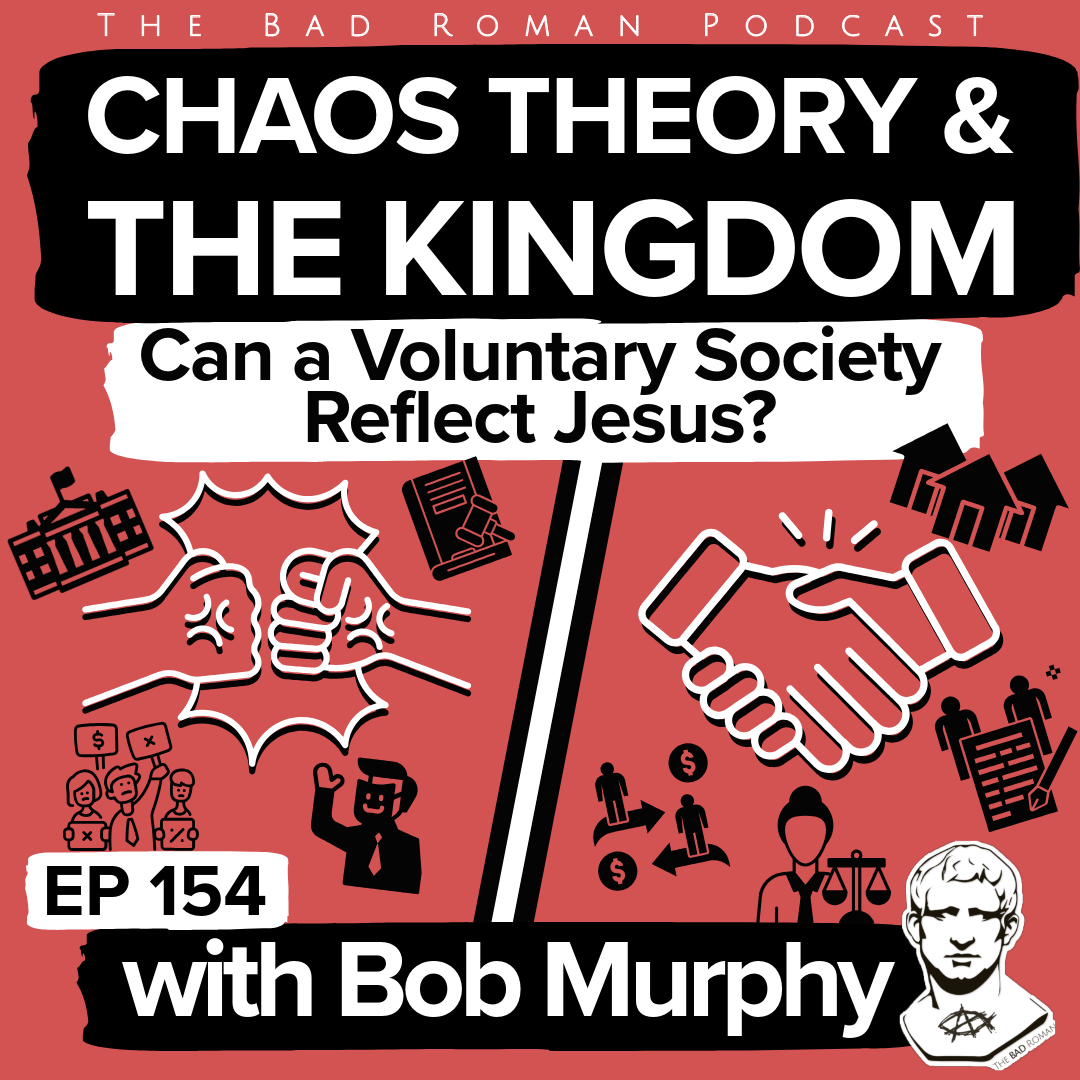
154. Kingdom Politics vs. Chaos: Can a Voluntary Society Reflect Jesus?

“What if the problem isn’t that we haven’t found the right rulers, but that we keep assuming someone needs to rule us at all?”

There’s a moment that shows up in almost every conversation about politics and faith. It usually comes right after someone says, “Okay, but what about bad people?” The room tightens. The air shifts. Because underneath the question isn’t policy, it’s fear. Fear of chaos. Fear of losing control. Fear that without someone in charge, everything falls apart.

This episode lives inside that moment.

Craig sits down with economist and author Bob Murphy to talk about Bob’s short book, Chaos Theory. On the surface, it’s about how law, courts, and public safety might work without a centralized state. But that’s not really why Craig wanted the conversation. What he’s really asking is something Christians rarely slow down long enough to face: Why are we so sure that force is necessary for order, and what does that say about what we believe Jesus actually taught?

Bob doesn’t come in trying to convince anyone. He comes in careful. Thoughtful. Almost pastoral. He knows the ideas he’s talking about can trigger alarm bells. So instead of starting with labels or slogans, he starts with a question that keeps circling back throughout the episode: Should anyone be allowed to do things that would be wrong for everyone else?

Craig Meets Bob Murphy

Craig opens with honesty. He’s familiar with these ideas. He’s heard them before. But he also knows where people get stuck. It’s not usually in theory. It’s in the details.

“How does this actually work?” Craig asks. “Not in a perfect world, but in this one.”

Bob nods. He doesn’t promise a world without sin or harm. “The goal isn’t utopia,” he says. “The goal is removing what I call an institutionalized aggressor.”

That phrase lands heavy.

Bob explains that every system has problems because people have problems. The difference is whether the system itself assumes that violence and threats are necessary tools. A voluntary society, he says, doesn’t eliminate wrongdoing. It eliminates the idea that some people are allowed to do wrong by design.

Craig pauses there, not because he disagrees, but because he recognizes how deeply that assumption runs. For Christians, this isn’t an abstract argument. It cuts straight into how we’ve learned to think about safety, authority, and obedience.

Why Bob Steps Around the Word “Anarchy”

Early in the conversation, Bob explains why he rarely leads with the word “anarchist,” especially among Christians. The word comes loaded. Too many images. Too many misunderstandings.

“I actually believe in order,” Bob says. “I just don’t think order requires rulers.”

Instead, he uses the phrase voluntary society. It sounds less dramatic, but it’s more accurate. A voluntary society isn’t about tearing everything down. It’s about cooperation without coercion. Rules without rulers. Agreement without threats.

Craig connects this to Christian nationalism almost instinctively. When Christians say “Jesus is King,” do we really believe it? Or do we still assume someone else needs to enforce things for Him? Jesus refused power when it was offered. He didn’t seize control. He invited people to follow.

That contrast lingers.

A Boring Word That Changes Everything

Midway through the episode, Craig opens Bob’s book and lands on a section that doesn’t sound very spiritual at all: contracts.

It almost feels like a letdown at first. No revolution. No big speeches. Just agreements.

But Bob leans in. Contracts, he explains, are how most of our lives already work. Jobs. Housing. Insurance. Services. We trust them not because someone is holding a gun, but because incentives, reputation, and accountability matter.

“Insurance companies don’t want to write million-dollar checks,” Bob says. “So they care about safety. They ask questions. They check training. They look at track records.”

Craig pushes back with the concern many listeners will feel. What about the vulnerable? What about people without power or money?

Bob doesn’t pretend this system fixes everything. He simply points out that our current system already fails the vulnerable, often while claiming moral authority. A voluntary system doesn’t solve sin. It just stops pretending that force is love.

Consent, Compliance, and the Ballot Box

One of the most uncomfortable turns in the conversation comes when Bob challenges the idea that voting equals consent.

“In normal life,” Bob says, “consent means you can say no. You can walk away.”

You can’t really do that with the state.

Markets depend on persuasion. Governments depend on compliance. Craig lets that contrast sit without rushing to resolve it. Because Jesus never appealed to majorities. He appealed to hearts. To repentance. To truth.

“If we wouldn’t do this to our neighbor,” Craig reflects, “why are we okay with a system that does?”

That question doesn’t get answered. And that’s the point.

Live the Question Jesus Calls us To Ask

This episode doesn’t give you a platform to stand on. It gives you a question to carry. And following Jesus has always meant carrying questions that cost us something.

If this conversation unsettled you, sit with that. Keep asking what it really means to follow a crucified King.

🤝 Connect with Bob Murphy 🤝

Highlights & Takeaways

  • A voluntary society doesn’t promise a perfect world

  • It refuses to give moral exemptions to people in power

  • Order and control are not the same thing

  • Consent requires the real option to walk away

  • Jesus never modeled threat-based transformation

  • Christian nationalism trusts force where Jesus trusted faithfulness

  • You don’t need a political plan to name a moral problem

Listen & Reflect

Listen: Pay attention to where fear enters the conversation. What are we afraid would happen if control loosened?

Reflect: Where have we accepted systems that do things we would never justify in our own lives?

Read: Read Matthew 5–7 slowly. Notice which teachings feel “impractical,”and ask why.

Practice: This week, choose persuasion over pressure in one real situation. Let go of leverage and see what remains.

Episode Timestamps:

(00:00) Voluntary Society: “Wouldn’t That Be Chaos?”

  • bad actors, security, fear of “chaos”

  • why Bob Murphy + Chaos Theory today

  • frame: Christ over the state

(00:45) Welcome Bob Murphy

(06:19) Why Bob Avoids the “Anarchist” Label

  • two kinds of “anarchists”

  • “I have a king… not an earthly king”

  • prefers “voluntary society” language

(07:19) Sermon on the Mount + Politics That Fit Jesus

  • “dovetail… best with what Jesus told Christians”

  • Craig’s shift from “looking for somebody to vote for”

  • discipleship vs ideology

(10:57) “I Don’t Have to Have a Plan”

  • refusing the election-pressure test

  • “this current system… is crazy”

  • Craig: “yeah, you’re allowed”

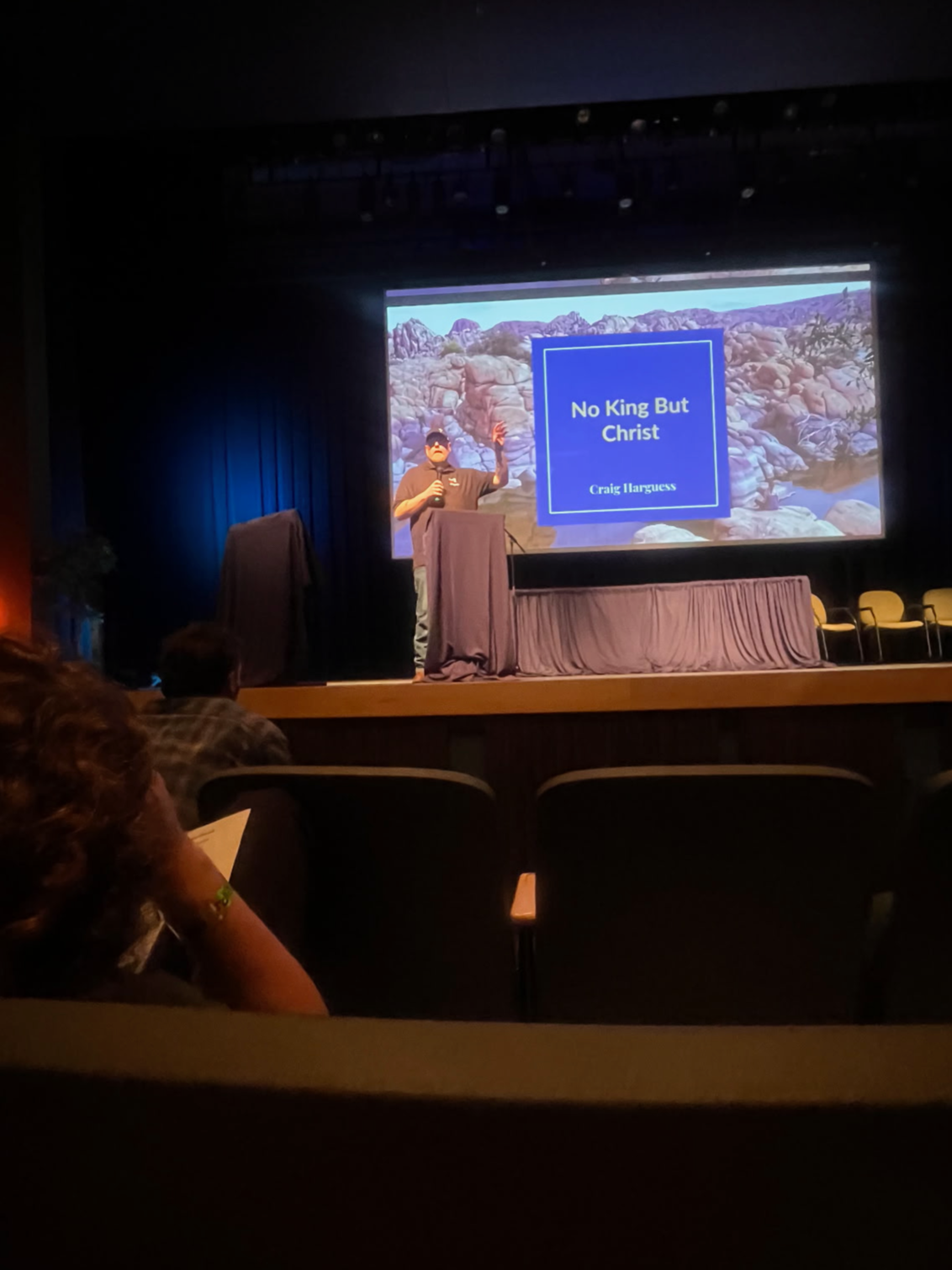
(11:33) Salsa Break: No King but Christ

  • put the politics down

  • support the show

  • “no king but Christ” hook

(12:14) Chaos Theory: Contracts

  • why contracts matter in a voluntary society

  • how contracts already matter

(14:37) “Institutionalized Aggressor” + Imposed Rules

  • no “my guy loses → stuff imposed on me”

  • what the booklet is trying to show

  • contracts “on the front end”

(33:14) Insurance as Due Diligence

  • “standard package” idea

  • insurance companies = background checks

  • malpractice example bridge

(34:03) Incentives: Background Checks + Risk

  • “we might have to pay $2 million”

  • vetting training, history, reputation

  • why incentives shape behavior

(46:57) “Give the Experts Guns” Problem

  • “very naive” assumption

  • experts can be the bad guys

  • quick support spotfund message + Memphis charities

(58:27) “Aren’t Insurance Companies the Government?”

  • “they seem like they play an important part”

  • Bob: not government because it’s voluntary

  • competition + no power to block new entrants

(1:03:24) Where to Find Bob + What He’s Building

  • how to get Chaos Theory (PDF or physical)

  • Human Action Podcast + other work

(1:04:22) Wrap-Up + Possible Part 2

  • “small book… packed tight”

  • Bob open to coming back

  • Craig: “we didn’t get to cover everything”


Related Episodes

Related Blog Post

98. The Devil’s Lettuce: Cannabis and Jesus a Christian Roundtable

About this Episode

In this eye-opening episode of the Bad Roman Podcast, we venture into the intricate, complex, and often misunderstood realm of marijuana. Your host for this thought-provoking journey is Craig Harguess, accompanied by a diverse group of guests - Scott, Aaron, Jim, and William. 

Each brings to the table their personal encounters, knowledge, and unique viewpoints on the topic of marijuana use, which goes beyond the clichéd stereotypes and delves into societal, legal, and religious dimensions. Our intention with this episode is to challenge the prevailing misconceptions, stimulate intellectual discourse, and provide a fresh perspective on marijuana. 

We aim to demystify the subject and explore its multi-faceted dimensions – from the societal implications of marijuana use to the controversial war on drugs, and from the adverse effects of government propaganda to the potential medical benefits of marijuana. One of the significant areas of discussion is the comparison of marijuana with pharmaceutical drugs and alcohol. In a world where prescription drugs and alcohol consumption are largely normalized, we delve into the complex question of whether marijuana, a naturally occurring plant, is inherently any more harmful or beneficial. 

From a religious perspective, the episode ventures into uncharted territory as it discusses the place of marijuana in Christian teachings. Rooted in the belief that God is the ultimate creator, our host, and guests explore the concept that marijuana, as a part of God's creation, may have a significant role to play. They navigate through scripture and theology, bringing forth interpretations that aim to challenge conventional beliefs. 

Throughout this illuminating discussion, we are constantly reminded that this conversation is not about advocating for 'potheads', but rather about the legality and morality of a God-created plant. 

The goal is to encourage an understanding of cannabis that transcends the stigma and stereotypes, helping us to better comprehend the complexities of state power, control, and the choices we make as Christians. The conversation dives deep into the heart of the controversy surrounding marijuana - the legal implications, mass incarceration, and societal perception of marijuana use. It brings to light the interplay of political power and public opinion, questioning the narratives we've been fed and urging us to think critically about the societal structures that govern us.

 This enlightening episode of the Bad Roman Podcast invites you to partake in a thought-provoking conversation, unraveling the intricacies, complexities, and controversies surrounding marijuana. Whether you are a believer or not, this discussion seeks to broaden your understanding and encourage a more informed perspective on marijuana use. 

Join us on the Bad Roman Podcast as we embark on this exploratory journey, challenging preconceived notions, stimulating deeper conversations, and fostering an open-minded, nuanced understanding of marijuana use. Prepare to have your perspectives challenged, your curiosity piqued, and your understanding of this God-created plant transformed.

Learn More About this Topic:

Endocannabinoid System Facebook

Araon’s Instagram @heavyicerx

Episode Timestamps:

(00:02) Christian Perspectives on Marijuana Use

Marijuana, Christianity, and the state are discussed with guests sharing personal experiences and views on government regulation.

(11:02) Perspectives on Marijuana

Jim shares his experience growing up in a rural area where marijuana was stigmatized, but later discovered its widespread use among adults.

(19:19) From Pharmaceuticals to Cannabis

Aaron shares his personal experience with marijuana for chronic pain, limitations of pharmaceuticals, growing own medicine, and promoting natural remedies.

(27:17) Lack of Trust in Medical Industry

Erosion of trust in medical industry, influence of pharmaceutical companies, demonization of marijuana by church and government, importance of education on cannabis.

(31:31) Marijuana, Alcohol, and Control

Personal experiences, war on drugs, and power dynamics surrounding marijuana's legalization and impact on mass incarceration.

(43:13) Marijuana and the Stigma Debate

Nature's purpose for marijuana, stigma and stereotypes, fear-mongering tactics, modern-day perception, and charity donations.

(55:56) Effects of Marijuana on Individuals

Nature's marijuana: personal experiences, benefits and drawbacks, societal judgments, potential for managing anxiety and stress.

(01:02:31) Marijuana's Benefits and Conversation

Participants share experiences with marijuana for anxiety and pain, considering its benefits and religious perspective.

(01:14:07) Discussion on Marijuana and Religious Perspectives

Cannabis and faith are discussed, acknowledging its positive effects on anxiety and the natural goodness of the plant.

(01:24:41) Marijuana

Nature's healing properties of marijuana are explored, challenging stigma and promoting understanding through personal experiences and recommended resources.

(01:29:40) Personal Transformations and New Opportunities

Host's updates: new vehicle, wife's higher-paying job, leaving job, exploring opportunities, homeschooling, coding, coaching, starting podcast. Grateful for brothers' support. Assisting with weight loss and addiction. Emphasizes healthy diet. Love and appreciation for listeners.

(01:34:58) Beliefs, Apparel, and Social Media

The panel discuss cannabis benefits, wearing podcast apparel, and potential pushback for their beliefs.


Related Episodes

Related Blog Post

90. Ideologies, Freedom & Critical Thinking with Mat and Phil from the Way of Life Podcast

About this Episode

Get ready for an enlightening journey with Mat and Phil from the Way of Life Podcast, as we delve into pressing topics that shape our everyday lives. Mat shares his background of growing up in Australia, being heavily involved in church, and pursuing pastoral ministry, while Phil gives an insight into his life as an underground coal miner and his interest in video production. The conversation also dive into the importance of meeting people where they are and encouraging them to think critically about what they hear. 

In our current global climate, how can we ignore the ideological shifts happening all around us? Mat and Phil take us on a fascinating journey, exploring the transformation of the understanding of harm in the progressive movement and its impact on politics in the U.S. and Australia. We probe into the concept of democracy, examining its potential pitfalls, and discuss whether sources of information like TikTok are skewing our perception of harm. 

But we don’t stop there. Our conversation meanders into the realm of military alliances, political apathy, and the intertwining of governmental and religious institutions. We scrutinize the US-Australia military alliance, ponder the implications of an increasingly intrusive government, and discuss the possibility of a U.S. government collapse. Are our understandings of freedom without boundaries leading us astray? 

In the final part of our discussion, we explore how the concept of freedom without boundaries can lead to a herd mentality and discuss the necessity of teaching people to think independently. We also assess the intertwining of church and state in the United States and how this contrasts with the Australian church scene. Wrapping up, we share the mission of the Way of Life podcast – equipping people to think critically and fostering a space for open dialogue. So, buckle up and prepare to see the world through a unique lens!

Connect with Mat and Phil:

Facebook Way of Life Podcast

Youtube Way of Life Podcast

Spotify Way of Life Podcast

Apple Way of Life Podcast

episode artwork the bad roman podcast episode 90

Episode Timestamps:

01:39 Mat’s Background

  • Christian 

  • drummer

  • Works with Youth at Church now

  • Meeting people where they’re at

05:33 Phil’s Background

  • Underground coal miner

  • Video producer

  • Joined ministry at 13

  • Started a podcast with Mat

09:25 Leaving Mainstream Media for Alternative Sources

  • Getting information from podcasts

  • Media Landscape in Australia

    • Liberal vs. labor parties

  • Democracy and tyranny

  • Does the government ensure peace?

15:14 Shifting Definition of Harm among generations

  • Physical harm vs. psychological harm 

  • Tik Tok, Podcasts, Youtube raising a generation

  • Role of feedback in forming ideas/beliefs

  • In such polarized times people are afraid to say something doesn’t make sense

    • The middle has been eroded

  • Idiocracy (2006)

25:19 Australian and US Government Alliance

  • American government is entertainment for Austrsilians

    • Click-bait

  • Gary Johnson

  • Democrats being anti-war in the past

    • Yemen and Saudis

  • Jesus worked towards peace and the government alway does harm

    • Church is outsourcing charity to the state

  • Australians don’t like to talk about government as openly as Americans

    • Christian identity is wrapped up in political identity in from the Australian point of view

  • Fine in australia for enrolling to vote and not submitting ballot sheet

  • Crocodile Dundee

  • Australians a generally trusting

    • Government was less invasive

    • John Anderson

  • Small government vs. what exist today

  • US involvement with Ukraine

  • Oil Protectors of America

  • Poppy fields in Afghanistan 

  • Peter Zhan

    • US’s role in global trade route “protection”

45:37 How Australian churches Interact with Government

  • Politics does not make it into the pulpit

  • Some Christian lobbyist groups

50:51 Way of Life Podcast

  • post-Christian nation

  • Freedom without boundary

    • Never give more than three options in retail

  • Crippled by information young people go with the herd

    • Being very passionate about something you have not thought very hard on

  • John 14:6

  • Doing show live because Q&A is big portion of the show

  • Learning to disagree with others in a healthy way


Related Episodes

Related Blog Post

71. Agorism is Practical Anarchy with Lily Forester

About this Episode

Lily Forester, of HBO’s “The Anarchists” documentary series fame, joins Craig to discuss freedom, anarchism, and agorism. Lily is a trailblazer of agorist activity, putting anarchist and agorist ideas into action in her own life.  She was a part of the Fireweed Universe City anarchist community in Detroit until her and her boyfriend John moved to Mexico and joined the Anarchapulco community. She ran a restaurant and farm from her house until John was killed in a shooting. These days she keeps herself busy training in circus arts, crocheting custom orders, blogging, building websites, and working with Anarchapulco and Anarchoforko.  

Craig and Lily discuss their frustrations with self-proclaimed anarchists who don’t act like anarchists. Both the ones that go back to the Libertarian Party to try to work through the state and the ones who abuse the title, complicating explanations of anarchist philosophy. Craig and Lily define the term agorist and discuss where it overlaps with anarchist as well as the differences. Where anarchists may shy away agorists tend to follow through on anarchist activities. They are the ones asking themselves how far they are willing to go and using their skills to build healthy communities of voluntary exchanges. Lily gives some advice on becoming an agorist, how to find an agorist community and using crypto-currency.

Where to find Lily:

Episode Timestamps:

5:15 – Who is Lily Forester?

  • Girl with a fake name

    • Arrested for cannabis related stuff in Ohio

  • Raised by agorists: practical anarchists

    • Mother was actively a fugitive in Ohio

  • On the fringe of the Anarchapulco community

  • Started Anarchoforko

  • Had a restaurant and farm at her house

  • Boyfriend murdered in 2019

  • Trains in circus arts

  • Features in “The Anarchists” documentary

7:58 – Frustrated with anarchists

  • Why do anarchists go back to working with libertarian parties?

    • Anarchists should be principled

      • When they aren’t, Craig is disappointed

      • This drew him to Lily’s words in The Anarchists

    • Anarchapulco in The Anarchists seemed to be all about partying

  • Shed the term anarchist for agorist

  • Fireweed Universe-City in Detroit is the most truly anarchist community Lily has lived in

    • Fixing abandoned houses

    • Growing food

    • Community garden

  • Agorists are practicing anarchy

    • Changing their lives

    • Unlicensed businesses

  • Winters in Detroit were hard, so Anarchapulco was appealing

  • Anarchists don’t all live their stated philosophy

    • When times get hard, some go back to the state

      • Or run for President

    • Some use the label to treat people poorly

      • “Don’t tell me what to do, I’m an anarchist.”

      • Manipulating people

  • Anarchists that believe the ideas and try to practice have overlap with agorists

    • They will face hardship

18:04 – Anarchists paying taxes

  • Anarchists do not “pay taxes” they are forcefully taken

    • It’s self-defence

    • It’s not voluntary

    • No one wants to live in a cage

  • Anarchists who run for office are not anarchists

  • Elections are like the movie “Groundhog Day”

  • Lily campaigned for Ron Paul

    • Became an anarchist after he failed

    • Craig was booing him off stage 

  • It’s hard to take anarchists seriously when they discus changing laws or using the libertarian party

  • What Donald Trump calls anarchy is not anarchy

  • Explaining the actions of some self-proclaimed anarchists is not easy

    • Complicates explanations of anarchy

  • Agorists tend to shy away from calling themselves anarchists for this reason

  • Agorists build healthy communities through:

    • Using their skills

    • Voluntary interactions

  • Agorists need to ask themselves:

    • What laws are they willing to break?

    • How far are they willing to test the IRS?

  • Anarchists say stop paying taxes and don’t vote

    • Don’t always follow-up

  • The mark of a good community is how they respond to crisis

    • When John was killed agorists were there for Lily

    • Anarchopulco failed

      • They were a bunch of broken people calling themselves anarchists

      • They couldn’t get along with each other

    • When the police were called they took everything from Lily

      • Her dogs

      • Solar panels

      • Vehicles

    • In the US police conduct “Asset Forfeiture” and do the same

  • Barry Cooper ex-cop fled the US and founded NeverGetBusted

  • Anarchists are suspicious of police officers

33:04 – How to become an agorist

  • Replace goods and services with people who are agorists

  • Do what makes you happy, produce things

    • Accept payments in crypto currency

  • Buy from people who are building the counterculture

  • Cryptocurrency

    • Monero

    • Find ways to transact without having to turn it into fiat currencies

    • A tool to send and receive money that may hide your identity

    • Behaves like a regular market with booms and busts

    • Is unregulatable

      • Decentralised and worldwide

    • A stepping stone to seeing the state collapse

    • The IRS can’t see it

    • Buying and selling services with agorists

    • Crypto wallets are untraceable with a VPN

    • Some businesses accept it

    • There is a whole community building and using it

44:56 – Spirituality

  • Psychedelics have been a part of Lily’s journey

  • Prayer works

  • No face or name or doctrine or worship

    • There is something out there who helps good people

    • People personify the unexplainable

    • Something is keeping Lily out of jail

  • The world is not completely random

  • Human Design

    • Focus on being good people

    • Doing things in ways that use your best modes

    • Makes life easier

  • A taro reading suggested a female lawyer would help and then one contacted her

  • Jesus said to love your neighbor and love your enemy

  • Lily got involved with Anarchopulco and they went from enemy to friend

    • Building what she wants to see

    • Now there are more people from various religious camps now

    • No more drunken parties, like in the past

    • Bringing people together who are actually doing stuff

    • More families, chill people, and business people come now

55:37 – Food

  • Lily’s guac recipe

  • Mexican guac is just avocado, cilantro, white onion, jalapeno, salt, and lime

    • Tastes cheesy

  • Texans believe beans don’t belong in chili

  • White people are the worst

  • Hot dogs go on every food in Acapulco

1:02:35 – Close the interview


Related Episodes

Related Blog Post