Voluntaryism in Action

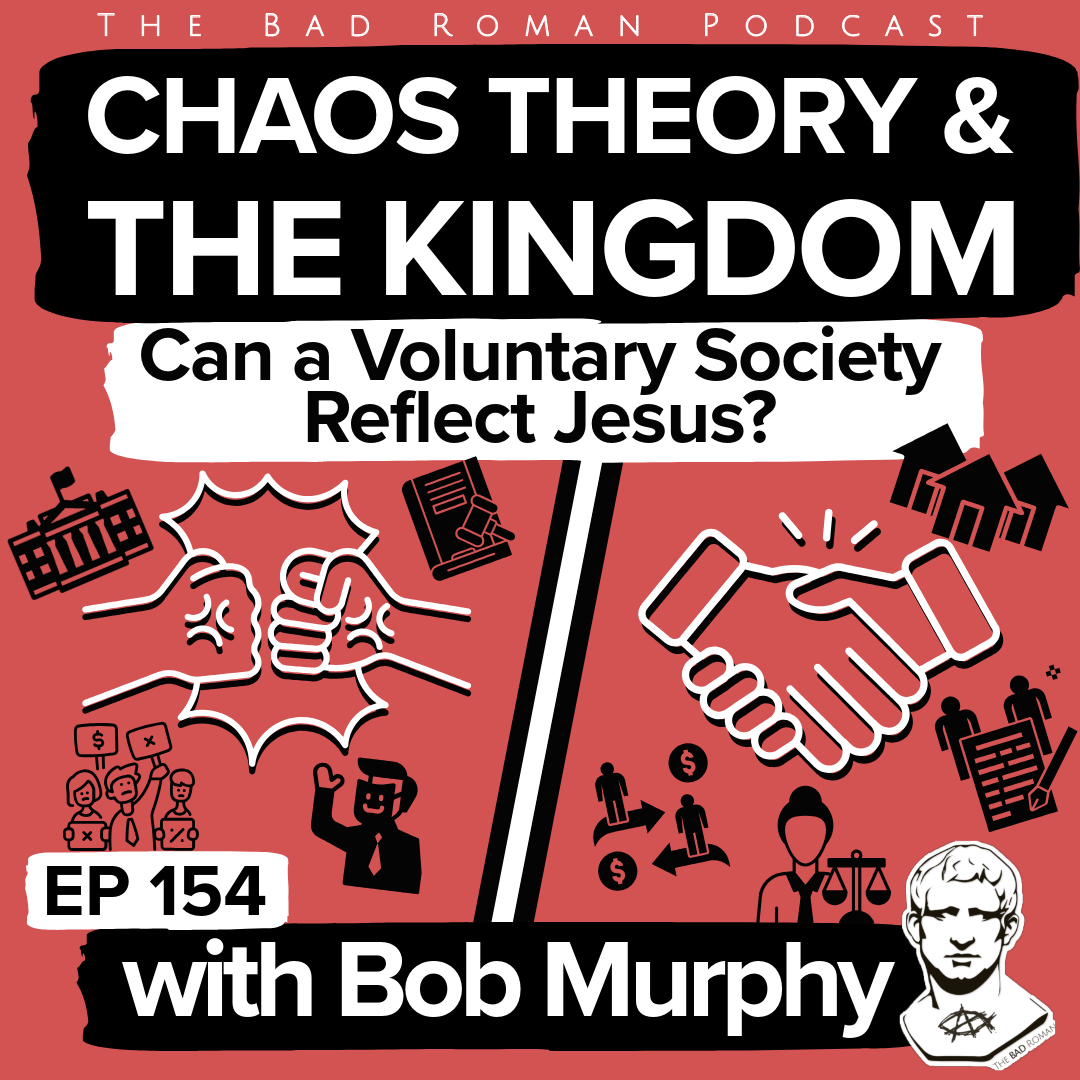
154. Kingdom Politics vs. Chaos: Can a Voluntary Society Reflect Jesus?

“What if the problem isn’t that we haven’t found the right rulers, but that we keep assuming someone needs to rule us at all?”

There’s a moment that shows up in almost every conversation about politics and faith. It usually comes right after someone says, “Okay, but what about bad people?” The room tightens. The air shifts. Because underneath the question isn’t policy, it’s fear. Fear of chaos. Fear of losing control. Fear that without someone in charge, everything falls apart.

This episode lives inside that moment.

Craig sits down with economist and author Bob Murphy to talk about Bob’s short book, Chaos Theory. On the surface, it’s about how law, courts, and public safety might work without a centralized state. But that’s not really why Craig wanted the conversation. What he’s really asking is something Christians rarely slow down long enough to face: Why are we so sure that force is necessary for order, and what does that say about what we believe Jesus actually taught?

Bob doesn’t come in trying to convince anyone. He comes in careful. Thoughtful. Almost pastoral. He knows the ideas he’s talking about can trigger alarm bells. So instead of starting with labels or slogans, he starts with a question that keeps circling back throughout the episode: Should anyone be allowed to do things that would be wrong for everyone else?

Craig Meets Bob Murphy

Craig opens with honesty. He’s familiar with these ideas. He’s heard them before. But he also knows where people get stuck. It’s not usually in theory. It’s in the details.

“How does this actually work?” Craig asks. “Not in a perfect world, but in this one.”

Bob nods. He doesn’t promise a world without sin or harm. “The goal isn’t utopia,” he says. “The goal is removing what I call an institutionalized aggressor.”

That phrase lands heavy.

Bob explains that every system has problems because people have problems. The difference is whether the system itself assumes that violence and threats are necessary tools. A voluntary society, he says, doesn’t eliminate wrongdoing. It eliminates the idea that some people are allowed to do wrong by design.

Craig pauses there, not because he disagrees, but because he recognizes how deeply that assumption runs. For Christians, this isn’t an abstract argument. It cuts straight into how we’ve learned to think about safety, authority, and obedience.

Why Bob Steps Around the Word “Anarchy”

Early in the conversation, Bob explains why he rarely leads with the word “anarchist,” especially among Christians. The word comes loaded. Too many images. Too many misunderstandings.

“I actually believe in order,” Bob says. “I just don’t think order requires rulers.”

Instead, he uses the phrase voluntary society. It sounds less dramatic, but it’s more accurate. A voluntary society isn’t about tearing everything down. It’s about cooperation without coercion. Rules without rulers. Agreement without threats.

Craig connects this to Christian nationalism almost instinctively. When Christians say “Jesus is King,” do we really believe it? Or do we still assume someone else needs to enforce things for Him? Jesus refused power when it was offered. He didn’t seize control. He invited people to follow.

That contrast lingers.

A Boring Word That Changes Everything

Midway through the episode, Craig opens Bob’s book and lands on a section that doesn’t sound very spiritual at all: contracts.

It almost feels like a letdown at first. No revolution. No big speeches. Just agreements.

But Bob leans in. Contracts, he explains, are how most of our lives already work. Jobs. Housing. Insurance. Services. We trust them not because someone is holding a gun, but because incentives, reputation, and accountability matter.

“Insurance companies don’t want to write million-dollar checks,” Bob says. “So they care about safety. They ask questions. They check training. They look at track records.”

Craig pushes back with the concern many listeners will feel. What about the vulnerable? What about people without power or money?

Bob doesn’t pretend this system fixes everything. He simply points out that our current system already fails the vulnerable, often while claiming moral authority. A voluntary system doesn’t solve sin. It just stops pretending that force is love.

Consent, Compliance, and the Ballot Box

One of the most uncomfortable turns in the conversation comes when Bob challenges the idea that voting equals consent.

“In normal life,” Bob says, “consent means you can say no. You can walk away.”

You can’t really do that with the state.

Markets depend on persuasion. Governments depend on compliance. Craig lets that contrast sit without rushing to resolve it. Because Jesus never appealed to majorities. He appealed to hearts. To repentance. To truth.

“If we wouldn’t do this to our neighbor,” Craig reflects, “why are we okay with a system that does?”

That question doesn’t get answered. And that’s the point.

Live the Question Jesus Calls us To Ask

This episode doesn’t give you a platform to stand on. It gives you a question to carry. And following Jesus has always meant carrying questions that cost us something.

If this conversation unsettled you, sit with that. Keep asking what it really means to follow a crucified King.

🤝 Connect with Bob Murphy 🤝

Highlights & Takeaways

  • A voluntary society doesn’t promise a perfect world

  • It refuses to give moral exemptions to people in power

  • Order and control are not the same thing

  • Consent requires the real option to walk away

  • Jesus never modeled threat-based transformation

  • Christian nationalism trusts force where Jesus trusted faithfulness

  • You don’t need a political plan to name a moral problem

Listen & Reflect

Listen: Pay attention to where fear enters the conversation. What are we afraid would happen if control loosened?

Reflect: Where have we accepted systems that do things we would never justify in our own lives?

Read: Read Matthew 5–7 slowly. Notice which teachings feel “impractical,”and ask why.

Practice: This week, choose persuasion over pressure in one real situation. Let go of leverage and see what remains.

Episode Timestamps:

(00:00) Voluntary Society: “Wouldn’t That Be Chaos?”

  • bad actors, security, fear of “chaos”

  • why Bob Murphy + Chaos Theory today

  • frame: Christ over the state

(00:45) Welcome Bob Murphy

(06:19) Why Bob Avoids the “Anarchist” Label

  • two kinds of “anarchists”

  • “I have a king… not an earthly king”

  • prefers “voluntary society” language

(07:19) Sermon on the Mount + Politics That Fit Jesus

  • “dovetail… best with what Jesus told Christians”

  • Craig’s shift from “looking for somebody to vote for”

  • discipleship vs ideology

(10:57) “I Don’t Have to Have a Plan”

  • refusing the election-pressure test

  • “this current system… is crazy”

  • Craig: “yeah, you’re allowed”

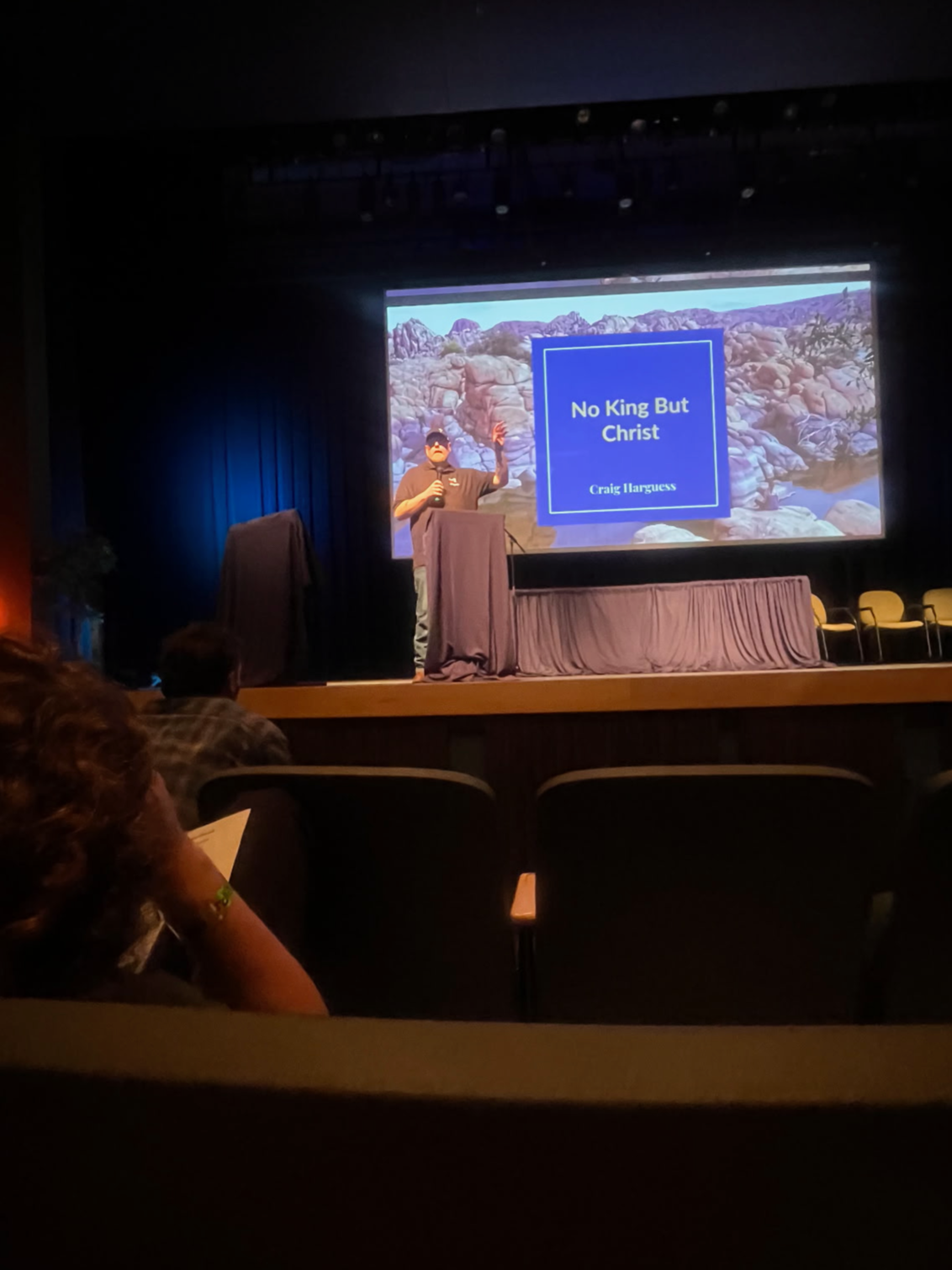
(11:33) Salsa Break: No King but Christ

  • put the politics down

  • support the show

  • “no king but Christ” hook

(12:14) Chaos Theory: Contracts

  • why contracts matter in a voluntary society

  • how contracts already matter

(14:37) “Institutionalized Aggressor” + Imposed Rules

  • no “my guy loses → stuff imposed on me”

  • what the booklet is trying to show

  • contracts “on the front end”

(33:14) Insurance as Due Diligence

  • “standard package” idea

  • insurance companies = background checks

  • malpractice example bridge

(34:03) Incentives: Background Checks + Risk

  • “we might have to pay $2 million”

  • vetting training, history, reputation

  • why incentives shape behavior

(46:57) “Give the Experts Guns” Problem

  • “very naive” assumption

  • experts can be the bad guys

  • quick support spotfund message + Memphis charities

(58:27) “Aren’t Insurance Companies the Government?”

  • “they seem like they play an important part”

  • Bob: not government because it’s voluntary

  • competition + no power to block new entrants

(1:03:24) Where to Find Bob + What He’s Building

  • how to get Chaos Theory (PDF or physical)

  • Human Action Podcast + other work

(1:04:22) Wrap-Up + Possible Part 2

  • “small book… packed tight”

  • Bob open to coming back

  • Craig: “we didn’t get to cover everything”


Related Episodes

Related Blog Post

101. Mormon Teachings and Anarchy: Uncovering the Path to Freedom

When Casey Beres walked away from the Mormon Church, he didn't just leave behind a congregation; he discovered a tapestry of anarchy and voluntaryism hidden within its teachings. In this profound discussion, we find unexpected solidarity with anarchist thought, as Casey unveils how the Book of Mormon's scriptures and doctrines mirror the principles of societal autonomy and individual freedom. Our exchange traverses religious and ideological frontiers, inviting both Mormons and non-Mormons to embrace the underlying values that bind us together as a global family. 

The conversation shifts as we contemplate the personal changes spurred by political disillusionment and debates over the constitution, intensified by the pandemic. As we consider the emotional impact of mandates on both individuals and communities, we delve into the debris of societal pressures. In doing so, we discover a widespread desire for a support network and a community that values individual choice, and we explore the role of authority and governance from a perspective of spiritual enlightenment, not political will.

Wrapping up, we look beyond the horizon of today's interpretations of LDS texts, questioning traditional views on government, war, and America's place in divine providence. We explore the notion of modern slavery within our own societal structures and discuss the frustrations of many modern Christians with the current state of affairs. 

We question divine providence in the American founding and probe the implications of the government's hand in modern slavery. Our quest for understanding takes us from the battlefield of American history to the heart of Christian anarchy, culminating in a call to action for the Mormon community to consider the anarchy threaded within their beliefs. Whether your interest lies in faith, freedom, or the crossroads where they meet, join us for a stimulating conversation that promises to challenge and enlighten.

Connect with the Casey Beres:

Substack: mackenziesspleen.substack.com

Bandcamp: Potbelly MacKraken

Key Moments:

00:02 Anarchy and the Book of Mormon

  • Introduction of Casey Beres to discuss anarchy in the Book of Mormon context.

  • Exploration of Casey's journey from the Mormon Church to anarchist insights.

  • Discussion on the resonance of anarchy and volunteerism with broader anarchist community.

  • Emphasis on commonalities that unite humans beyond individual beliefs.

  • Importance of open dialogue for understanding and breaking down barriers.

08:04 Churches and Conversion to Anarchy

  • Personal reflections on church, faith, and non-traditional worship.

  • Preference for intimate gatherings over structured church services.

  • Influence of anarchy on views of authority and community.

  • Disconnection felt in family-centric church settings.

  • Journey from political apathy to anarchy, inspired by figures like Ron Paul and Michael Malice.

18:27 COVID Horror Stories and Vaccine Mandates

  • Personal impact of COVID-19 mandates on an individual with Tourette syndrome.

  • Challenges of job loss and societal exclusion due to mandates.

  • Importance of support networks during challenging times.

  • Conflicts between state and federal regulations during the pandemic.

  • Reflections on varied societal and political responses to the pandemic.

25:12 Understanding the LDS Scriptural Canon

  • Exploration of anarchy in Mormon scripture, addressing misconceptions.

  • Clarification of 'D&C' and other foundational Mormon texts.

  • Examination of ancient and modern societies in Mormon scripture through an anarchistic lens.

  • Anarchistic interpretation of scriptural events like the flood.

32:13 Anarchy in the Book of Mormon

  • Inspirational similarities between the Bible, Book of Mormon, and D&C.

  • Discussion on societies transitioning to democracy and anarchy in the Book of Mormon.

  • Analysis of anarchy and voluntarism in the Book of Mormon narratives.

  • Challenges in reconciling certain D&C sections with anarchistic principles.

39:28 Government and Anarchy in LDS Scriptures

  • Examination of contradictions in Doctrine and Covenants 134 regarding government.

  • Analysis of government's role in violating individual rights despite claims of protection.

  • Discussion on the compatibility of divine endorsement with flawed human government.

  • Reflection on implications for libertarians, anarchists, and constitutional conservatives.

49:43 Beliefs on God, Constitution, and Slavery

  • Relationship between religion, nationalism, and government in LDS context.

  • Debate on divine inspiration of the U.S. Constitution and America's founding.

  • Comparison of historical chattel slavery to modern governmental control.

  • Discussion on advocating for change and the irony of 'leaving the country'.

59:30 Frustration of Modern Christians and Anarchism

  • Reflection on the U.S.'s history of conflict and personal transition in political beliefs.

  • Exploration of Christian anarchy and Jesus' teachings against hierarchical control.

  • Critique of religious and political leadership's misuse of influence.

  • Biblical perspective on authority and leadership contrary to oppressive power structures.

01:09:07 Promoting Anarchy in the Mormon Community

  • Challenges and goals in introducing anarchism to the Mormon community.

  • Engagement with influential figures and feedback from church members.

  • Importance of gradual change, personal humility, and the impact of the Bad Roman Project.

  • Encouragement for others to contribute to dialogue through various platforms.

Explore Related Episodes Below:

EXPLORE RELATED BLOG POSTS:

100. Christian Ethics and Stateless Societies: The Anarchist Approach of the Perry Family

In the 100th episode of the podcast, host Craig Harguess is joined by guests Sarah and Jeff Perry from Voluntaryism in Action for a captivating exploration into the confluence of Christian values and the philosophy of anarchy. This milestone episode delves into the nuances of Christian Anarchism and Voluntarism, examining the personal metamorphoses that steer individuals away from traditional political paradigms toward a life of voluntary statelessness underpinned by faith. 

Throughout the episode, Sarah and Jeff Perry share the hurdles encountered in seeking a like-minded community and the challenges a society deeply ingrained with state-oriented ideologies poses. They shed light on the essence of fellowship and kinship, even in the digital sphere, for those who perceive themselves as misfits in a world unprepared for such radical ideas. The conversation also touches on the difficulty of communicating complex ideas over social media and the importance of giving people grace and meeting them where they are, as they were once in a similar position. The group emphasizes that the people they may joke about now were once reflections of their past selves, highlighting the transformative journey that led them to their current ideological stance. 

Taking an unexpected detour, the discussion ventures into the rustic world of homesteading, contrasting the merits of duck and chicken eggs and unpacking the symbolism it holds for Christian anarchists. This segment uncovers the layers of self-reliance and philosophical maturation, accompanied by a narrative of Jeff’s military service and how he underwent a profound ideological shift towards anarchism. 

The episode critically addresses the contentious interpretation of Romans 13 from an anarchist perspective, scrutinizing the alignment—or lack thereof—between modern democratic establishments and the teachings of Jesus. The discourse celebrates the significance of genuine leadership as demonstrated by Jesus, compared to the forceful rule often exhibited by earthly authorities. 

The discussion also spotlights the impactful initiatives of Voluntaryism in Action, emphasizing the human connections nurtured through voluntary charity. This starkly contrasts the impersonal touch of institutionalized aid, underscoring the human and spiritual dimensions of giving.

 Listeners are treated to a blend of humor, social commentary, and personal anecdotes that exemplify the intertwining of Christianity's core tenets with the principles of voluntaryism. As the 100th episode of the podcast, this thought-provoking journey offers an inspiring vision of community, support, and voluntary action shaped by love, grace, understanding, and Christian values.

Connect with the Perrys:

Website

Podcast: Voluntary View on Spotify, iTunes, Youtube

Key Moments:

00:02 Exploring Christian Anarchism and Voluntaryism

• Introduction to the intersection of Christianity and statelessness.

• Personal journeys from conventional politics to stateless existence based on Christian values.

• Importance of community, even if primarily online.

01:11 The Reach of the Bad Roman

• Discussion on the international reach of the podcast.

• Personal reflections on discovering Christian Anarchy.

• Surprise at finding a community with similar beliefs.

09:08 Duck Eggs and Freshly Laid Eggs

• Discussion on homesteading, duck vs. chicken eggs.

• Nutritional content and taste comparison.

• Personal anecdotes about self-sufficiency and philosophical evolution.

15:22 - Military Transition to Anarchism & Non-Judgmental Dialogue

• A former military medical officer's ideological shift towards anarchism.

• Impact of literature and libertarian thought on worldview.

• Emphasis on non-judgmental engagement within the anarchist community.

23:13 Christian Anarchism and the Bad Project

• Craig's journey from neoconservatism to Christian anarchism.

• Misconceptions about Christian Anarchy clarified.

• Sharing personal revelations about faith and statelessness.

26:41 Facebook Thread Drama and Miscommunication

• Addressing miscommunication and drama in a Facebook thread.

• Emphasis on understanding different perspectives within anarchism.

30:05 Understanding Anarchy and Romans 13 (11 Minutes)

• Interpretation of Romans 13 in the context of Christian anarchy.

• Biblical examples of resistance to secular authorities.

• Addressing objections related to submission to governing authorities.

33:57 Not Voting and Complaining About Government

• Discussion on Craig's decision not to vote and its implications.

• The counterintuitive nature of the argument that non-voters cannot complain.

38:41 Voluntarism and Anarchy

• Explanation of voluntarism as a subset of anarchy.

• Voluntarism focuses on voluntary interactions without coercion.

41:22 Religion, Government, and Accountability

• Differences between authority figures and authoritarianism.

• Critique of representative democracy and accountability.

• Reflection on the role of law enforcement and early church teachings.

49:57 Christian Anarchism and Voluntaryism Action

• Exploration of how Voluntaryism in Action embodies Christian Anarchist principles.

• Discussion on the organization's initiatives and community impact.

• Tension between Christianity and statism in church settings.

• Discomfort with nationalistic practices in worship.

• Early Christian teachings versus modern interpretations post-Constantine.

55:42 Voluntaryism

• Origins and evolution of a charitable organization, Voluntaryism in Action.

• Challenges and misconceptions surrounding non-profit work.

• Importance of voluntary giving and the impact of government programs on charity.

57:07 Obtaining & Maintaining 501(c)3 Status

• The process and challenges of obtaining 501(c)3 status for the organization.

• Insights into maintaining non-profit status and its importance.

01:04:18 Voluntaryism in Action

• Celebration of the work and achievements of Voluntaryism in Action.

• Personal anecdotes that underscore the organization's ethos.

01:09:36 Discussion on Voluntaryism in Action

• Impactful work of Voluntaryism in Action aligned with Christian values.

• Encouragement for listener support through donations or involvement.

• Challenges of social media censorship.

01:11:39 Twitter Campaigns and Content Restrictions

• Addressing the impact of content restrictions on social media campaigns.

• The organization's approach to creating and sharing provocative content.

Explore Related Episodes Below:

EXPLORE RELATED BLOG POSTS: