Facebook

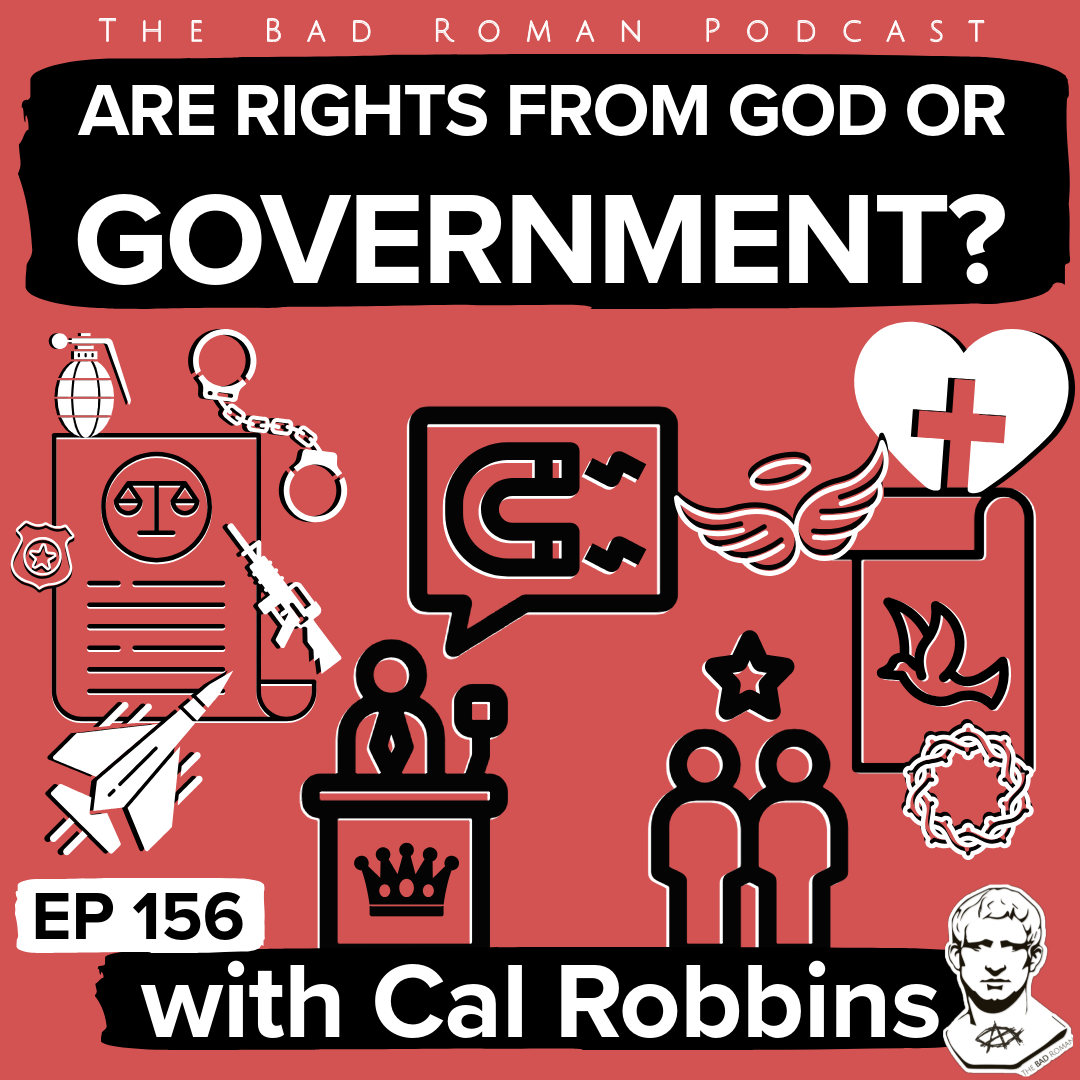
149. Is Your Christianity Just Patriotism? Learning to Love Beyond the Flag with Misty Hubbard

There’s a version of Christianity that never really meets Jesus.
It memorizes the pledge, knows all the right political buzzwords, and can quote more politicians than church fathers. It says “Christ is King” on Sunday and “vote harder” on Monday, as if Caesar just needs a better campaign manager.

That was the air Craig and Misty both breathed for years.

They organized rallies, cheered on “good candidates,” defended the Constitution like it had been handed down on Sinai. It felt righteous. It felt Christian. It felt like fighting the good fight, until Jesus started messing with their loyalties.

This episode is the story of waking up from that spell.

Not into apathy or cynicism, but into something weirder and older: a Kingdom where the Sermon on the Mount is more binding than the Bill of Rights, and where the question isn’t “How do we save America?” but “How do we love our enemies like Christ?”

When the Flag Becomes Your Faith

Misty didn’t stumble into politics by accident. She’s a wife, mom, grandma, and restaurant manager in Arkansas, the kind of person who knows everyone at the grocery store and cares deeply about her town. For years, that care took the shape of activism: gun-rights events, local organizing, being “all in” for Team Red.

Craig remembers meeting her back then, at a Chris Ann Hall convention in Clarksville. Both of them were learning about the Constitution, the Founders, the history they never got in school. It was exciting. It felt like discovering hidden truth. And over time, that civics education started to feel a lot like discipleship.

The problem? The more energy went into “saving the country,” the less energy was left for the actual living out of the things Jesus says about enemies, violence, and power. It’s not that patriotism and faith can’t coexist, but if you’re honest, one usually ends up calling the shots.

The Class That Broke the Spell

The turning point for Misty wasn’t a Bible study. It was a civics class.

She signed up as a die-hard constitutional conservative ready to nod along. Instead, the teacher, friend of the project, Mike Gaddy, started pulling at threads: the myths about the founding, the sanitized hero stories, the idea that United States was uniquely holy.

Misty left that first session furious. She went home with a notebook full of quotes, determined to disprove him. She cracked open books, dug into history, chased footnotes… and found out the uncomfortable thing: he wasn’t lying. The founding was messier than the church bumper stickers made it sound.

One question stuck in her ribs: “When have you ever voted yourself more free?”

She thought about politicians she’d worked for who sold out the second they got in office. She thought about all the cheering for “freedom” while bombs fell on people who’d never heard of her. Slowly, painfully, she realized her “Christian” activism had quietly become devotion to the state.

When Compassion Outgrows Your Patriotism

Craig went through his own version of that. Looking back at his old voting record, neoconservative almost every time, he feels a weight. Not because voting is the worst sin ever, but because those choices empowered real people to wage real wars on real families. Once Jesus taught him to see beyond the labels, he couldn’t shrug it off as “just politics” anymore.

That’s the strange side effect of taking “No King but Christ” seriously: your compassion gets bigger than your borders. Suddenly you can’t hear about drone strikes, refugee camps, or kids in cages without thinking, Those are my neighbors too.

Misty admits she used to be the one cheering for the war, as long as the “bad guys” were far away. Now she sees faces instead of flags. The same Jesus who told her to love her literal neighbor is also Lord over the moms and dads in countries she’ll never visit. Once that sinks in, a certain kind of patriotic chest-thumping starts to feel… off.

Rage-Posting in Jesus’ Name

Then there’s the internet.

If you’ve spent any time on Facebook, you’ve met this guy: profile full of Bible verses and worship songs… and also full of posts calling people “demon-crats,” fantasizing about political dynasties, and mocking “woke queer trash” or whatever today’s latest slur is.

Misty watches one of these men in her feed whiplash between “I love Jesus so much” and “if you don’t like it, delete me, you idiots.” She finally comments, not to dunk on him, but to say: “You’re not just pushing people away from your politics. You’re pushing them away from Christianity.”

And that’s the heartbreak. People like her coworker, who told Misty, “I just wish all Christians were like you,” aren’t rejecting the real Jesus. They’re rejecting a Jesus-shaped mask worn over cruelty, contempt, and tribal rage.

Craig points out the obvious but rarely-said thing: if someone only knows Christians like that, of course they want nothing to do with our faith. Why would they? The fruit is rotten.

Taking It Offline

One of the most practical parts of this conversation is embarrassingly simple: take it offline.

If you’re going to challenge someone you know, about their politics, their rhetoric, their discipleship, do it face to face if you can.

Tone is different when you’re sitting across from a human you share a town and a table with. You can see their expression, hear their hesitation, notice when they’re actually trying to be loving but clumsy. On Facebook, all you see is words and your own projection of malice.

Misty and Craig have both seen it over and over: online, people are ready to torch each other. In person, they’re softer, more open, more aware that the other person has a story too. If “No King but Christ” is going to mean anything in our politics, it’ll show up in those small, awkward, holy in-person conversations.

Little Kingdom Cells in Arkansas

Out of all this wrestling, Misty has quietly started something small in Russellville, a little circle of younger folks trying to figure out what it means to follow Jesus instead of party platforms. Just a group of people who gather to read Scripture, wrestle with current events, and ask, “Would Jesus really be okay with this?”

They practice disagreeing without dehumanizing. They experiment with actually blessing enemies instead of owning them.

It doesn’t look like much. But neither did twelve confused disciples in Galilee.

Kingdom seeds are being scattered.

Listen & Reflect

  • Listen: Pay close attention when Misty talks about the class that made her angry. What would you have done with that information?

  • Ask: Where has your “Christian” identity quietly fused with your national or political identity?

  • Confess: Is there anyone you’ve treated like trash in Jesus’ name that you need to repent to?

  • Practice: Pick one person you strongly disagree with and invite them to coffee. Ask more questions than you make statements.

🤝Connect with MISTY hubbard:

Episode Timestamps:

(00:00) From statism to “No King but Jesus”

  • Craig welcomes Misty and sets the theme: deeper faith, deeper compassion.

(00:05) Meet Misty: Arkansas, restaurant, and kindness over hate

  • Misty introduces herself as an Arkansas restaurant manager, wife, mom, and grandma.

  • She jokes about “Go Hogs” and the pain of that as a sports fan.

  • She explains that her goal is to spread the message through kindness, not hate.

  • Craig riffs on how Facebook trains people to act the opposite of Jesus online.

(01:22) The Chris Ann Hall rally and early constitutional days

  • Craig and Misty remember meeting at a “Second Amendment” rally in Clarksville.

  • They were both learning new things about the founding and the Constitution.

  • Craig notes that the teacher helped him understand civics but stayed deeply statist.

  • Misty mentions organizing that event as part of a local gun group and later politicians.

(12:29) “Good candidates” and the lost cause of electoral politics

  • Craig and Misty talk about candidates who stop caring once they’re in office.

  • Misty calls trying to get “good people” elected a lost cause.

  • Craig pushes back on the idea that not voting means “doing nothing.”

  • They argue that handing more authority to rulers isn’t the same as loving neighbors.

(14:24) Owning neocon votes and paid patriotism

  • Craig admits he voted for neoconservatives almost every time and feels responsibility for what those politicians did.

  • Misty describes “paid patriotism:” the millions spent to keep people flag-waving.

  • They call out propaganda around the anthem, sports, and outrage over who stands or kneels.

  • The conversation exposes how manipulated our sense of “duty” often is.

(15:31) “Vote harder” and the salsa break

  • Misty notes how division is stirred up so we’ll “vote harder” for our team.

  • Craig jokes about needing to hold your mouth just right in the voting booth.

  • The Bad Roman salsa jingle kicks in, inviting listeners to support the show instead of the state.

  • They come back from the break still poking at the myth that voting is the highest form of action.

(16:25) The class that wrecked Misty’s civic religion

  • Craig walks Misty through how, after her event organizing, she met Mike Gaddy.

  • Her first class with him made her furious as a constitutional conservative.

  • She went home, took notes, and researched to try to prove him wrong.

    • Instead she confirmed that the founding was ugly and we’d been sold a myth.

(18:00) When have you ever voted yourself more free?

  • Misty recalls Gaddy’’s question about whether we’ve ever “voted ourselves more free.”

  • They wrestle with the claim that soldiers are “over there fighting for our freedom.”

  • Craig and Misty ask what our “freedom” was doing in Somalia while bombs fell on children.

  • They connect this to a broader realization that empire and Kingdom serve different masters.

(39:29) None of us were born anarchists

  • Craig notes that most anarchists he knows started out statist, just like him and Misty.

  • They mention friends like Gaddy whose stories include serious regret.

  • Misty laughs about her Facebook memories reminding her how statist she used to be.

  • Craig jokes about “accidentally” losing access to his old account and starting fresh.

(47:40) Compassion that outgrows the flag

  • Craig says that taking “No King but Jesus” seriously changed how he views war and cages at the border.

  • Misty admits she used to cheer for war and “get the bad guys at all costs.”

    • Now she sees people in other nations as God’s children too, not faceless enemies.

(52:16) A daily Jesus lesson at work

  • Misty talks about a coworker who didn’t believe at all but loved their daily conversations.

    • The coworker told her, “I just wish all Christians were like you.”

  • Misty compares fake Christians to people wearing a Lakers jersey without playing for the Lakers.

    • She says Jesus teaches and shows you to treat people with kindness, not contempt.

(55:48) “Founded on Christian values?” vs cursing your enemies

  • Craig reads a meme fantasizing about a decades-long MAGA dynasty and calling opponents vile names.

  • He asks how anyone can say “we’re founded on Christian values” while talking like that.

  • Misty says this kind of faking pushes people like her unbelieving friend away.

(57:04) You’re pushing people away from Christianity (not just politics)

  • Misty shares another post where the same guy curses “demon-crats” and tells him to delete him.

    • Someone tells him he’s pushing people away from Christian conservative Republicans.

    • Misty comments that he’s pushing people away from Christianity, period.

    • They both highlight how the same feed includes sweet Jesus posts right after hateful rants.

(58:00) Take it offline: Face-to-face hits different

  • Craig asks if Misty knows the guy personally and encourages her to talk with him in person.

  • He notes that tone is completely different face to face than on Facebook.

  • Misty says if you perceive a comment as snarky online, it’s snarky, whether it was meant that way or not.

  • Seeing someone’s face makes it clear when they’re trying to be loving, not hateful.

(59:10) The solution: Be more like Jesus

  • Craig directly asks Misty what the solution is to Christians entangled with the state.

    • She says it plainly: be more like Jesus as best we can.

  • Treat people the way Jesus would, especially those you disagree with.

  • They agree that this is how you actually win people over and introduce them to Christ.

(1:04:12) Misty’s local Russellville group

  • Misty describes a small, unofficial local group she’s started with younger folks.

  • They share Jesus’ teachings and plug them into current events like the Charlie Kirk story.

  • She pushes members to ask if they’re taking verses out of context or truly following Jesus.

(1:08:08) Stepping back from social media and cat memes

  • Craig talks about unplugging from social media after some heavy events like the Kurt murder.

  • He reminds folks that what they heard is a snapshot of his and Misty’s usual conversations.

  • Misty jokes about posting cat memes with Craig’s face, and Craig embraces being the “crazy cat lady.”

Highlights & Takeaways

  • The more seriously Craig and Misty take Jesus, the more compassion they feel for people their teams used to call enemies.

  • “When have you ever voted yourself more free?” became a crucial question in leaving statism.

  • Paid patriotism and propaganda keep people outraged, divided, and committed to “voting harder.”

  • Social media rants about “demon rats” and “woke” enemies push people away from Christianity, not toward it.

  • Face-to-face conversations reveal tone and care in ways Facebook never can.

  • Ordinary kindness at work—a daily Jesus lesson—can open hearts more than any argument.

  • Local, informal groups like Misty’s in Russellville help people work out what “Christ is King” really means in practice.

  • 100% of donations beyond production costs go to Memphis-area charities, keeping the project rooted in real-world love of neighbor.

Calls to Action

If this episode helped disentangle your faith from the state and grow your compassion, share it with someone still stuck in “vote harder” mode.

If you want to help keep the message of No King but Christ in people’s feeds, visit Spotfund and search “No King but Christ.” Even five or ten bucks a month helps keep the show going and supports local Memphis charities beyond production costs.

If you’re near Russellville, Arkansas and want to dive into these conversations in person, find Misty Hubbard via the Bad Roman Facebook page and ask about her group.

Love y’all.


Related Episodes
Related Blog Post

127. Jesus and Politics with Liberty Minds

About this Episode

Craig welcomes Bob from the Liberty Minds Facebook page to explore our favorite intersection: politics and faith. Bob, a man who's lived everywhere from Central America to North Carolina, and now calls the Golden State home, brings a unique perspective to the discussion. But this isn't your typical California dreamin' conversation. The duo pack-in spicy takes that'll make you rethink the politics of your childhood church pew.

Guest Background

Bob shares his experiences of living in various parts of the world and how these experiences shape his views on life in California. Despite the state's challenges, he appreciates its cultural diversity and quality of life, offering skeptics a fresh take on what it means to call California home.

The discussion highlights Bob's political journey from a conservative talk radio listener to libertarian thinker. This shift was driven by his desire for consistency in his beliefs and the realization that his Christianity should guide his political views. Bob reflects, "I started realizing my Christianity needs to be dictating how I actually feel about these things. And that started shifting me."

Christianity and Political Ideologies: A Delicate Balance

Bob and Craig delve into the intersection of Christian beliefs and political ideologies. Bob grapples with balancing market-based solutions with compassion for the poor and marginalized, often facing criticism for his empathetic stance. He remarks, "The more that I seem to care about those folks, the more I get called a left winger.”

Reflecting on the 2024 re-election of Donald Trump, Bob and Craig express their disillusionment with both major political parties. They critique the lack of anti-war sentiment on the Left and the continuation of harmful foreign policies by both sides. 

Contemplating the Future of the American Empire

They end with a sobering look at the future of the American empire. Craig ponders the timeline of a downfall and Jesus’ return while Bob voices uncertainty about its future, noting economic challenges alongside continued global influence. He states, "It seems like every year two things concurrently happen. The United States slips further into insolvency economically and in every way possible. The United States just gets worse, but at the same time somehow figures out a way to like exert violence and power on others to keep going." 

Yet the hope of heaven on earth remains and we continue to follow no king but christ.

Join Craig and Bob for a thought-provoking discussion that challenges mainstream narratives and encourages listeners to examine how their beliefs align with their politcal ideologies.

Connect with Liberty Minds:

Facebook Page

Episode Timestamps:

(01:21) Guest Background: Bob's Personal and Professional Life

  • Family man, married for over 20 years with four kids

  • Consultant in sales and marketing

  • California resident

    • Bob's experience living in various parts of the U.S. and abroad

    • Christian Anarchist Circles and Regional Differences

(06:07) Liberty Minds Facebook Page and Political Discussions

  • Bob's approach to political discussions on social media

  • Balancing criticism of government actions with appreciation for local culture

(08:35) Bob's Political Journey

  • From Republican upbringing to conservative talk radio influence

  • Shift towards libertarianism and eventual disillusionment with mainstream politics

  • Evolution of political views influenced by Christianity

(16:27) The Danger of "Both Sides Bad" Arguments

  • Addressing the perception of intellectual laziness in criticizing both political sides

  • The importance of engaging in meaningful action beyond criticism

(19:56) Differences Between Right and Left Political Approaches

  • Perceptions of how conservatives and liberals approach government growth

  • Current state of political radicalization

(26:08) The Anti-War Left and Disappointment in Political Consistency

  • Disappearance of the anti-war left

  • Frustration with support for candidates continuing harmful policies

(34:43) The Future of the American Empire

  • Potential fall of the American empire

  • Balancing the desire for change with concerns about suffering during societal collapse

(47:10) Liberty Minds' Social Media Presence

  • Primary focus on Facebook platform

(48:27) Closing Thoughts

  • Appreciation for intellectual discussions on political topics

  • Importance of finding like-minded individuals for meaningful conversations


Related Episodes

Related Blog Post

125. Social Media Overload: Digital Detox & True Community with Blaklee Ramsey

About this Episode

Are you ready to dive down the digital rabbit hole? Buckle up, because this episode takes you on a wild ride through the world of social media, podcasting, and personal growth.

Blaklee Ramsey, the mastermind behind the "Elevated Edict Podcast," joins host Craig Harguess for a no-holds-barred conversation that'll make you rethink your scrolling habits. But first, let's rewind:

Remember those college days when your biggest worry was how many wings you could sling during game day? Craig and Blaklee do. They kick things off with a nostalgic trip down memory lane, reminiscing about their time at Foghorns Wings near the University of Arkansas. It's all laughs and "remember whens" until...

BAM! We're thrust into the present, where TikTok reigns supreme and dopamine hits come faster than you can say "swipe up." Blaklee drops some truth bombs about social media addiction that'll have you side-eyeing your phone. But don't worry, it's not all doom and gloom.

Did you know social media can actually be... good for you? (Gasp!) Our dynamic duo explores the brighter side of the digital world, from networking opportunities to spreading positivity. It's like finding a unicorn in a sea of cat videos.

But wait, there's more! Blaklee pulls back the curtain on her journey on being called to podcasting and here quick success. Spoiler alert: it's not all glamour and perfectly edited sound bites. She gets real about the self-doubt, the late-night editing sessions, and the unexpected connections that make it all worthwhile.

And for all you aspiring podcasters out there? Craig and Blaklee serve up a heaping helping of real talk about the challenges and triumphs of growing a show. It's like a masterclass in audio entrepreneurship, minus the hefty price tag.

So, are you ready to laugh, learn, and maybe rethink your relationship with that little device in your pocket? Tune in to this episode of the Bad Roman Podcast. Who knows? You might just find the inspiration to start your own digital revolution.

Connect with Blaklee Ramsey:

Episode Timestamps:

(0:55) Reconnecting and Reminiscing

  • Craig introduces Blaklee Ramsey, fellow podcaster and longtime friend

  • Craig and Blaklee reflect on their past work experiences at Foghorns Wings in Fayetteville, Arkansas

    • Realities of working in Fayetteville during game days

(4:06) Blaklee's Background

  • Born and raised in Arkansas

  • Started working in restaurants at age 12

  • Transition to sales and real estate, highlighting her strong work ethic

    • Burnout in Real Estate

  • Blaklee's journey to overcome burnout and set boundaries

    • The Birth of the Elevated Edit Podcast

    • Focus on self-improvement, work-life balance, and feminine energy

(11:32) The Dark Side of Social Media

  • Social Media Overconsumption

    • Discussion on the addictive nature of social media platforms

  • Craig's recent experience with social media during a difficult time

  • Blaklee's experience with social media addiction during the 2020 lockdown

  • Realization of time wasted on social media

(20:43) Positive Aspects of Social Media

  • Social media as a powerful connector

  • Blaklee's use of social media to grow her brand and podcast

  • Blaklee's strategies for setting boundaries and curating a positive online environment

(28:22) The Science Behind Social Media Addiction

  • Companies' strategies to keep users engaged

  • Importance of setting boundaries and being mindful of social media use

(34:39) The Elevated Edit Podcast

  • Blaklee's journey to starting her podcast

  • Focus on vulnerability, authenticity, and positive messaging

(40:27) Advice for Aspiring Podcasters

  • Importance of pushing through initial challenges

  • The value of authentic, unscripted content

(58:52) Final Thoughts

  • Importance of diverse perspectives in podcasting


Related Episodes

Related Blog Post

101. Mormon Teachings and Anarchy: Uncovering the Path to Freedom

When Casey Beres walked away from the Mormon Church, he didn't just leave behind a congregation; he discovered a tapestry of anarchy and voluntaryism hidden within its teachings. In this profound discussion, we find unexpected solidarity with anarchist thought, as Casey unveils how the Book of Mormon's scriptures and doctrines mirror the principles of societal autonomy and individual freedom. Our exchange traverses religious and ideological frontiers, inviting both Mormons and non-Mormons to embrace the underlying values that bind us together as a global family. 

The conversation shifts as we contemplate the personal changes spurred by political disillusionment and debates over the constitution, intensified by the pandemic. As we consider the emotional impact of mandates on both individuals and communities, we delve into the debris of societal pressures. In doing so, we discover a widespread desire for a support network and a community that values individual choice, and we explore the role of authority and governance from a perspective of spiritual enlightenment, not political will.

Wrapping up, we look beyond the horizon of today's interpretations of LDS texts, questioning traditional views on government, war, and America's place in divine providence. We explore the notion of modern slavery within our own societal structures and discuss the frustrations of many modern Christians with the current state of affairs. 

We question divine providence in the American founding and probe the implications of the government's hand in modern slavery. Our quest for understanding takes us from the battlefield of American history to the heart of Christian anarchy, culminating in a call to action for the Mormon community to consider the anarchy threaded within their beliefs. Whether your interest lies in faith, freedom, or the crossroads where they meet, join us for a stimulating conversation that promises to challenge and enlighten.

Connect with the Casey Beres:

Substack: mackenziesspleen.substack.com

Bandcamp: Potbelly MacKraken

Key Moments:

00:02 Anarchy and the Book of Mormon

  • Introduction of Casey Beres to discuss anarchy in the Book of Mormon context.

  • Exploration of Casey's journey from the Mormon Church to anarchist insights.

  • Discussion on the resonance of anarchy and volunteerism with broader anarchist community.

  • Emphasis on commonalities that unite humans beyond individual beliefs.

  • Importance of open dialogue for understanding and breaking down barriers.

08:04 Churches and Conversion to Anarchy

  • Personal reflections on church, faith, and non-traditional worship.

  • Preference for intimate gatherings over structured church services.

  • Influence of anarchy on views of authority and community.

  • Disconnection felt in family-centric church settings.

  • Journey from political apathy to anarchy, inspired by figures like Ron Paul and Michael Malice.

18:27 COVID Horror Stories and Vaccine Mandates

  • Personal impact of COVID-19 mandates on an individual with Tourette syndrome.

  • Challenges of job loss and societal exclusion due to mandates.

  • Importance of support networks during challenging times.

  • Conflicts between state and federal regulations during the pandemic.

  • Reflections on varied societal and political responses to the pandemic.

25:12 Understanding the LDS Scriptural Canon

  • Exploration of anarchy in Mormon scripture, addressing misconceptions.

  • Clarification of 'D&C' and other foundational Mormon texts.

  • Examination of ancient and modern societies in Mormon scripture through an anarchistic lens.

  • Anarchistic interpretation of scriptural events like the flood.

32:13 Anarchy in the Book of Mormon

  • Inspirational similarities between the Bible, Book of Mormon, and D&C.

  • Discussion on societies transitioning to democracy and anarchy in the Book of Mormon.

  • Analysis of anarchy and voluntarism in the Book of Mormon narratives.

  • Challenges in reconciling certain D&C sections with anarchistic principles.

39:28 Government and Anarchy in LDS Scriptures

  • Examination of contradictions in Doctrine and Covenants 134 regarding government.

  • Analysis of government's role in violating individual rights despite claims of protection.

  • Discussion on the compatibility of divine endorsement with flawed human government.

  • Reflection on implications for libertarians, anarchists, and constitutional conservatives.

49:43 Beliefs on God, Constitution, and Slavery

  • Relationship between religion, nationalism, and government in LDS context.

  • Debate on divine inspiration of the U.S. Constitution and America's founding.

  • Comparison of historical chattel slavery to modern governmental control.

  • Discussion on advocating for change and the irony of 'leaving the country'.

59:30 Frustration of Modern Christians and Anarchism

  • Reflection on the U.S.'s history of conflict and personal transition in political beliefs.

  • Exploration of Christian anarchy and Jesus' teachings against hierarchical control.

  • Critique of religious and political leadership's misuse of influence.

  • Biblical perspective on authority and leadership contrary to oppressive power structures.

01:09:07 Promoting Anarchy in the Mormon Community

  • Challenges and goals in introducing anarchism to the Mormon community.

  • Engagement with influential figures and feedback from church members.

  • Importance of gradual change, personal humility, and the impact of the Bad Roman Project.

  • Encouragement for others to contribute to dialogue through various platforms.

Explore Related Episodes Below:

EXPLORE RELATED BLOG POSTS:

100. Christian Ethics and Stateless Societies: The Anarchist Approach of the Perry Family

In the 100th episode of the podcast, host Craig Harguess is joined by guests Sarah and Jeff Perry from Voluntaryism in Action for a captivating exploration into the confluence of Christian values and the philosophy of anarchy. This milestone episode delves into the nuances of Christian Anarchism and Voluntarism, examining the personal metamorphoses that steer individuals away from traditional political paradigms toward a life of voluntary statelessness underpinned by faith. 

Throughout the episode, Sarah and Jeff Perry share the hurdles encountered in seeking a like-minded community and the challenges a society deeply ingrained with state-oriented ideologies poses. They shed light on the essence of fellowship and kinship, even in the digital sphere, for those who perceive themselves as misfits in a world unprepared for such radical ideas. The conversation also touches on the difficulty of communicating complex ideas over social media and the importance of giving people grace and meeting them where they are, as they were once in a similar position. The group emphasizes that the people they may joke about now were once reflections of their past selves, highlighting the transformative journey that led them to their current ideological stance. 

Taking an unexpected detour, the discussion ventures into the rustic world of homesteading, contrasting the merits of duck and chicken eggs and unpacking the symbolism it holds for Christian anarchists. This segment uncovers the layers of self-reliance and philosophical maturation, accompanied by a narrative of Jeff’s military service and how he underwent a profound ideological shift towards anarchism. 

The episode critically addresses the contentious interpretation of Romans 13 from an anarchist perspective, scrutinizing the alignment—or lack thereof—between modern democratic establishments and the teachings of Jesus. The discourse celebrates the significance of genuine leadership as demonstrated by Jesus, compared to the forceful rule often exhibited by earthly authorities. 

The discussion also spotlights the impactful initiatives of Voluntaryism in Action, emphasizing the human connections nurtured through voluntary charity. This starkly contrasts the impersonal touch of institutionalized aid, underscoring the human and spiritual dimensions of giving.

 Listeners are treated to a blend of humor, social commentary, and personal anecdotes that exemplify the intertwining of Christianity's core tenets with the principles of voluntaryism. As the 100th episode of the podcast, this thought-provoking journey offers an inspiring vision of community, support, and voluntary action shaped by love, grace, understanding, and Christian values.

Connect with the Perrys:

Website

Podcast: Voluntary View on Spotify, iTunes, Youtube

Key Moments:

00:02 Exploring Christian Anarchism and Voluntaryism

• Introduction to the intersection of Christianity and statelessness.

• Personal journeys from conventional politics to stateless existence based on Christian values.

• Importance of community, even if primarily online.

01:11 The Reach of the Bad Roman

• Discussion on the international reach of the podcast.

• Personal reflections on discovering Christian Anarchy.

• Surprise at finding a community with similar beliefs.

09:08 Duck Eggs and Freshly Laid Eggs

• Discussion on homesteading, duck vs. chicken eggs.

• Nutritional content and taste comparison.

• Personal anecdotes about self-sufficiency and philosophical evolution.

15:22 - Military Transition to Anarchism & Non-Judgmental Dialogue

• A former military medical officer's ideological shift towards anarchism.

• Impact of literature and libertarian thought on worldview.

• Emphasis on non-judgmental engagement within the anarchist community.

23:13 Christian Anarchism and the Bad Project

• Craig's journey from neoconservatism to Christian anarchism.

• Misconceptions about Christian Anarchy clarified.

• Sharing personal revelations about faith and statelessness.

26:41 Facebook Thread Drama and Miscommunication

• Addressing miscommunication and drama in a Facebook thread.

• Emphasis on understanding different perspectives within anarchism.

30:05 Understanding Anarchy and Romans 13 (11 Minutes)

• Interpretation of Romans 13 in the context of Christian anarchy.

• Biblical examples of resistance to secular authorities.

• Addressing objections related to submission to governing authorities.

33:57 Not Voting and Complaining About Government

• Discussion on Craig's decision not to vote and its implications.

• The counterintuitive nature of the argument that non-voters cannot complain.

38:41 Voluntarism and Anarchy

• Explanation of voluntarism as a subset of anarchy.

• Voluntarism focuses on voluntary interactions without coercion.

41:22 Religion, Government, and Accountability

• Differences between authority figures and authoritarianism.

• Critique of representative democracy and accountability.

• Reflection on the role of law enforcement and early church teachings.

49:57 Christian Anarchism and Voluntaryism Action

• Exploration of how Voluntaryism in Action embodies Christian Anarchist principles.

• Discussion on the organization's initiatives and community impact.

• Tension between Christianity and statism in church settings.

• Discomfort with nationalistic practices in worship.

• Early Christian teachings versus modern interpretations post-Constantine.

55:42 Voluntaryism

• Origins and evolution of a charitable organization, Voluntaryism in Action.

• Challenges and misconceptions surrounding non-profit work.

• Importance of voluntary giving and the impact of government programs on charity.

57:07 Obtaining & Maintaining 501(c)3 Status

• The process and challenges of obtaining 501(c)3 status for the organization.

• Insights into maintaining non-profit status and its importance.

01:04:18 Voluntaryism in Action

• Celebration of the work and achievements of Voluntaryism in Action.

• Personal anecdotes that underscore the organization's ethos.

01:09:36 Discussion on Voluntaryism in Action

• Impactful work of Voluntaryism in Action aligned with Christian values.

• Encouragement for listener support through donations or involvement.

• Challenges of social media censorship.

01:11:39 Twitter Campaigns and Content Restrictions

• Addressing the impact of content restrictions on social media campaigns.

• The organization's approach to creating and sharing provocative content.

Explore Related Episodes Below:

EXPLORE RELATED BLOG POSTS: